
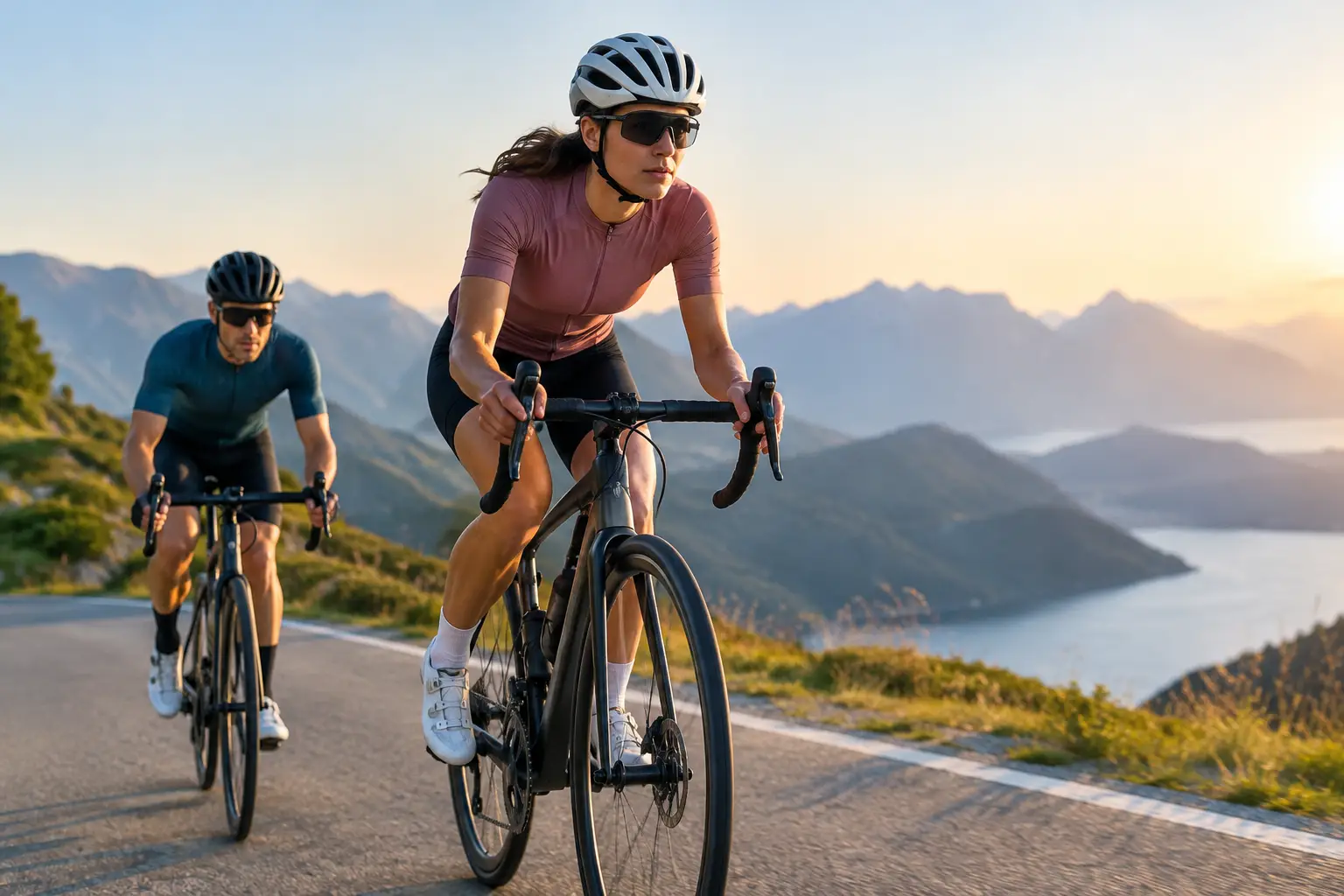
A steep Welsh climb, a rutted woodland track or a long exposed road section can all make one habit painfully obvious: grinding a big gear feels tough long before it makes you faster. Cycling cadence drills teach you to turn the pedals with more control, respond to changing terrain and save your legs for the run still to come.
For adventure athletes, cadence is not about spinning wildly for the sake of a big number on a bike computer. It is about having options. When the course pitches up, the surface gets loose or the wind swings round, a comfortable range of pedal speeds lets you keep moving efficiently instead of fighting the bike.
What cadence means on an adventure ride
Cadence is simply how many times your cranks turn each minute, measured in revolutions per minute (rpm). A rider pushing a heavy gear at 60 rpm is producing the same basic forward movement as someone using an easier gear at 90 rpm, but the demand on their muscles, joints and cardiovascular system is different.
There is no magic number that suits every rider or every route. On flat road sections, many recreational riders settle somewhere around 80 to 95 rpm. On a technical mountain bike climb, cadence may naturally drop as traction, line choice and balance take priority. The aim is not to force a road-racing style onto every trail. It is to make your natural cadence broader, smoother and more useful.
A higher cadence usually shifts more of the effort towards your heart and lungs, while a lower cadence asks more force from your muscles. Neither is automatically better. A strong rider can use a lower cadence well on a short climb, but repeatedly stomping a massive gear can burn through your quads and leave your knees complaining. Being able to change gear early and spin a little more freely is a valuable endurance skill.
Why cycling cadence drills belong in your training
Adventure triathlon asks your body to keep adapting. You may arrive on the bike after paddle boarding, ride over uneven ground, then need enough spring left for a trail run. Efficient pedalling will not remove the challenge, but it can reduce the unnecessary tension that makes a long day feel harder than it should.
Cadence work improves coordination between your legs, hips and core. It encourages a rounder pedal stroke rather than a series of heavy downward pushes. It can also teach you to spot a gear that is too hard before your speed fades and your breathing spikes.
For mountain bikers, the benefit is often practical rather than purely physiological. A lighter gear and quicker legs can help you keep traction on loose climbs, recover after a corner and avoid the sudden lurch that breaks rhythm. For road riders, it creates the ability to lift the pace into a headwind or over rolling terrain without immediately reaching for a bigger gear.
The trade-off is that high-cadence riding can feel bouncy and inefficient at first. If your upper body is rocking, your feet are slapping the pedals or your breathing becomes frantic, the cadence is probably beyond your current control. Build gradually. Smoothness matters more than chasing 110 rpm on day one.
Four cycling cadence drills worth doing
Add one of these sessions to an easy or moderate ride each week. Choose a safe, predictable stretch of road, smooth fire road or turbo trainer. Technical singletrack is brilliant for practising natural gear changes, but it is not the place to stare at a cadence screen.
- Fast-pedalling efforts: After a thorough warm-up, ride 6 x 1 minute at a light resistance and a cadence that is quicker than normal but still controlled. Recover for 90 seconds of easy spinning between efforts. Keep your shoulders relaxed and your upper body quiet.
- Cadence ladders: Ride for one minute at your usual comfortable cadence, then increase it by roughly 5 rpm each minute for four or five minutes. Ease back down and repeat once or twice. This is a smart way to find the point where smooth pedalling starts to unravel, then gradually push that point upwards.
- Spin-ups: On a gentle flat or slight downhill, begin at an easy cadence and accelerate your leg speed over 20 to 30 seconds without changing into a harder gear. Stop before you bounce in the saddle. Take plenty of easy recovery, then repeat 6 to 8 times.
- Hill gear practice: Find a steady, non-technical climb that takes two to four minutes. Ride it once at a controlled, slightly lower cadence, then repeat in an easier gear at a higher cadence. Keep the effort similar and notice what happens to your breathing, grip on the bars and leg fatigue. This is not a test of toughness. It is a lesson in choosing the right tool for the gradient.
These sessions do not need to leave you wrecked. In fact, they work best when you are fresh enough to pay attention to technique. Put them after 15 to 20 minutes of easy riding and finish with a relaxed spin home.
How to pedal smoothly when the terrain gets messy
On a trainer, cadence is easy to control. Outside, the route has other ideas. Gravel, roots, crosswinds, gates, traffic and sudden ramps all interrupt your rhythm. That is exactly why cadence awareness matters.
Start by shifting earlier than you think. Riders often wait until the hill has already bitten, then try to force a gear change under pressure. Anticipate the rise, ease your pedal force for a moment and select an easier gear before speed drops away. On a mountain bike, keep your weight centred, elbows soft and hands light enough that the front wheel can track the ground.
Stay seated for as long as traction allows on loose climbs. Standing can be useful for a short burst of power, but it often puts a sharp load through the rear wheel. A seated, slightly higher cadence is usually calmer and more grippy. If you must stand, choose a gear that lets you move smoothly rather than wrenching at the pedals.
On the road, do not confuse fast legs with rushed riding. Your pedal stroke should feel quiet. Think of brushing your feet around the circle, with steady pressure through the top and bottom of each revolution. Clipless pedals can help some riders feel connected, but they are not essential. Flat pedals are entirely capable of teaching a good, stable stroke, especially for riders who split their time between trail and road.
Build cadence work around your actual event goals
If you are preparing for a road-focused route, use longer blocks at 90 to 100 rpm on steady terrain. These help you stay relaxed when the pace rises and make it easier to recover while still moving well. If your event includes mountain biking, prioritise short bursts of controlled spinning, early shifting and climbing practice on surfaces that resemble your route.
For mixed-discipline athletes, do not place a hard cadence session immediately before your key run workout. High-cadence training is often gentler on the muscles than grinding, but it still asks your nervous system to work. Pair it with an easy paddle or use it early in a bike session, then keep the rest of the day sensible.
A simple fortnight might include one skills-focused cadence ride, one longer endurance ride where you practise shifting to terrain, and one session that includes a few hills at your normal event effort. That is enough for most recreational athletes. More is not always better when you are also swimming, paddle boarding, running, working and trying to live a life beyond the training plan.
Do you need a cadence sensor?
No. A cadence sensor gives clear feedback, especially on a turbo trainer, but you can learn plenty by feel. Notice when your legs are labouring, when your hips begin to rock and when a change to an easier gear makes the same pace feel more sustainable. Those observations matter on race day when you may be more focused on the trail ahead than a number on a screen.
If you do use data, treat it as a prompt rather than a verdict. A lower cadence into a strong headwind may be right. A very high cadence on a sketchy descent is definitely not the goal. Your safest, most efficient choice changes with gradient, surface, fatigue and confidence.
At SUPBIKERUN, the bike leg is part of a bigger outdoor day, not an isolated test of watts. Practise turning the pedals smoothly, make peace with changing gear and give yourself more ways to handle whatever the course puts in front of you. The best cadence is the one that gets you over the next rise with enough energy to enjoy what comes next.