
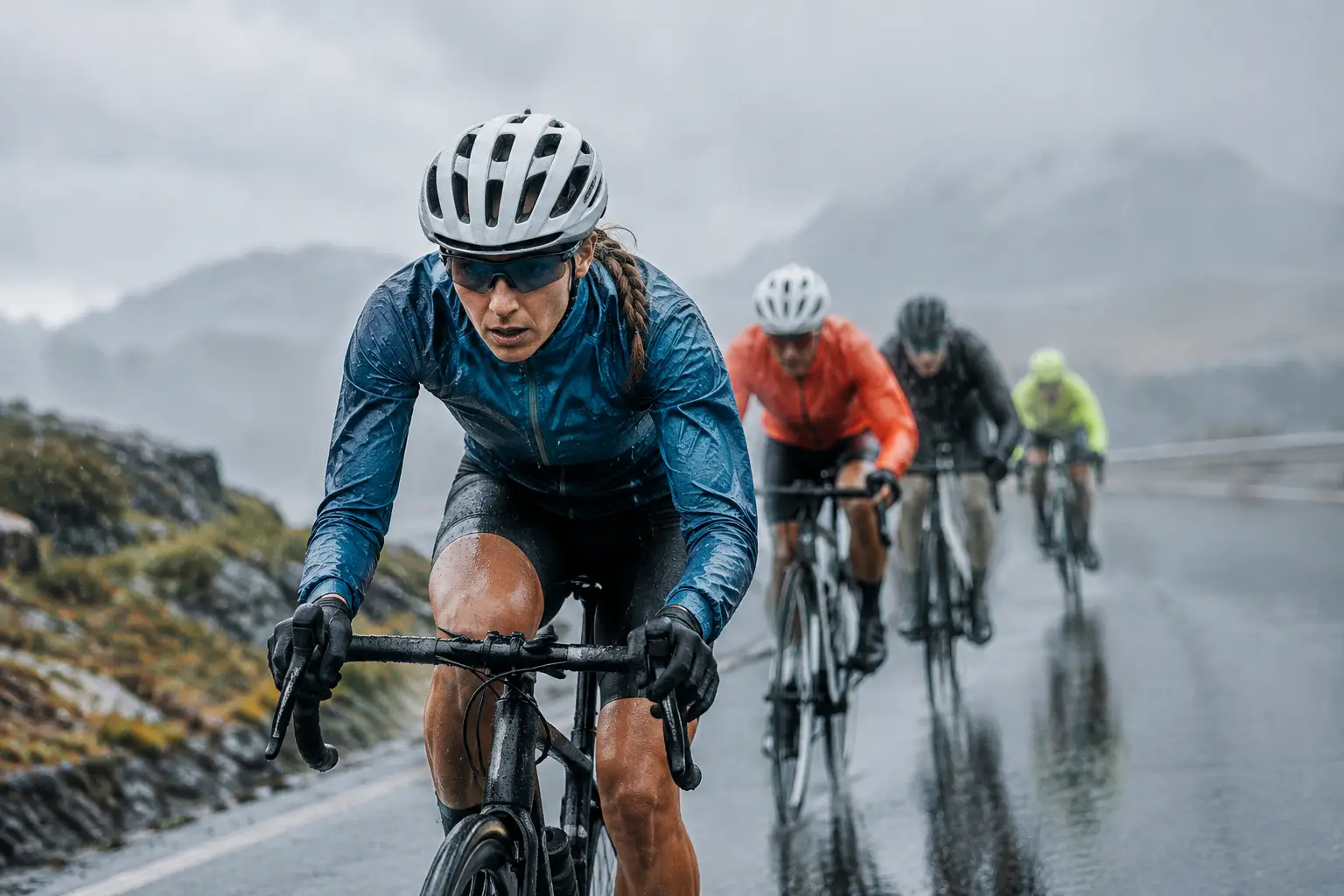
A forecast full of rain clouds can make a race-weekend group chat lively. But what happens in bad weather at an outdoor adventure event is not usually a simple case of carrying on or cancelling. Rain, wind, heat, lightning and reduced visibility affect paddle boarding, cycling and trail running in different ways – and the decision is always about the conditions on the ground, not just the weather app.
Outdoor events are built to feel like an adventure. A bit of mud, a headwind and a proper Welsh or Lakeland shower can be part of the story you tell afterwards. The line is drawn when conditions could stop participants, volunteers, spectators or emergency teams from operating safely. That is when a well-organised event team moves from normal race delivery to a clear weather plan.
What happens in bad weather at an outdoor race?
Organisers monitor forecasts before the event, then keep checking conditions during set-up and throughout race day. Forecasts are useful, but they are only one part of the picture. Wind strength at the water, ground saturation on a descent, river levels, lightning nearby and visibility on an exposed section can tell a very different story from the symbol on your phone.
The event team will assess whether the course can be delivered safely, whether medical and rescue access remains available, and whether staff and volunteers can work safely at every point. They also consider the experience for participants. A tough course is one thing. A course where people cannot see route markings, stay warm or get assistance quickly is another.
Most weather decisions sit on a scale rather than being all-or-nothing. The response might be a delayed start, a shortened route, a changed transition area, a revised cut-off time or the removal of one discipline. In more serious circumstances, an event may be paused, postponed or cancelled. The right call can feel frustrating in the moment, especially after weeks of training, but it protects the people who make the weekend possible.
Rain is not automatically a problem
For many UK endurance events, rain is expected rather than exceptional. It can make a trail run muddier, a mountain bike section more technical and transition a little messier. With sensible route design, clear marshalling and prepared participants, wet weather can still make for a brilliant day out.
What changes in sustained rain is the condition of the terrain. Grass slopes become slippery, roots and rocks are harder to spot, and braking distances increase on roads and trails. Heavy rain can also create standing water, affect river crossings and turn parking fields into boggy ground.
If rainfall is intense or prolonged, organisers may reroute exposed sections, close steep descents, add extra marshals or shorten the course. You may be asked to slow down through specific areas. That is not a challenge to race harder around – it is a chance to show good trail etiquette and look after the people around you.
Your job is simple: arrive ready to get wet. Pack dry layers for after your finish, use clothing that still works when damp, protect any essentials in dry bags, and make sure your bike tyres and brakes are suitable for the course. A waterproof is not glamorous, but neither is shivering in the car park after an unforgettable race.
Wind changes the paddle board equation
Wind deserves particular respect in a paddle boarding event. It can change a calm stretch of water quickly, create chop, push boards off line and make getting back to shore harder than expected. Wind direction matters as much as wind speed. An offshore wind, gusting conditions or a long exposed fetch may lead to a different decision than the same wind speed in a sheltered venue.
If paddling conditions are unsuitable, the team may delay the water start while conditions are reassessed, adapt the paddle route, bring the course closer to shore or remove the paddle section altogether. Safety cover, launch points and exit access all matter here.
Participants can help by following water-safety instructions without debate. Wear the required buoyancy aid, use the specified leash arrangement for the venue and conditions, and tell a marshal early if you are not comfortable. There is no prize for pretending you are fine when you are cold, exhausted or out of your depth. Adventure is about making good decisions as well as bold ones.
Lightning and extreme heat need fast action
Thunderstorms are different from ordinary rain. Lightning creates an immediate risk on open ground, on water and around exposed infrastructure. If lightning is observed or forecast nearby, an event may be paused and participants directed to a safer location. Timing depends on the conditions and the event’s safety procedures, so listen for official instructions rather than relying on rumours in the start pen.
Hot weather has its own challenges. A sunny day can look perfect from the café, but prolonged heat raises the risk of dehydration, heat exhaustion and poor decision-making. Organisers may adjust start times, increase water provision, alter routes with little shade or tighten welfare monitoring. Participants should pace for the day they have, not the day they hoped for.
Drink regularly, use sunscreen, wear suitable kit and be honest about how you feel. If you stop sweating, feel confused, become dizzy or develop a severe headache, get help. Pushing through is not toughness – it can turn a manageable issue into a medical emergency.
How organisers make the call
The best weather calls are rarely dramatic. They are based on planning that began long before race weekend: route inspections, local knowledge, contingency options, communications plans, welfare provision and coordination with relevant landowners and emergency services.
On the day, the event director and safety team will weigh the evidence available at that time. They have to make decisions for the whole field, from fast racers through to first-time participants, plus marshals, medics and spectators. They may have information participants cannot see, such as changing water levels, access problems or a forecast deterioration later in the day.
That is why an organiser can make a decision that feels cautious from one point on the course and entirely necessary from another. It also explains why plans can change close to a start time. Conditions do not follow a timetable.
At SUPBIKERUN, the goal is not to remove the wildness from an outdoor challenge. It is to give that challenge the structure, support and clear communication it deserves. A route change or schedule adjustment is still a race day – just one shaped by the landscape rather than a rigid script.
What participants should do before race day
Check official event communications in the days before you travel and again on the morning of the event. Use the information supplied by the organiser as your source of truth, especially if social media posts, local forecasts or messages from mates say something different.
Pack for variation, not perfection. Bring warm layers, a waterproof, spare socks, a towel, dry footwear and enough food and drink for a long day outdoors. If you are camping, secure your shelter properly and think about where you will leave wet kit. For your bike, inspect tyres, brakes and lights if they are required. For your board, check your equipment well before you reach the launch area.
Build extra time into your journey too. Poor weather can affect parking, traffic and access routes. Arriving stressed and late makes every decision harder, while arriving prepared gives you time to listen to the briefing, adjust your kit and soak up the atmosphere.
When the format changes
A modified event is not always the race you expected, and it is fair to feel disappointed if a favourite discipline is shortened or removed. But it can still be a proper test of resilience, adaptability and community spirit. The finish-line buzz does not come only from perfect conditions. It comes from taking on what the day gives you, supporting fellow participants and getting it done together.
Race briefings and official updates matter more than personal preference in these moments. Follow marshals, respect closed sections, keep clear of emergency access, and avoid sharing unconfirmed information that could confuse others. If you need help, ask early. If you see someone struggling, alert the nearest marshal rather than trying to manage a serious situation alone.
Bad weather does not have to spoil an adventure. Pack smart, stay flexible and trust the people watching the skies, trails and water. Then, when the clouds roll in, you can focus on the best part: earning the stories that only an outdoor race can give you.