
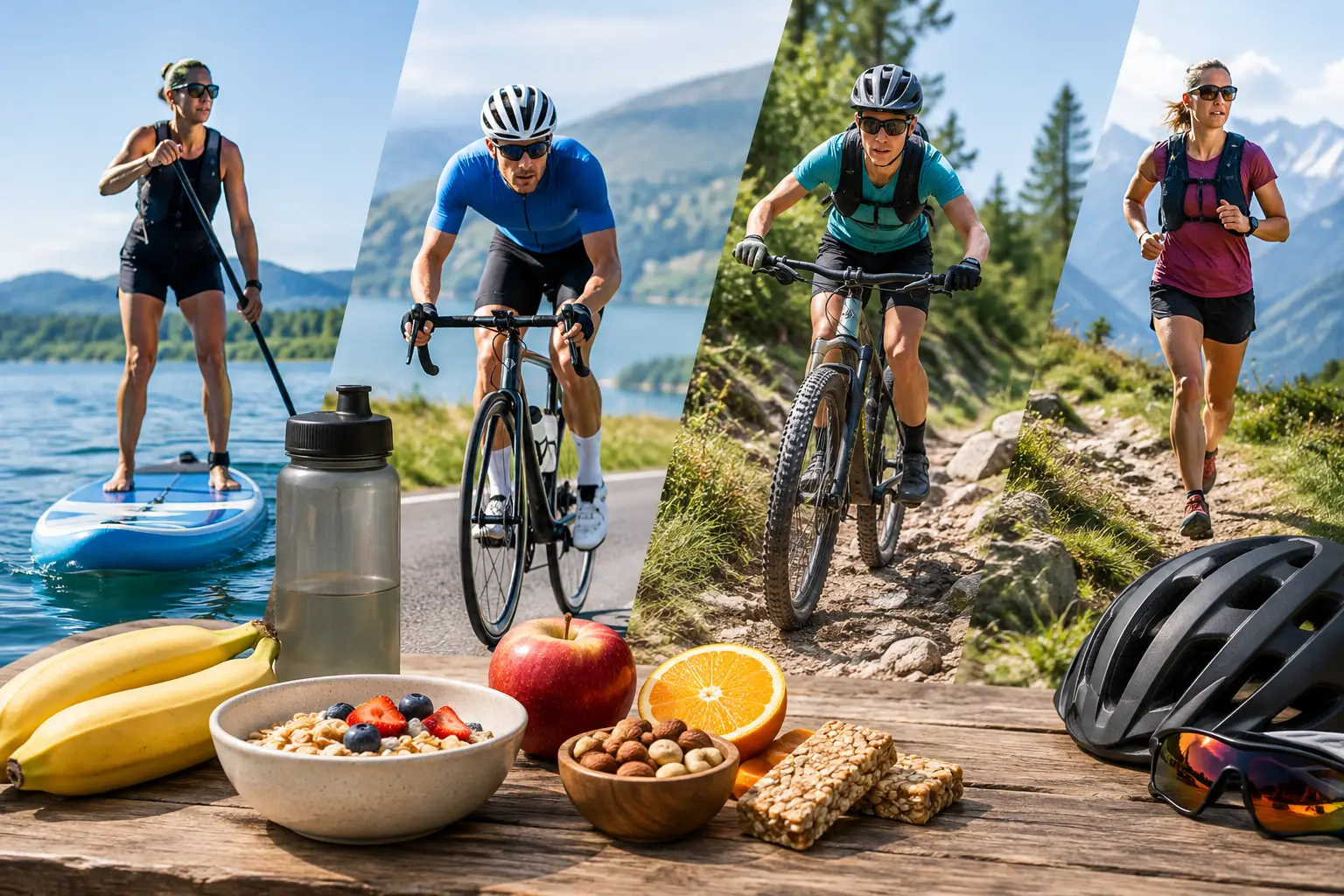
Your race kit is packed, your board is ready and the forecast is doing whatever a British forecast does. Now comes the question that can make the difference between feeling brilliantly strong and fading halfway through the bike: what should I eat before multisport?
For an adventure triathlon, you need fuel that supports a paddle, bike and trail run without sitting heavily in your stomach. This is not the morning to chase a perfect diet, copy an elite athlete’s routine or try the spicy breakfast burrito from the café by the start line. Keep it familiar, carbohydrate-led and suited to the time you have before the gun goes.
What should I eat before multisport?
Your main aim is to top up carbohydrate stores, arrive well hydrated and start comfortably rather than stuffed. Carbohydrate is your most useful race-day fuel because your body can turn it into energy quickly when the pace rises, the trail climbs or a headwind appears.
For most people, a meal containing easy-to-digest carbohydrates plus a little protein, eaten two to four hours before the start, works well. Think porridge with banana and honey, bagels with jam and yoghurt, cereal with milk and fruit, or toast with scrambled egg and a glass of juice. These are not glamorous choices. They are dependable choices.
How much you need depends on your body size, start time, expected finish time and how hard you plan to go. A shorter, sociable challenge may only need a normal breakfast. If you are tackling a longer route or pushing for a strong time, plan a more substantial meal. Sports nutrition guidance often suggests one to four grams of carbohydrate per kilogram of bodyweight in the one to four hours before exercise, but do not turn race morning into a maths test. Practise a sensible version during training and use how you feel as your guide.
The best pre-race meal is the one you have already tested on a long ride, run or brick session. Your gut is part of your race plan.
Build your breakfast around the start time
An early start changes the plan, but it does not mean skipping fuel altogether. Work backwards from your wave time and choose what feels manageable.
If you have three to four hours
This is the ideal window for a proper breakfast. Go for a carbohydrate-rich meal with modest protein and low to moderate fat. Porridge made with milk, topped with banana, berries and maple syrup is a solid option. So is a couple of slices of toast with jam, a banana and yoghurt.
Keep portions realistic. A giant fry-up may sound tempting when you are up before sunrise, but high-fat food digests slowly and can make the first paddle feel more like a rolling stomach test. Save the celebratory breakfast for afterwards.
If you have one to two hours
Choose a lighter meal or substantial snack. A bagel with jam, a banana with yoghurt, a bowl of cereal, or toast with honey are all useful choices. If dairy does not agree with you before exercise, use a plant-based alternative you know works for you.
This is also a good time for coffee if it is already part of your routine. Caffeine can sharpen focus and make hard effort feel easier for some athletes, but race day is not the place to discover you are sensitive to it. Keep the dose familiar and remember that coffee is not a replacement for water or breakfast.
If you have less than an hour
Keep it simple and easy to digest. A banana, a few dates, a cereal bar you have used in training, a slice of white toast with jam or a small sports drink can bridge the gap. You are not trying to eat a full meal at this point. You are adding a little accessible energy without creating discomfort.
If nerves make food difficult, liquid carbohydrate can help. A smoothie, drinkable yoghurt or sports drink may go down more easily than chewing through dry toast while watching the clock.
The night before matters more than a last-minute feast
You do not need a dramatic ‘carb-load’ for every event. For many recreational multisport athletes, the smarter move is simply eating a normal, satisfying evening meal that includes carbohydrate, then having a reliable breakfast.
Pasta, rice, potatoes, couscous or noodles paired with a familiar protein source and some vegetables will do the job. Avoid turning dinner into a competition. A huge plate of food, extra pints or an unfamiliar curry can leave you under-fuelled in a different way: tired, dehydrated or glued to the loo queue.
If you are travelling to an event in Mid Wales, Devon or the Lake District, pack a few breakfast basics rather than relying entirely on what is available nearby. Bagels, porridge pots, bananas, cereal, jam and your preferred electrolyte drink are easy to transport and remove one race-morning decision.
Hydrate steadily, not desperately
Starting dehydrated makes every discipline feel harder. It can affect concentration on the bike, effort on the trail and your ability to stay cool when the day warms up. But downing litres of water at breakfast is not the answer either.
Drink normally and consistently the day before, then have fluids with meals and snacks on race morning. Your urine should generally be a pale straw colour, not completely clear all day and not dark yellow. If it is hot, you sweat heavily or the event is long, an electrolyte drink can be useful, particularly if you know you lose a lot of salt.
Do not experiment with strong electrolyte mixes or salt tablets without practising first. More is not automatically better. The right plan is one you can comfortably drink and absorb while moving.
Think beyond the start line
What you eat before multisport sets up your day, but it cannot carry you through every kilometre alone. Paddle boarding, cycling and trail running ask different things of you, and transitions can be a brilliant chance to take on fuel before the next section begins.
For events lasting longer than around 90 minutes, most people benefit from taking in carbohydrate during the race. The exact amount depends on duration and intensity, but a useful starting point is 30 to 60 grams of carbohydrate per hour. For longer efforts, trained athletes may tolerate more, but only if they have practised it.
Use food that is easy to carry, easy to open and easy to eat when your hands are cold or your brain is busy. Good options include:
- gels or chews with water
- bananas or soft fruit
- flapjacks or low-fibre cereal bars
- jam sandwiches cut into small pieces
- sports drink that provides carbohydrate as well as fluid
The bike is usually the easiest place to eat because you can settle into a rhythm. Do not wait until the run, when your stomach is bouncing and your legs are asking tougher questions. Take small amounts regularly, and use transitions to check in: drink, eat if needed, then get moving.
Foods to be cautious with before racing
There is no universal banned-food list. Some people run happily after porridge, others swear by white toast, and a few can tolerate almost anything. The key is personal tolerance.
That said, race morning is usually a poor time for very high-fibre foods, greasy breakfasts, large amounts of cream or cheese, spicy meals and anything new. A big bowl of bran cereal may be a healthy weekday choice, but it can be a risky companion before a trail run. Likewise, avoid relying on a single energy gel if you have never opened one before. Surprise ingredients have a habit of appearing at inconvenient moments.
If you follow a vegetarian, vegan, gluten-free or dairy-free diet, the principle stays the same: choose familiar carbohydrates, include a little protein if you have time, and check labels before race weekend. Being prepared is far more useful than being restrictive.
Practise your plan in training
The strongest fuelling plans are built gradually. On a weekend session, eat the breakfast you are considering for race day. Test the drink mix in your bottles. Try the bar or gel you plan to carry. Notice what happens when you climb, run downhill or push the pace after eating.
Keep a quick note in your phone after longer sessions. Did you feel hungry early? Were you bloated? Did you stop drinking because your bottle was awkward to reach? These small details help you arrive at SUPBIKERUN with a plan that feels calm, not complicated.
A simple race-morning example
For a mid-morning start, you might have porridge with banana and honey around three hours beforehand, sipping water alongside it. About 45 minutes before the start, have a few mouthfuls of sports drink or half a banana if you are hungry. Carry a bottle and the fuel you have tested for the bike, then begin taking small amounts before your energy dips.
For an early start, reduce the size of the meal rather than forcing down food at an impossible hour. A bagel with jam, banana and coffee two hours beforehand, followed by a small sports drink nearer the start, can work brilliantly.
Arrive fuelled, not full. Choose food you trust, drink steadily, and give your body enough energy to enjoy the paddle, attack the bike and still find something for the trail. The finish-line food will taste even better when you have earned it properly.