The best multisport event snacks are the ones you can eat easily, digest happily and trust when your legs are working harder than your brain. A paddle, bike and trail run event is not the day to discover that a new gel tastes like wallpaper paste or that your ‘healthy’ flapjack needs a knife and fork. Keep it familiar, practical and packed where you can reach it.
At SUPBIKERUN, the goal is bigger than simply getting to the finish line. You want enough energy to enjoy the challenge, chat at the finish, soak up the atmosphere and still have something left for the drive home. Here is how to snack smart from the start line to the final trail mile.
What makes the best multisport event snacks?
For a recreational multisport event, carbohydrate is your main job. It is the quickest useful fuel for sustained effort, particularly when the day includes climbing, uneven trails, wind, weather and the stop-start nature of transitions. Most athletes will do well aiming for around 30-60g of carbohydrate per hour once they are moving for longer than 90 minutes. Bigger efforts, longer events and experienced racers may use more, but only if they have practised it in training.
The perfect snack also needs to survive the real world. It should fit in a jersey pocket, running belt or transition bag, open with tired hands and stay appealing after a few hours outdoors. A snack that is technically brilliant but impossible to unwrap in rain is not race-day brilliant.
Look for food that is mostly carbohydrate, low in fibre and not overly fatty. Protein and fat have a place in everyday eating, but they are slower to digest and can feel heavy when you are pushing hard. The closer you are to the start or the more intensely you are working, the simpler your choices should be.
Build your race-day snack plan by discipline
There is no single magic snack for paddle boarding, cycling and trail running. Each stage gives you different access to food, different intensity and a different tolerance for fiddly packaging.
Before the start: eat breakfast, then top up
Start with a normal, carbohydrate-led breakfast two to three hours before your wave where possible. Porridge with banana and honey, toast with jam, a bagel, or cereal with milk can all work well. Keep your choices familiar and avoid suddenly adding huge portions of nuts, seeds or spicy food because race morning has made you experimental.
Thirty to 60 minutes before the start, a small top-up can settle nerves and raise available energy. A banana, a few jelly sweets, half an energy bar or a small rice cake with jam are all solid options. You do not need to force-feed yourself if breakfast was close to the start, but do not begin a long day already hungry.
Paddle: keep it simple and secure
Paddling can make eating awkward, especially if conditions are lively or you are focused on balance and technique. If your paddle leg is short, take on fuel before launching and save your snack for transition. For a longer paddle, choose something that can live securely in a buoyancy aid pocket or waterproof pouch.
Soft chews, a gel you have already tested, or small pieces of an oat-based bar work better than anything crumbly. If you are carrying a drink, make sure it is properly attached. Dropping a bottle mid-course is frustrating for you and unhelpful for the event environment.
Bike: your best chance to eat properly
The bike is usually the easiest discipline for taking on food. You have more carrying space, a steadier rhythm and a better chance to eat before fatigue really builds. Make use of it. Start fuelling early rather than waiting until you feel flat, because by then you are already trying to recover a deficit.
Bananas, energy bars, flapjack-style bars, mini jam sandwiches and chews can all work on the bike. For mountain biking, the terrain may make a bar impractical while moving. Use a safe, smoother stretch, slow down if needed, or eat at an aid station. There is no prize for attempting to unwrap a snack while bouncing over roots.
If you like savoury food, a small salted boiled potato or a mini pretzel pack can be a welcome change after a lot of sweet fuel. Just remember that bulky foods are less convenient, so save them for a planned stop rather than trying to graze constantly.
Trail run: small, fast and easy to swallow
Running is where your stomach tends to become more opinionated. Keep portions small and choose soft options: chews, gels, jelly sweets, banana pieces or a few bites of a bar. Take a mouthful, wash it down with water, then get back into your rhythm.
Trail terrain asks more of your concentration, so do not make snacking a hazard. Walk a steep climb for a minute if it helps you eat and drink properly. That is smart pacing, not a setback. A steady runner who fuels well will often catch the athlete who charged off on empty.
Reliable snack options worth practising
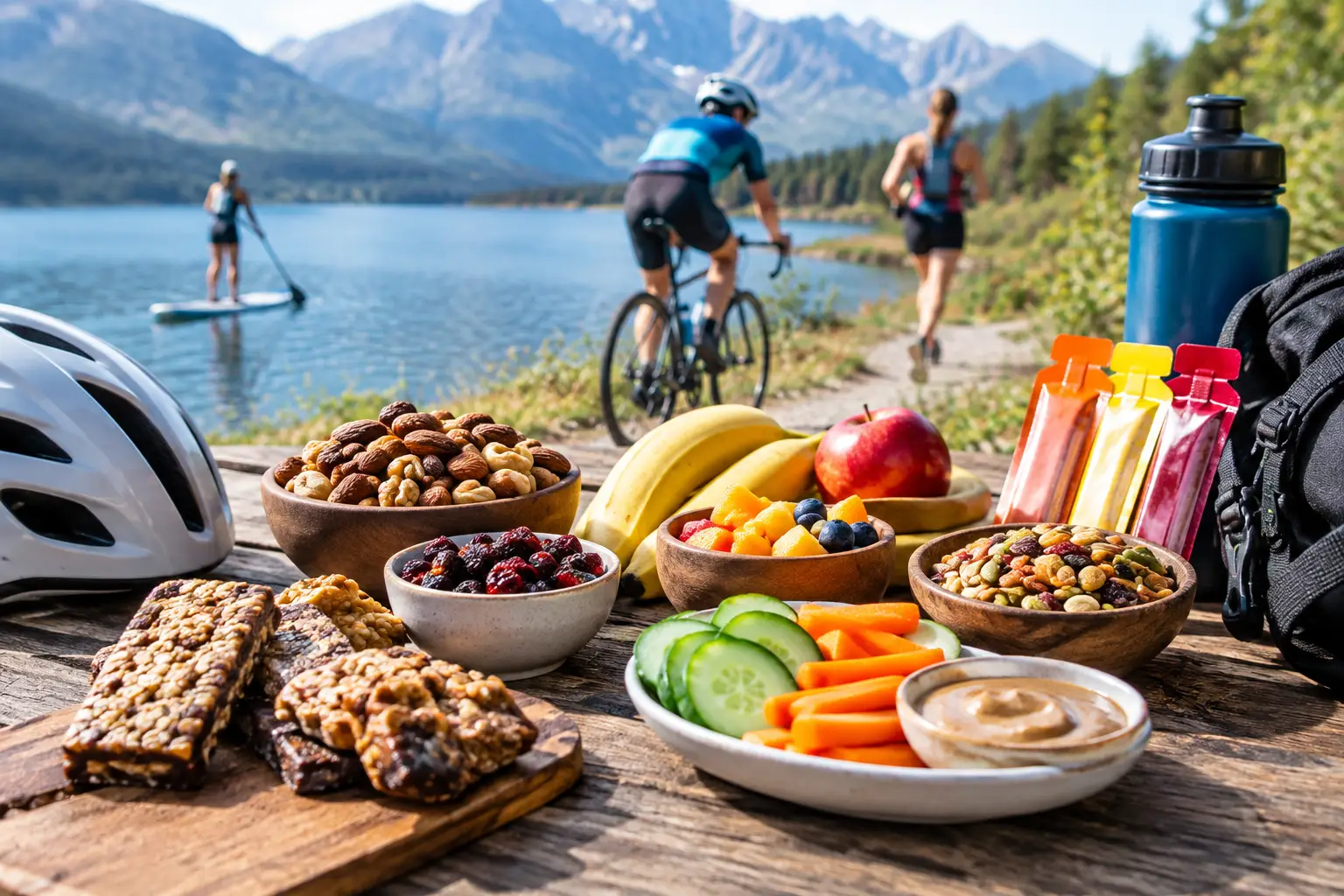
You do not need a suitcase full of specialist products. The best approach is a mix of convenient sports nutrition and ordinary food your body already knows. Four dependable categories cover most people:
- Energy chews and gels are compact, quick to digest and easy to measure. They are ideal for the run, but test flavours and textures first.
- Bananas and soft fruit pouches offer straightforward carbohydrate and can feel less processed. Bananas are best saved for before the start, aid stations or the bike.
- Flapjack-style bars, rice cakes and jam sandwiches provide more satisfying mouthfuls for the bike. Choose soft versions that are not packed with fibre, nuts or thick chocolate coatings.
- Jelly sweets, pretzels and salted potatoes are simple, affordable and often a morale boost late in the day. They are especially useful if sweet gels become too much.
Variety can be useful, but do not overcomplicate it. Pick two or three options that you genuinely enjoy, then repeat them in longer training sessions. Familiar fuel is calm fuel.
Do not forget hydration and electrolytes
Snacks only work properly alongside fluids. How much you need depends on the temperature, your body size, how hard you are working and how much you sweat. As a starting point, drink regularly to thirst and avoid trying to replace every drop of sweat with litres of water.
On a warm day, or if you tend to finish training with salt marks on your kit, an electrolyte drink or electrolyte tablets can help replace sodium. This becomes more relevant during longer events, particularly when you are drinking plenty. In cooler Mid Wales, Devon or Lake District conditions, you may need less fluid than expected, but you still need a plan. Weather can change quickly, and a hard climb will make its own microclimate.
Use your training to learn whether you prefer water plus separate snacks, or a carbohydrate drink alongside lighter food. A drink with carbohydrate is convenient, but it can be hard to judge exactly how much you have consumed. If your stomach is sensitive, water and simple solids may be easier.
Pack snacks where they will actually be useful
A brilliant snack hidden at the bottom of a kit bag is just extra weight. Put your first fuel option somewhere instantly accessible. On the bike, use a jersey pocket, top-tube bag or storage box you can reach safely. For the run, use a belt, vest pocket or shorts pocket that does not bounce.
Keep a second stash in transition or your post-finish bag. This is where a recovery snack earns its place. A chocolate milk drink, yoghurt pouch, sandwich, banana or protein shake can help you start recovering, especially if it will be a while before your next proper meal. Carbohydrate is still useful after the finish, and a little protein supports muscle repair.
Take packaging seriously. Tear the top of bars slightly before the start if that helps, while keeping them sealed. Put loose chews in a reusable pouch. Never drop wrappers on course – carry them until you reach a bin or aid point. Adventure sport belongs outdoors, so leave the trails and water as good as you found them.
Common race-day mistakes to avoid
The biggest mistake is waiting for hunger. Hunger is not always a reliable signal when adrenaline is high, and energy can disappear quickly after a long climb or a hard effort into the wind. Set a simple reminder on your watch for every 30 minutes if you tend to forget.
The second is copying someone else’s plan. Your mate may race happily on three gels an hour, while you feel queasy after one. Your body, event duration and intensity decide the right approach.
Finally, do not confuse a big pre-race meal with a fuel strategy. A huge breakfast cannot carry you through a full adventure day. Eat well beforehand, then keep topping up in manageable amounts.
Bring fuel you trust, start early, sip regularly and keep the next snack within reach. That small bit of preparation gives you more freedom to enjoy every paddle stroke, pedal turn and muddy trail mile.