
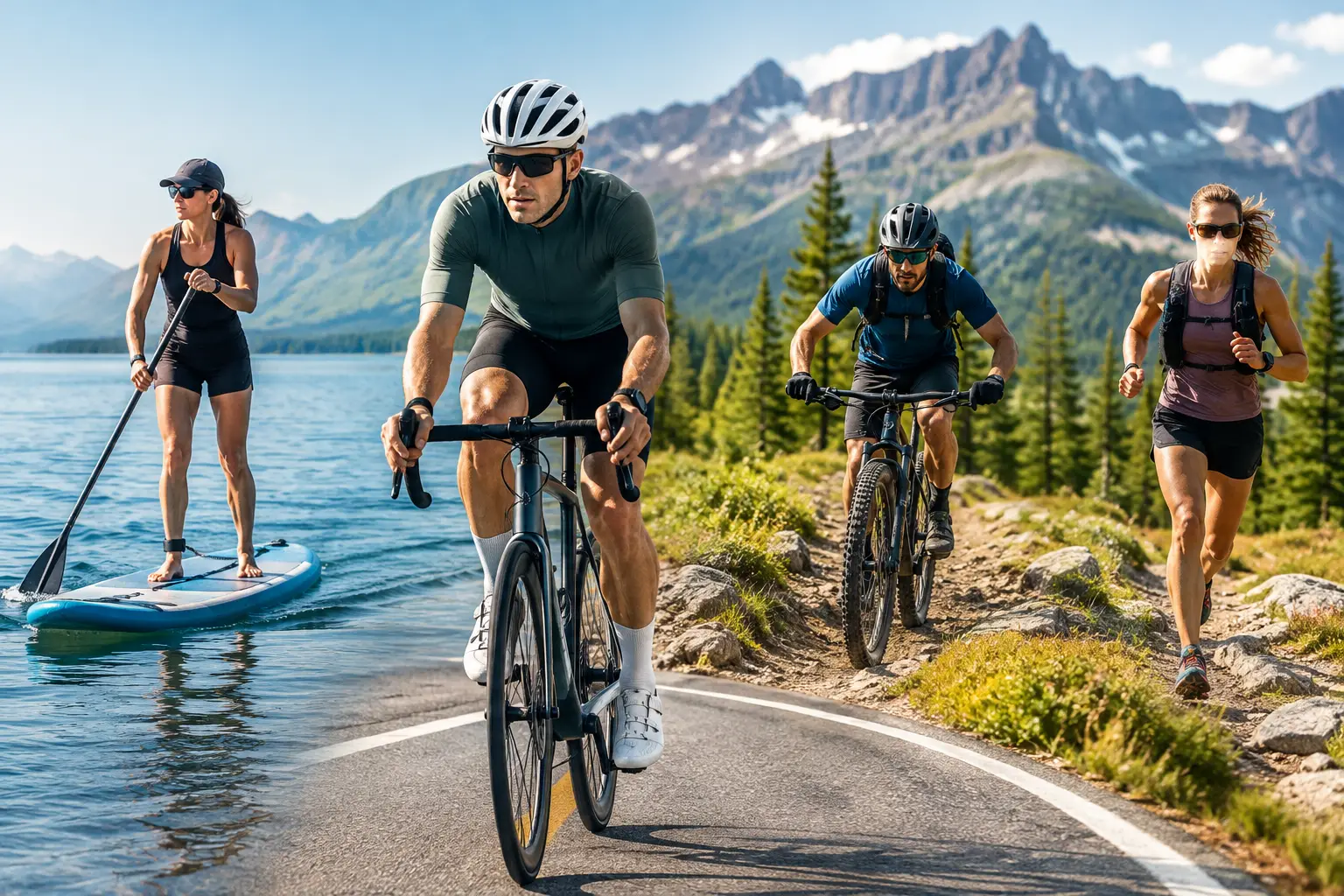
A finish-line medal is great. But the story most people tell on Monday is rarely about the medal. It is about the mist over the lake at sunrise, the stranger who helped on a steep climb, the campfire chat afterwards, or the moment they discovered they could keep going when the route got properly tough. That is the force behind the growth of experiential sports events: people are signing up for a challenge, but they are buying a weekend they will remember.
For years, mass-participation sport was built around a simple promise: train hard, race hard, get a time. That still matters, especially for athletes chasing a personal best or a podium. But a growing number of active adults want more from the effort they put in. They want nature, a clear sense of occasion, a welcoming crowd and an adventure worth travelling for.
Why the growth of experiential sports events is gathering pace
The best events now understand that competition and enjoyment are not opposites. A course can test your legs, lungs and nerve while still feeling friendly. It can be professionally timed and properly marshalled without becoming stiff or overly serious. That balance is attracting people who may have felt conventional racing was not quite for them.
Outdoor sport has also become part of how people spend their free time. A long run is not only training. A bike ride is not only about average speed. Paddle boarding is not only about core strength. For many participants, these are ways to get outside, clear the head and spend time with people who share the same appetite for doing something memorable.
Experiential events bring those motivations together in one place. Instead of fitting a race into a single morning, participants can make a proper trip of it. They can arrive with friends, camp nearby, explore the surroundings, race, cheer, eat well and head home with a camera roll full of more than the finish arch.
There is a practical reason for the shift too. Busy people are selective about their weekends. If they are investing time in training, travelling and entry fees, they want an event that feels substantial. A brilliantly designed experience can make the early alarm, muddy shoes and tired quads feel entirely worthwhile.
The race is only one part of the experience
A memorable sports event starts long before the starter’s horn. The booking journey should be clear, the event information should answer real questions, and participants should know what kit they need, where they are going and how they will be supported. Confidence is part of the adventure. People are far more willing to take on something new when the organisation behind it feels calm and capable.
On event day, the details carry enormous weight. Helpful registration teams, a course that is easy to follow, well-positioned aid stations and enthusiastic marshals all shape how a challenge feels. Nobody expects an adventure route to be effortless. They do expect the event team to have thought ahead.
Then there is the atmosphere. A great event makes room for different kinds of achievement. The fast racers need space to push. First-timers need encouragement. Relay teams, mates taking on a big goal together, and corporate groups stepping outside their usual routines should all feel they belong. The loudest cheer should not be reserved for the first person home.
That is where a format such as SUPBIKERUN stands apart. Combining paddle boarding, cycling and trail running changes the rhythm of the day. It asks participants to adapt, to enjoy different terrain and to bring an adventurous mindset rather than simply repeat a familiar race formula. The point is not to make sport complicated for the sake of it. It is to make the challenge feel alive.
Nature is not a backdrop
In an experiential event, the landscape is part of the course design. A lake changes the feel of a paddle. A woodland climb changes the demands of a bike section. A trail descent can turn tiredness into a grin, provided the route is suitable and clearly managed.
That creates a responsibility for organisers as well as an opportunity. Working respectfully with landowners, local communities and the environment matters. Routes need careful planning, sensible participant numbers and clear guidance on leaving places as they were found. Wild settings are a privilege, not a disposable product.
For participants, this connection to place is often what turns a hard day into a meaningful one. Mid Wales, Devon and the Lake District do not need artificial drama. The terrain, views and changeable conditions bring their own character. The right event lets people experience that character while keeping safety and good logistics firmly in place.
Community makes challenge more accessible
The word “inclusive” can sound vague until you see it in action. It means communications that do not assume everyone already knows the rules. It means practical kit advice rather than gatekeeping. It means a start line where a nervous newcomer and a seasoned endurance athlete can stand side by side without either feeling out of place.
This is particularly relevant in multi-discipline events. The thought of paddle boarding, cycling and running can feel intimidating when viewed from the sofa. Break it into manageable training sessions, offer straightforward guidance and surround people with a supportive atmosphere, and the same challenge becomes an exciting target.
Community also extends beyond participants. Volunteers create the human energy that no amount of branding can manufacture. Spectators give racers a lift at exactly the right moment. Local suppliers, photographers and event partners all help build the feeling that something bigger than a race is happening.
Corporate groups are part of this change too. The strongest team-building experiences do not force people into awkward games in a hotel conference room. They give colleagues a shared goal, room to encourage each other and a story that lasts beyond the office. The format needs options for different confidence levels, but the sense of collective achievement is powerful.
What participants expect now
The growth of experiential sports events does not mean people have lowered their standards. Quite the opposite. Participants increasingly expect excitement and professionalism to travel together. They want a bold challenge, but they also want accurate pre-event information, sensible cut-offs, trained medical cover, clear contingency plans and responsive support when conditions change.
There is a trade-off here. The more remote, rugged and unpredictable a route becomes, the more difficult it is to deliver the polished convenience of a city-centre race. Some people will always prefer closed roads, large crowds and a finish time measured to the second. Others will take a little mud, weather and uncertainty in exchange for a bigger sense of adventure.
Neither preference is wrong. The important thing is honesty. Tell people what the event is, who it suits and what they need to prepare for. The right audience will be excited by the very things that might put someone else off.
Authenticity matters just as much. Participants can spot a generic obstacle course or a manufactured “festival vibe” a mile away. An experience earns loyalty when every part of it connects: the location, the route, the people, the event village and the way it communicates. It should feel designed with genuine care, not assembled from a checklist of trends.
Better memories create stronger sporting habits
Experiential events have an effect long after finishers head home. A person who enjoyed their first trail race may keep running through winter. Someone who tried a paddle board for the first time may join a local club. Friends who tackled an event together may plan their next adventure before their legs have recovered.
That matters for the future of participation. Sport grows when it gives people an emotional reason to return. Personal progress is one reason. Community is another. A sense of place, a well-earned celebration and the belief that ordinary people can do extraordinary things are just as powerful.
For organisers, the challenge is to keep improving without losing the soul of the event. Bigger is not automatically better. More entertainment is not always more memorable. The experiences that endure are the ones that respect participants’ time, make them feel looked after and give them a challenge worth talking about.
Choose the event that makes you want to train, not just turn up. Find your people, prepare properly and embrace the bits that cannot be measured by a stopwatch. The best weekend adventures begin when you decide the finish line is only part of the point.