
The first time you see a paddle board, bike and trail run lined up in one event, it can look like a challenge reserved for people with an impressive kit cupboard and a very serious training diary.
It is not. Can beginners do multisport events? Absolutely – provided they choose an event that welcomes first-timers, prepare with purpose and give themselves permission to take it at their own pace.
A multisport event is not about being the fastest person on the course. It is about moving through an incredible outdoor route, solving one discipline at a time and finding out what you are capable of when the day asks for a little more. That is where the magic lives.
Can beginners do multisport events safely?
Yes, but “beginner” can mean different things. You do not need to be a competitive triathlete, own a carbon bike or have raced before. You do need a sensible baseline: the ability to stay active for a few hours, confidence around the equipment you will use and enough preparation to enjoy the experience rather than simply endure it.
For a paddle, bike and trail running event, the key question is not whether you are brilliant at all three disciplines. It is whether you can manage each one steadily and safely. Perhaps cycling is your strong suit but paddle boarding feels new. Maybe you are a confident runner who has not ridden a mountain bike since school. That is normal. Most first-timers have one discipline they are looking forward to and one that makes their eyebrows rise.
Choose an event with clear route information, realistic cut-off times, support on course and a friendly atmosphere. These details matter. A relaxed event culture does not mean poor organisation – it means there is space for people chasing a podium and people chasing a finish line, all on the same adventure.
Pick the challenge that suits your starting point
Not every multisport event is the right first event. Distance, terrain, water conditions and the technical demands of the bike route all change the experience. A shorter course or a format designed for accessible participation is often the smartest place to begin.
Read the event information properly before entering. Look at total distance, elevation, expected completion time, minimum age, kit requirements and whether equipment hire is available. If a route includes technical mountain biking, ask yourself whether you can comfortably control your bike on uneven ground, brake confidently and get on and off without panic. There is no shame in choosing a route that feels manageable. In fact, it is the route most likely to make you want to come back.
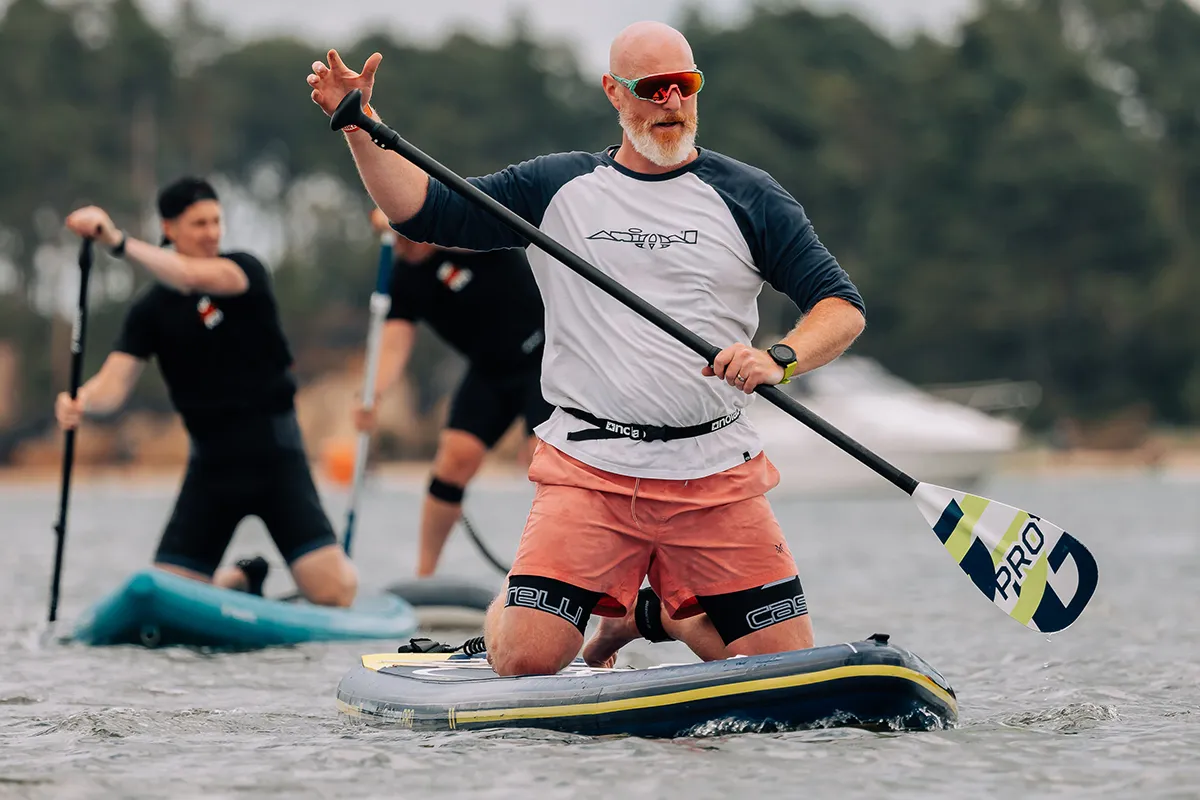
Paddle boarding deserves particular respect. You do not need to be an elite paddler, but you should practise getting on and off the board, paddling in a straight line, turning and recovering from a wobble or fall. Wear the required buoyancy aid and follow the event safety guidance. Calm water can still feel very different when you are surrounded by fellow participants and managing race-day nerves.
Trail running is also not road running with better views. Expect uneven ground, hills, mud and changing weather. Your pace may be slower than usual, and that is exactly as it should be. Walking steep climbs can be a strong strategy, not a failure.
Build fitness for the whole day, not three perfect sessions
The best beginner training plans are consistent, not heroic. You do not need to train every day or smash every session. Start by building regular movement into your week, then gradually make it more specific to the event.
Aim to practise each discipline regularly, with extra attention on the one that feels least familiar. A simple week could include two rides, two runs and one paddle, plus rest days. Some sessions can be short. A 30-minute easy run, a steady bike ride and a relaxed paddle where you focus on balance all count.
After a few weeks, introduce a small “brick” session – doing two disciplines back to back. Try an easy cycle followed by a short run, or a paddle followed by a ride. This teaches your legs and brain how transitions feel. The first time you run after cycling, your legs may feel as though someone has replaced them with garden furniture. That odd sensation passes quickly with practice.
Build duration gradually. Increase your longest weekly session in small steps and take recovery seriously. If you are constantly exhausted, picking up niggles or dreading every session, the plan is asking too much. Fitness improves during recovery as well as training.
Practise the skills that save energy
Beginners often focus only on endurance, but basic skills can make the entire event feel easier. On the bike, practise changing gears before a climb, looking ahead rather than at the front wheel and drinking while moving. On the paddle board, learn efficient strokes and how to stand up calmly. On trails, get used to shortening your stride downhill and lifting your feet over roots and rocks.
These are not glamorous sessions, but they build confidence fast. They also reduce the energy wasted through tension. A relaxed rider handles rough ground better than a tired rider gripping the handlebars like they have offended them.
Your first multisport kit does not need to be expensive
Outdoor events can create the impression that every participant needs specialist gear from head to toe. Start with safety, comfort and what the event requires. You can upgrade later once you know which part of the adventure you love most.
For most beginners, the essentials are a properly fitting helmet, suitable footwear, weather-appropriate layers, a hydration option and the required safety kit for the water. If you are using your own bike, make sure it is serviced or at least checked before the event. Brakes, tyres, chain and gears deserve attention well before race week.
Avoid trying anything new on the day. New shoes can rub, a new hydration pack can bounce, and an untested snack can become a regrettable experiment. Train in the kit you intend to use, including your buoyancy aid and any clothing you will wear on the paddle section.
Weather is part of the adventure in the UK. Pack layers for waiting around before the start and dry clothes for afterwards. A warm layer waiting at the finish can feel more valuable than any medal.
Race day: make it an adventure, not an exam
Arrive with time to register, set up your equipment, visit the loo and take in the briefing without rushing. Listen closely to the safety information, particularly around water entry and exit points, route markings, road crossings and any sections where you may need to dismount your bike.
Set a simple goal before you begin. It might be to finish smiling, stay calm on the paddle, run every runnable section or encourage three other participants. A time target can be motivating, but it should not be the only measure of a great day. Conditions change, legs have opinions and occasionally a hill appears to have been designed by someone with a grudge.
Fuel little and often. Drink before you feel desperate for a drink, and eat familiar snacks at regular intervals on longer events. If the course has feed stations, use them as planned breaks rather than relying on them to rescue an under-fuelled start.
Transitions are where many beginners lose their cool. Slow down. Lay your kit out simply, know what comes next and focus on one job at a time. Helmet on before touching the bike. Shoes secure before heading onto the trail. A calm transition is faster than a frantic one.
The community is part of the finish line
Multisport events attract a brilliant mix of people: dedicated racers, weekend adventurers, mates taking on a challenge together and people proving something to themselves after a difficult year. You will find encouragement on the course, shared jokes at the tricky bits and plenty of finish-line stories.
That is a big reason a format like SUPBIKERUN works for first-timers. The paddle, bike and trail run combination feels properly adventurous, while the event atmosphere gives beginners room to find their rhythm. You are not required to look like a seasoned athlete to belong there. You just need to show up ready to have a go.
If you are unsure, train with a friend or enter as part of a group. Shared training makes the early mornings easier, and shared nerves tend to shrink the moment the start horn goes. Corporate teams and friendship groups often discover that the person they least expected becomes the day’s biggest source of grit.
Your first multisport event may be messy, muddy, thrilling and tougher than anticipated. It may also be the day you realise that adventure sport is not a club with a locked door. Pick a challenge that respects your current level, put in the steady preparation, and step up to the start line. The finish is waiting.