
The thought of paddling, pedalling and running your way through the outdoors can make a standard gym session feel very small indeed. But can beginners do adventure triathlons? Absolutely – provided you choose the right event, prepare with purpose and arrive ready to enjoy the challenge rather than race somebody else’s race.
An adventure triathlon is not reserved for people with carbon bikes, podium ambitions or years of open-water experience. It is for people who want a big day out with a finish line attached: a test of fitness, nerve and good humour, shared with others who have also decided that a weekend should involve more mud, more views and a little more adventure.
Can beginners do adventure triathlons without elite fitness?
Yes. Beginner-friendly does not mean effortless, and it should not. The satisfaction comes from doing something that asks more of you than your usual routine. Yet you do not need to be an elite endurance athlete to earn the medal, the stories and that brilliant feeling of crossing the finish line.
What you need is a sensible base of fitness. If you can comfortably exercise for 45 to 60 minutes, you have a useful starting point. From there, build your ability to keep moving for longer, especially across uneven ground and in changeable weather. Adventure triathlons reward steady effort far more than all-out speed.
The key distinction is between being challenged and being overwhelmed. A well-organised event gives you clear routes, safety cover, feed stations, transition guidance and support from people who know that not every participant is chasing a personal best. Your job is to pick a distance and format that feels exciting, then give yourself enough time to prepare.
Why adventure formats can feel more accessible
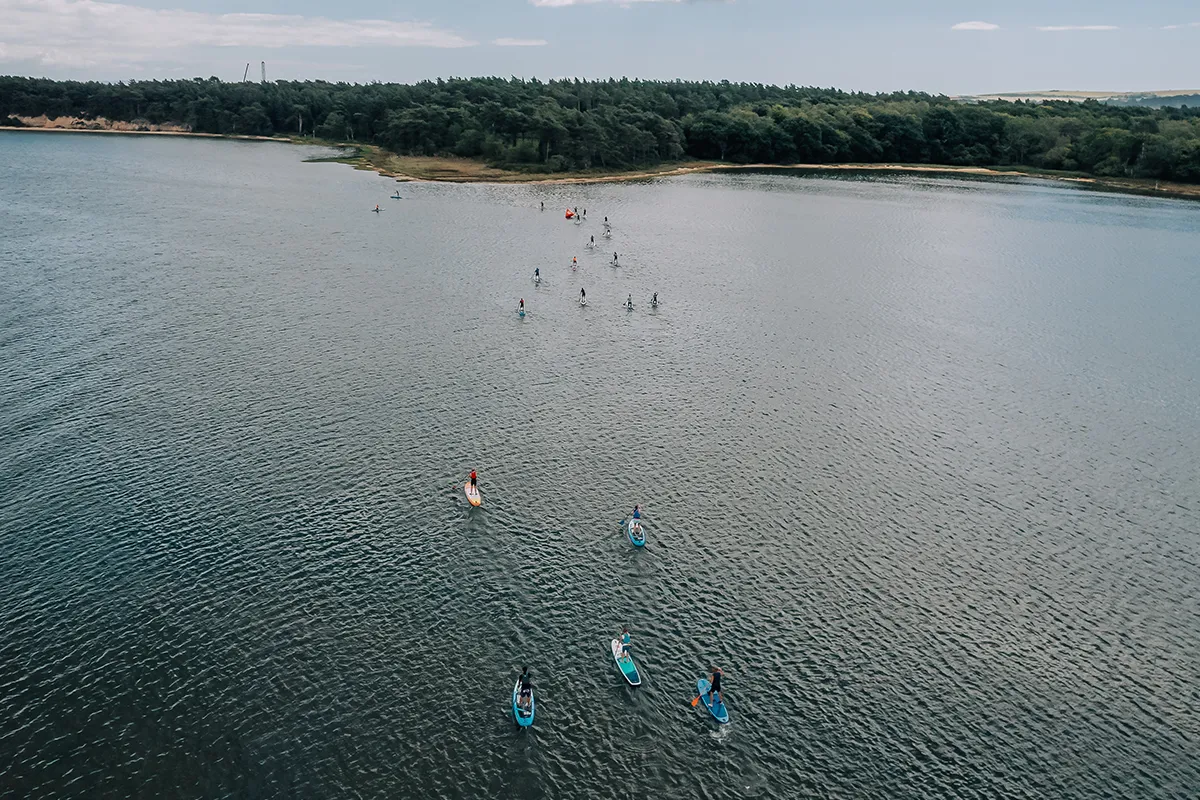
A conventional triathlon often begins with a swim, which can be the biggest barrier for newcomers. Adventure triathlons switch the water discipline for paddle boarding, then combine cycling with trail running. For many people, that feels more approachable and more fun.
Paddle boarding is still a skill, particularly if conditions are breezy or the water is choppy, but it is a discipline you can practise at your own pace. You can learn balance, turning and efficient paddling without the pressure that some beginners feel in a mass swim start. If you fall in, you get back on, laugh about it and carry on.
The bike and run sections also bring variety. A mountain bike route may ask you to negotiate loose ground, climbs and puddles, while a road-based course rewards controlled pacing. Trail running is rarely about setting a fast kilometre split. It is about reading the terrain, hiking the steeper bits when needed and keeping enough in the tank for the final push.
That variety is the point. Each discipline uses your body differently, so a weaker moment on one section does not have to define your whole day.
Start with the distance, not the ego
Your first event should leave you proud, not broken. Choose the shortest available route if you are new to multi-discipline events, new to one of the sports or unsure how you cope with long periods of activity. There is no prize for signing up to a distance that turns your preparation into a stressful scramble.
A useful test is to consider the longest session you can currently complete. If a 90-minute bike ride wipes you out for the rest of the day, a longer bike leg plus paddle boarding and trail running will need a proper training block. If you already cycle, run or paddle regularly, you may progress more quickly, but do not underestimate the effect of doing all three in sequence.
Course profile matters too. A flat, hard-packed route and a hilly, technical trail are very different experiences, even when the distances look similar. Check the event information, understand the terrain and be honest about where your confidence sits. Walking a steep climb is sensible racecraft, not failure.
Build the skills that make the day enjoyable
You do not need a complicated plan, but you do need practice in each discipline. Aim for two or three sessions a week at first, alternating between cycling, running and paddle boarding. Add a longer, easy session at the weekend, then gradually increase its duration. Small, consistent gains beat one heroic week followed by a fortnight on the sofa.
As the event gets closer, try a few short ‘brick’ sessions – for example, a bike ride followed by a gentle trail run. The first time you run after cycling, your legs may feel strange and heavy. That is normal. Practising the change teaches your body and your brain that the feeling passes.
For paddle boarding, focus on the basics before chasing speed. Learn to get on and off the board safely, paddle in a straight line, turn without panic and recover if you fall in. Practise in conditions similar to those you are likely to face, ideally with an experienced friend or instructor. A buoyancy aid is not optional when it is required by the event, and it is a sensible confidence-builder in any case.
For cycling, get comfortable braking, changing gears on hills and riding on the surface you will encounter. Mountain biking demands a relaxed grip, eyes up and a willingness to get off and walk a feature that is beyond your current skill level. There is nothing glamorous about an unnecessary crash.
The kit you need – and what can wait
Beginners sometimes believe they need a garage full of specialist equipment before they can enter. They do not. Start with safe, functional kit and use the event rules as your checklist.
You will generally need a roadworthy bike suited to the route, a properly fitted helmet, clothing you can move in, trail-friendly running shoes and a board with the required safety equipment if you are bringing your own. A bottle or hydration pack, basic nutrition and layers for changing weather can make a far bigger difference than expensive upgrades.
Do not test new shoes, a new pack or a new energy gel on event day. Use training to work out what rubs, bounces, leaks or upsets your stomach. The boring preparation is what frees you up to enjoy the exciting bit.
If you are unsure whether your bike, board or clothing is suitable, ask before you travel. Good event teams would rather answer a practical question early than see you worried in transition on the morning.
Train for the outdoor reality
Adventure events happen outdoors, which is exactly why people love them. It also means wind, rain, heat, mud and uneven surfaces can all play a part. You cannot control the forecast, but you can avoid being surprised by it.
Train in some less-than-perfect conditions. Ride when there is a light shower. Run on wet trails. Learn which layer keeps you warm without turning into a sweatbox. You do not need to seek out misery, but a little weather experience gives you calm when the day gets lively.
Fuel is another lesson worth learning early. For sessions lasting longer than around an hour, practise drinking regularly and taking on easy-to-digest food. There is no universal formula. Some people like gels; others prefer chews, bananas or something more substantial. The right option is the one your body tolerates while moving.
Make event day simple
The night before, lay out your kit in the order you will use it. Check tyre pressure, charge any devices you genuinely need and pack dry clothes for afterwards. Arrive with time to register, listen to the briefing and settle into the atmosphere.
At transition, keep your space tidy. Put your helmet with your bike, open your shoes and know where your water and nutrition are. Transitions are not only for fast athletes. A calm transition saves energy, prevents forgotten kit and stops a small wobble becoming a stressful start.
When the event begins, hold back slightly. The buzz can tempt you to go too hard in the opening minutes, especially around other excited participants. Find a sustainable effort, eat and drink before you feel desperate for it, and break the day into manageable chunks: the next buoy, the next climb, the next feed station.
SUPBIKERUN is built around that balance – a proper challenge, a brilliantly social atmosphere and the reassurance of an organised event experience. You may arrive feeling like the least experienced person there. You will almost certainly discover that plenty of others are having their own first go too.
A first adventure triathlon is a starting line
You do not need to wait until you feel completely ready. Most people never do. You need enough preparation to participate safely, enough humility to respect the course and enough curiosity to say yes to a day that will stretch you.
Choose your distance wisely, train consistently and let the finish time take care of itself. Your first adventure triathlon is not a verdict on how athletic you are. It is proof that you were willing to get outside, try something different and keep going when it got interesting.