
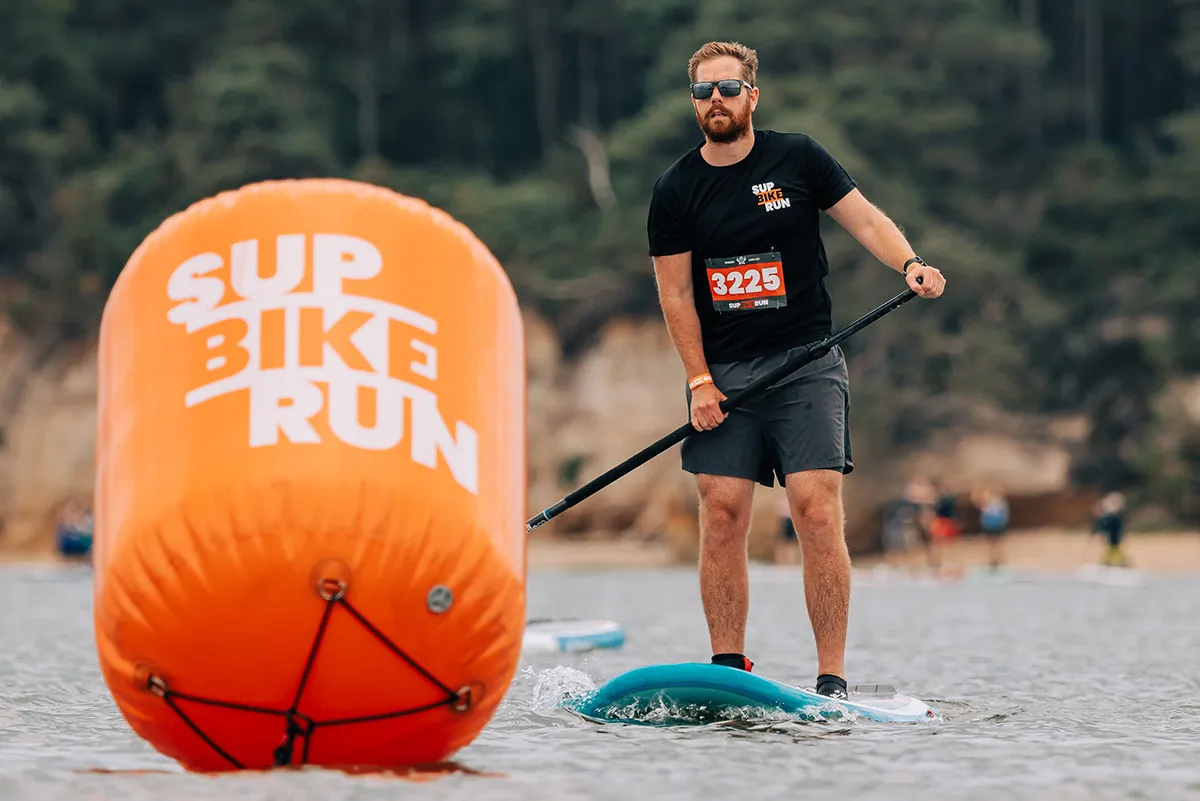
A race start is not the moment to find out whether your shoulders can handle a hard paddle, your balance disappears in chop, or your effort has left nothing for the bike and trail run. Smart stand up paddle race training turns those unknowns into familiar territory – so you can get stuck into the challenge, enjoy the water and still have plenty of race day left to give.
For an adventure triathlon, the paddle is not simply a warm-up before the next discipline. It asks for fitness, technique, calm decision-making and a willingness to keep moving when the water is less glassy than it looked in the photos. The good news? You do not need to train like a full-time racer. You need a plan that fits real life, builds steadily and prepares you for the full day outdoors.
Start with the demands of your race
Before adding sessions, get clear on what your event actually asks of you. Paddle distance matters, but so do likely conditions, board type, launch and exit points, turns, and what comes immediately afterwards. A short, punchy paddle into a bike course needs a different approach from a longer, steady water leg where maintaining rhythm is the main job.
If you are training for a multi-discipline event, avoid treating each sport as an isolated project. The aim is not to post your fastest-ever paddle time in training, then discover your legs have gone flat for the bike. You are building the ability to move well across the whole adventure.
A useful starting point is to give yourself 8 to 12 weeks. Beginners may need more time to develop comfort and confidence on the board, while experienced paddlers can focus earlier on pace, efficiency and race-specific efforts. It depends on your current fitness, access to water and how familiar you are with paddling in British conditions.
Build stand up paddle race training around consistency
Two purposeful paddle sessions each week will take most recreational athletes a long way. Add a third only when recovery, family life and the rest of your training are all in a good place. One excellent hour on the water is more valuable than three rushed sessions where technique falls apart.
Your weekly paddle work should usually include one steady endurance session and one session with controlled harder efforts. The steady session develops comfort on the board and lets you practise efficient movement for longer. Keep it conversational at first. You should finish feeling that you could have continued, not as though you have just survived a fight with the canal.
For your harder session, try intervals that reflect racing without turning every outing into a test. After a gentle warm-up, paddle six efforts of two minutes at a firm but sustainable pace, with two minutes easy between each. As your fitness improves, build towards four-minute efforts, or include short 20 to 30-second bursts to practise responding to a busy start or getting round a turn.
The point is control. If you are wobbling, gripping the paddle too tightly and losing all sense of rhythm by rep three, ease back. Fast paddling is built on good movement, not brute force alone.
Technique is free speed
A paddler who moves efficiently can make a modest fitness level go much further. Keep your hands relaxed, reach forward without over-stretching, plant the blade cleanly and pull the board past the paddle using your core and torso rotation. Your arms are part of the system, but they should not be doing every bit of the work.
Look ahead rather than down at your feet. A stable, athletic stance with soft knees helps the board move beneath you rather than making every ripple a drama. On longer sessions, notice when your form starts to fade. That is useful information: a slightly shorter paddle, a reset of your posture or a reduction in effort may be smarter than forcing bad habits for another kilometre.
Practise changing sides smoothly, especially if you naturally favour one side. An uneven stroke can send you weaving across the water and waste energy you will want later. If your event includes turns, rehearse them. Step-back turns can be quick, but they are not essential for everyone. A reliable wider turn that keeps you upright beats an ambitious manoeuvre followed by a swim.
Train for water, not just the gym
Flat, sheltered water is ideal for learning and building confidence. But race day rarely promises a private millpond. Once you are comfortable, make space for controlled exposure to wind, boat wash, small chop and changing conditions. Pick a safe location, stay within your ability and never head out in conditions that make you anxious or exceed your experience.
This is where confidence becomes a performance skill. Learn how your board reacts when the wind catches it, how much wider your stance needs to be in chop and how to remount efficiently if you fall in. Falling is not failure. It is part of paddleboarding, and knowing you can get back on calmly removes a surprising amount of race-day tension.
Wear the right safety equipment for your location and conditions, understand local water rules and check the forecast before setting off. If you use a leash, make sure it is appropriate for the water environment. Safety decisions are not a barrier to adventure – they are what allow you to keep having it.
Make the bike and run part of the plan
The biggest mistake in adventure triathlon training is doing three separate sports whenever time allows, with no thought for how they connect. You do not need a complicated programme, but you do need occasional transition practice.
Every couple of weeks, finish a paddle with a short, easy bike ride. Keep the first few minutes deliberately gentle and notice how your legs feel. Later in the training block, add a brief trail run after a bike session. These are not sessions to smash. They teach your body and brain that changing discipline is normal, even when you are tired and slightly wet.
Strength work helps too, particularly if you sit at a desk or have a history of shoulder, back or knee niggles. Two short sessions a week can make a real difference. Focus on squats or split squats, hip hinges, rows, presses, carries, planks and rotational control. Quality matters more than loading up a barbell for the sake of it.
If time is tight, protect your key paddle sessions and use cycling or running to build general aerobic fitness. The bike is especially useful for adding endurance without the impact of extra running. But do not replace all board time with gym work or cardio machines. Balance, stroke timing and water confidence only improve on the water.
Rehearse race day before race day
In the final three to four weeks, include one or two sessions that feel like a simplified version of your event. Lay out your kit, practise getting your buoyancy aid on and off if required, and work out what you will eat and drink. Test the clothing you intend to wear, including how it feels when wet and when you move onto the bike.
Aim to finish these rehearsals feeling confident rather than wrecked. Race-week fitness does not appear from one heroic final workout. Tapering slightly, sleeping well and arriving fresh will do more for your performance than panic-training ever will.
At SUPBIKERUN, the best stories are rarely only about a finishing time. They are about getting through a tough patch, helping a fellow racer, laughing at the weather and crossing the line knowing you took on something different. Train with that experience in mind.
A simple week that works
A balanced week for a recreational racer might include a steady paddle, an interval paddle, two rides, two runs and one or two short strength sessions. That sounds like a lot, so combine sensibly and adjust to your starting point. A bike-run session can cover two disciplines in one outing, while a rest day is a training decision, not a missed opportunity.
Listen to the signs that you need to back off: persistent shoulder pain, a loss of enthusiasm, poor sleep or sessions that feel harder than they should. Missing one workout to recover is sensible. Trying to push through a developing injury is a poor trade.
Bring curiosity to every paddle. Learn what happens when the wind changes, when you increase your cadence, when you relax your grip and when you pace the first five minutes properly. By race day, the board should feel less like an obstacle and more like the start of a brilliant day out.