
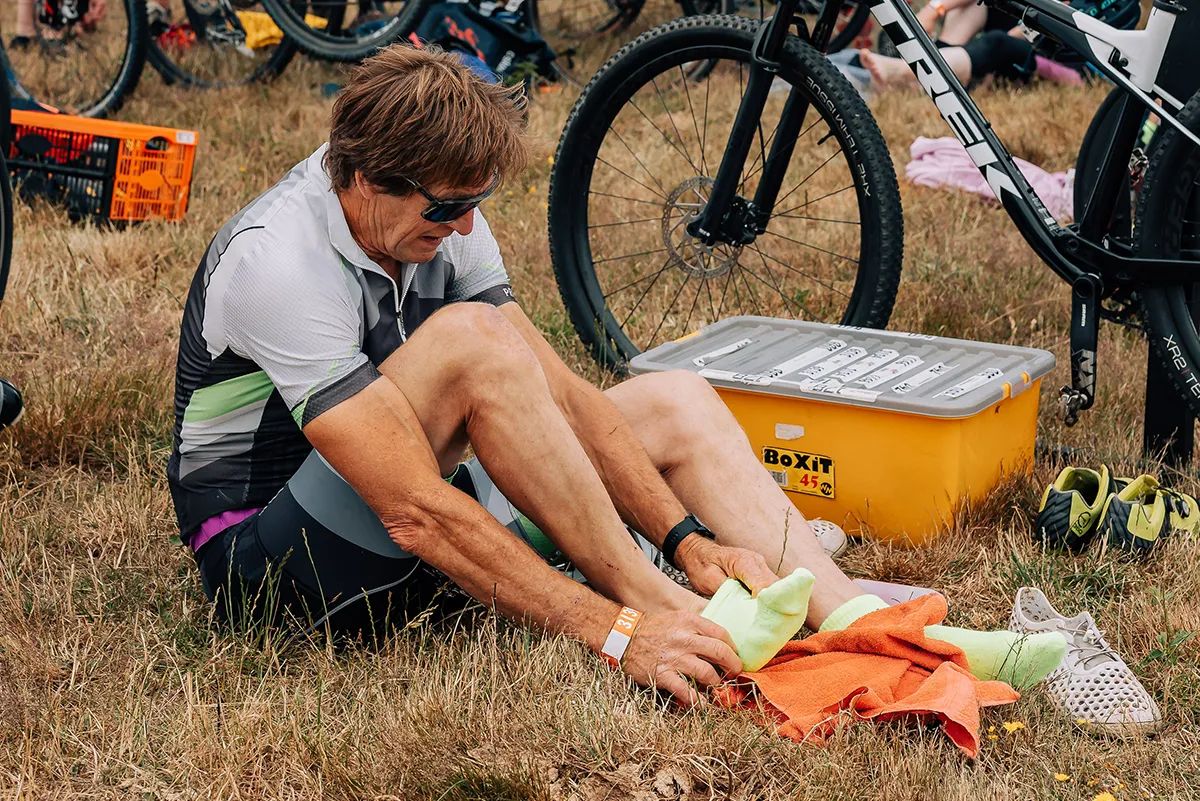
The stopwatch keeps ticking when you step off your board, but that does not mean your transition needs to feel frantic. Learning how to transition between paddle bike run is less about pulling off a lightning-fast shoe change and more about staying calm, organised and ready for the next part of the adventure.
A good transition protects your energy, keeps your kit where you need it and stops small problems becoming big ones. Get it right and you will leave the transition area feeling in control, even when your legs are wobbly and your hands are cold.
Treat transition as part of the race
Paddle-bike-run racing asks your body to change gears twice. You go from balancing and paddling with your upper body to turning the pedals, then from the bike into trail-running mode. Those shifts can feel surprisingly tough, particularly if you have only trained the three disciplines separately.
The biggest mistake is treating transition as dead time. It is still part of your race, and it is a chance to make smart decisions. Rushing can mean forgotten kit, twisted race belts, wet feet in the wrong socks or a sprint onto the bike with your helmet unfastened. A few composed seconds are usually faster than a frantic minute.
Before race day, understand the event set-up. Check where your board will be collected or racked, where your bike is positioned, which direction you will enter and leave, and whether you need to carry any equipment. A professionally organised event will make the route clear, but knowing the flow before the start removes a lot of noise from the moment.
How to transition between paddle, bike and run
The secret is simple: make every action deliberate. Lay your kit out in the order you will use it, rehearse the sequence, and keep it simple enough to follow when you are tired.
Paddle to bike: arrive, park, reset
Coming off the water is often the most chaotic feeling transition. Your heart rate may be high from a final push, your feet may be wet, and the ground underfoot can feel odd after balancing on a board. Give yourself a moment to stand tall as you run or walk in. That brief reset helps your balance and prevents an unnecessary stumble.
As you reach your allocated area, secure your paddleboard and paddle exactly as instructed. Do not throw kit down and hope for the best. It is courteous to other competitors, kinder to the event crew and means you will not be searching for anything later.
Your bike should be ready to go. Put your helmet on first and fasten it before touching the bike. Then deal with footwear. Some athletes prefer cycling shoes; others choose trainers for a simpler, more relaxed set-up. Neither option is automatically better. Cycling shoes can feel more efficient on longer rides, but trainers remove a change and may be the sensible choice if you are new to the format or want one pair for bike and run.
Wet feet are the big consideration. If you paddle barefoot, decide in advance whether you will dry your feet, use thin socks or accept a quick shoe-on-and-go approach. Drying thoroughly can be comfortable, but costs time. Going straight into shoes is quicker, though grit and dampness can lead to rubbing. Practise your chosen option after a paddle, not just in your living room.
Before you leave, take a quick three-point check: helmet secure, race number visible if required, bike moving in the correct direction. Then go. Do not try to eat, rearrange your whole bag or have a long conversation with your supporters in the middle of the transition lane.
Bike to run: make the first kilometre easier
The bike-to-run transition can make your legs feel like they belong to somebody else. That heavy, slightly uncoordinated sensation is normal. You do not need to fight it by blasting out of transition at full pace.
As you approach the dismount point, ease your effort slightly and use the final minute of the ride to prepare. Take a drink if you need one, settle your breathing and shift into an easier gear. Dismount where instructed, not where it seems convenient. Those rules are there to keep riders, runners, volunteers and spectators safe.
Rack your bike securely, remove your helmet, and switch into run shoes if you have not used the same pair throughout. A race belt is useful here because it lets you move your number quickly from bike-ready to run-ready, but only if you have practised it. If you are carrying gels or a lightweight layer, make sure they are easy to grab rather than buried beneath towels and spare kit.
Start the run with short, quick steps and lower expectations for the first few minutes. Your stride will settle. Trail running asks for attention, especially on uneven ground, so use that early section to find your rhythm rather than stare at your watch. The strongest runners are not always those who leave transition fastest. They are often the ones who leave controlled enough to keep moving well later.
Build a transition station you can trust
A tidy transition space gives you one less thing to think about. Keep your setup compact and respect the room around you. Think function first, not a giant kit display.
A small towel can define your space and give your feet a cleaner surface. Place your shoes open and facing out, with socks tucked inside if you are using them. Put your helmet on your handlebars or directly beside your bike, and keep nutrition somewhere you can reach without rummaging. If the forecast is changeable, have a cap, glasses or light layer ready, but only bring what you are genuinely likely to use.
Your essentials may include:
- a properly fitted helmet and bike shoes or trainers
- run shoes, socks and a race belt if needed
- water and any nutrition you have already tested in training
- a small towel, plus weather-specific extras such as a cap or lightweight waterproof
Avoid leaving valuables in transition unless the event arrangements specifically allow for it. More kit also creates more decisions, and decision-making gets harder when adrenaline is high.
Practise when you are tired, not just when you are fresh
You do not need to recreate a full race every weekend to improve. Add short transition rehearsals to normal training. After a paddle, set up your bike and go for a 10 to 20-minute ride. After a ride, park the bike safely and jog for ten minutes. The aim is to teach your body that the change is ordinary.
Practise the awkward details too. Can you fasten your helmet with cold fingers? Can you put on your trainers with damp feet? Can you find your gel without turning your bag inside out? These tiny drills build confidence quickly.
It also helps to rehearse at the pace you expect to race. If your goal is to enjoy the day with mates, your transition can be calm and social. If you are chasing a personal target, your layout and sequence need more precision. Both approaches work, provided they are planned.
Fuel and pacing through the changeovers
Transitions are not usually the best place to take on a full meal. Keep fuelling simple. Take regular sips on the bike and use the ride to eat any nutrition that needs chewing or unwrapping. Then use transition for quick actions only.
Your needs depend on distance, weather, effort and how long you expect to be out. On a cooler day, it is easy to forget to drink after the paddle. On a hot day, a rushed transition can tempt you to skip fluids when you need them most. Have a plan, but stay flexible if conditions change.
Pacing matters just as much. A huge effort to overtake people in the first few minutes of the bike can make the run feel brutal. Let the event unfold. Paddle with control, build on the bike and give yourself enough left to enjoy the trails, the atmosphere and that brilliant feeling of finishing a challenge you chose.
Race-day habits that keep you moving
Arrive early enough to set up without stress. Walk through the transition area, listen to the briefing and ask an event marshal if anything is unclear. Their job is to help the day run smoothly, and a quick question before the start is far better than a wrong turn during the race.
Check your tyre pressure, make sure your bike is in a sensible starting gear, and test that your helmet, shoes and race number are all where you expect them to be. Then step back from the kit. You are ready.
SUPBIKERUN is built for people who want a real challenge without leaving the good vibes behind. Your transition does not have to look like an elite triathlete’s pit stop. It just needs to work for you, your kit and your race plan.
When the water is behind you, the pedals are turning and the trail opens up ahead, trust the preparation you have done. Stay composed, back yourself and keep moving towards the finish.