
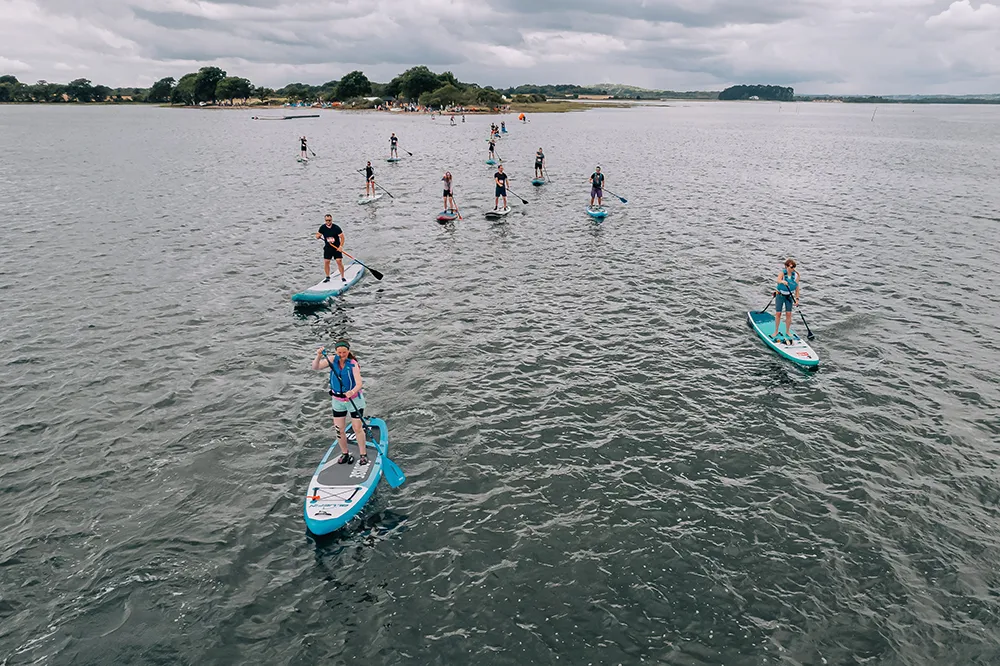
A start line can tell you everything about an event. If it is full of nervous first-timers, experienced racers, mates doing it together and people there for the atmosphere as much as the finish, you are looking at an inclusive multisport event format that is doing its job properly.
That matters because too many endurance events still make people feel like they need permission to enter. The kit looks expensive, the rules feel rigid, and the culture can seem built for people who already know the drill. A better format keeps the challenge high but removes the feeling that you have turned up to the wrong place. It gives people a real test, a clear structure and proper event support, without turning the day into an insiders-only club.
What an inclusive multisport event format really means
Inclusivity in sport is often talked about as a nice extra. In reality, it is a design choice. The format either widens the door or narrows it.
An inclusive multisport event format is not about making an event easy. It is about building an experience that more people can realistically access, understand and enjoy. That starts with the disciplines themselves, but it also runs through pacing, cut-offs, transitions, event briefing, route marking, spectator energy and the tone of the whole day.
For adventure events, the best formats feel bold without being alienating. They give people something to train for and something to talk about afterwards. Stand up paddleboarding, cycling and trail running work so well together because they offer variety, flow and a sense of journey. They also shift the mood away from the narrow expectations some people still attach to traditional triathlon.
That change matters. Plenty of capable, active people are put off by formats that look overly technical or overly formal. Give them a race that feels adventurous, well run and welcoming, and suddenly the leap from interested to entered becomes much smaller.
Why the format shapes who turns up
People do not just sign up for distance. They sign up for identity, atmosphere and confidence.
A conventional race format can attract a certain crowd very effectively, and there is nothing wrong with that. But if the goal is broader participation, the event has to signal from the outset that there is more than one way to belong there. That is where format does heavy lifting.
When the course mixes paddleboarding, riding and running through open landscapes, the event starts to feel less like a narrow performance test and more like an outdoor challenge with room for different strengths. Someone strong on the bike but new to paddling still sees a route in. A trail runner who wants a fresh target feels curious rather than excluded. A group of friends with mixed backgrounds can imagine doing the same event together.
That is one of the biggest strengths of a well-designed adventure triathlon. It does not flatten everyone into the same mould. It lets different participants bring different skills to the day.
Challenge and accessibility are not opposites
This is where some events get it wrong. They assume inclusive means watered down. It does not.
A strong inclusive multisport event format keeps the sense of achievement intact. The course should still ask questions. Weather can still play a part. Terrain should still feel real. Crossing the line should still mean something. But the barriers that do not need to be there – confusing entry expectations, intimidating race culture, unnecessary complexity – can be stripped out.
That balance is what participants remember. They want to feel stretched, not shut out. They want a proper challenge, but they also want to know the event team has thought carefully about support on the course, clear communication before race day and a structure that rewards effort without demanding perfection.
There is always a trade-off. Open the event too far without enough guidance and people feel underprepared. Make it too technical and you lose the very audience you want to welcome. The sweet spot is an event that feels exciting from the first glance, then reassuring once people start reading the details.
The role of atmosphere in inclusive design
Atmosphere is not fluff. It is infrastructure.
If the event village feels friendly, if staff and volunteers speak to people like humans, if the briefing is clear rather than performative, participants settle faster and race better. That is especially true for anyone trying a new format for the first time.
Outdoor multisport events have a big advantage here. They can build a culture around shared adventure rather than hierarchy. Camping, spectator viewing points, post-race food, team entries and a lively start-finish area all make the day feel like more than a stopwatch exercise. For many people, that is exactly the point.
It also helps retention. A participant who feels supported is far more likely to come back, bring mates next time or persuade colleagues to enter as a group. That is how events grow properly – not just by selling entries, but by building a community that wants to return.
Good event design removes silent barriers
Some barriers are obvious, such as cost or travel. Others are quieter and just as powerful.
People hesitate when they cannot picture how the day works. They worry about whether they are fit enough, whether they need specialist knowledge, whether they will look out of place, whether transitions will be chaos or whether the event is really only for hardened racers. If an organiser does not answer those doubts, many potential entrants never make it past the idea stage.
That is why inclusive design needs practical detail. Clear start procedures, sensible kit guidance, visible safety planning, straightforward category options and realistic cut-offs all make a difference. So does plain language. People should not need a decoder ring to read race information.
This is especially relevant in newer formats. If you are asking people to try something proudly unconventional, the event has to meet that boldness with excellent organisation. The relaxed feel only works when it sits on top of solid planning.
Why adventure sport is well placed to lead
Adventure sport has an edge here because it already attracts people who care about experience as much as ranking. That creates space for a more open event culture.
A paddle-bike-run format, for example, naturally appeals to participants who value variety, scenery and personal challenge over strict tradition. It invites curiosity. It also reflects how many active adults actually like to train – mixing disciplines, getting outdoors and avoiding the monotony that can creep into more repetitive race prep.
That does not mean everyone wants the same thing. Some will race flat out. Others will be there to complete a personal milestone. Some will come with a club, others solo. A few will use it as a team day or a company challenge. A format that can hold all of those motivations at once is far stronger than one that only serves a narrow type of competitor.
That is where SUPBIKERUN sits so naturally. The format is different enough to feel exciting, but grounded enough to feel doable. It gives people a reason to train, a reason to travel and a reason to talk about the event long after race day.
Inclusion also makes events more resilient
There is a business reality here as well. Events that welcome a broader mix of participants are usually better placed to grow.
If your start list depends on one highly specific audience, you are always more exposed. If your event appeals to triathletes, paddleboarders, cyclists, runners, adventure seekers, corporate teams and social groups, you have more routes into the market and more reasons for people to engage.
But wider appeal only works if the experience still feels coherent. A format cannot try to be everything to everyone. It needs a clear identity. The strongest events know exactly what they are: challenging, outdoorsy, well organised and open to more kinds of participant than the old model allowed.
That clarity builds trust. People are happy to try something new when they can see the event team knows what it is doing.
The future belongs to formats people want to join
Endurance sport does not need less challenge. It needs smarter challenge.
The events that will keep growing are the ones that make people feel invited before they feel tested. They will still have tough courses, early alarms and hard-earned finishes. But they will also have personality, warmth and a format that makes sense for modern participants who want more from a race than split times alone.
That is why an inclusive multisport event format works so well. It respects ambition without worshipping exclusivity. It gives experienced athletes something fresh and gives newcomers a genuine way in. Most of all, it creates the kind of event people do not just complete, but want to be part of.
If you can build a race where challenge, community and adventure all carry equal weight, you are not lowering the bar. You are raising the standard for what a great event should feel like.