
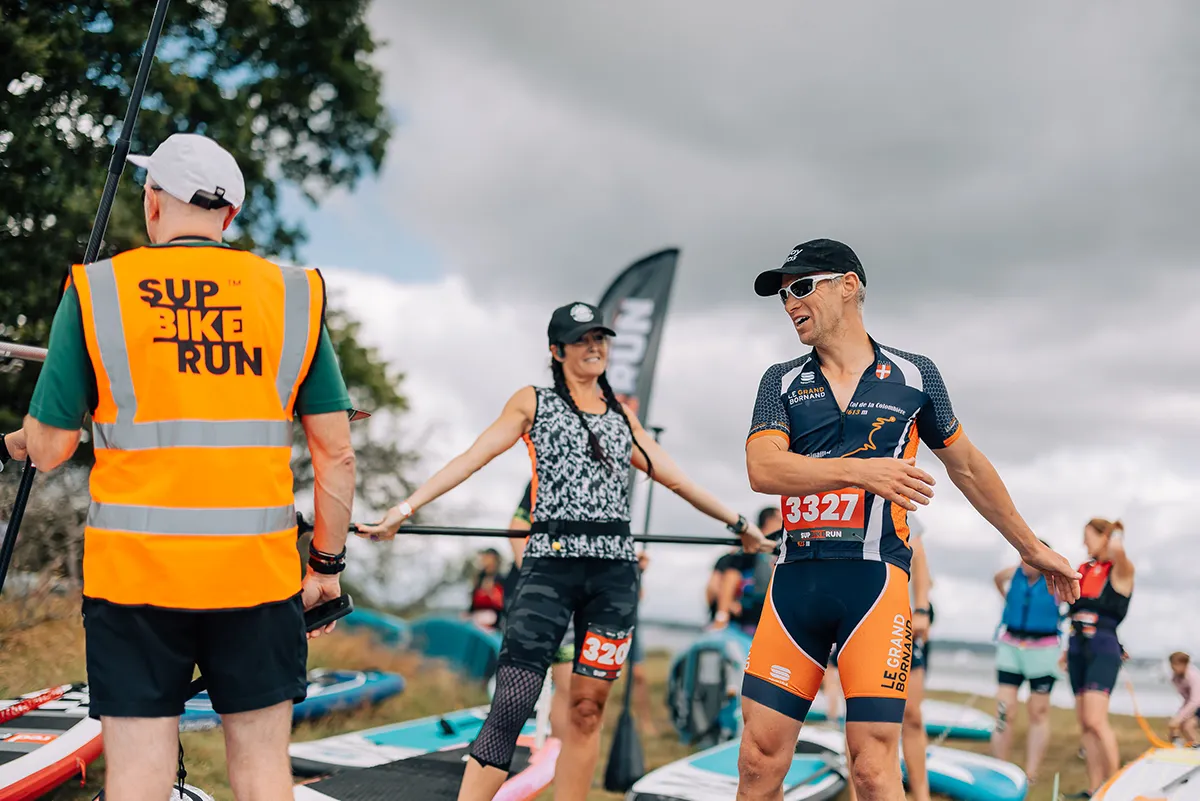
Some team days are forgotten before the coach gets back to the office. A team building adventure race is not one of them. Put people on paddleboards, bikes and trails, give them a shared goal, and the usual workplace roles start to shift in the best possible way. You see who keeps calm, who lifts the group, who thinks ahead, and who finds another gear when it matters.
That is exactly why this format works so well for companies that want more than a polite lunch and a PowerPoint. A good adventure race puts teamwork under just enough pressure to make it real, while still feeling exciting, inclusive and genuinely enjoyable. Done well, it is less about forcing “bonding” and more about giving people a challenge worth taking on together.
Why a team building adventure race works
The strongest team days are built around a shared experience, not a staged icebreaker. Adventure racing creates that naturally. Teams have to communicate clearly, pace themselves, adapt to changing conditions and make decisions on the move. Those are workplace skills, but they show up far more honestly outdoors than they do around a boardroom table.
There is also something powerful about stripping things back. Put people in the open air, away from inboxes and job titles, and you get a clearer sense of how they operate as a group. The confident talker does not always become the best leader. The quieter colleague often turns out to be the one with the steadiest judgement. People notice each other differently when they are navigating a course, helping one another over the finish line, or sharing the effort across multiple disciplines.
For active teams, the appeal is obvious. It is a challenge, not a chore. For mixed-ability groups, the key is in how the event is designed. The best races are demanding enough to feel worthwhile but structured well enough that newcomers are not left behind. That balance matters. If the day feels too easy, it lacks energy. If it feels too extreme, people switch off before they start.
What makes a great team building adventure race
A great event starts with the format. Multi-discipline racing works particularly well because it asks for different strengths across the day. A team member who feels less confident on a bike might come into their own on the trail. Someone who has never tried paddleboarding may still become the person who keeps morale high and the team organised through transitions.
Stand up paddleboarding, cycling and trail running make a strong combination because each discipline tests something different without losing the fun factor. Paddleboarding adds novelty and a sense of shared adventure. Cycling brings momentum and distance. Trail running introduces grit, pacing and support under fatigue. Together, they create a challenge that feels bigger than a standard corporate sports day without tipping into elite-only territory.
The second ingredient is structure. People want an event that feels adventurous, but they also want to know it is professionally organised. Clear briefing, route marking, safety cover, timing, kit guidance and event support all matter. A relaxed atmosphere works best when it is backed by serious planning. That is what gives participants the confidence to throw themselves into it.
The third ingredient is inclusivity. That does not mean removing the challenge. It means building an experience where different fitness levels and experience can still find a place. Team formats, relay options and supportive event crews all help. The aim is to create a proper sense of achievement for everyone involved, not just the fastest few.
Team building adventure race formats to consider
Not every company needs the same setup, and that is where the format really matters. If your group is already sporty, a full team challenge with all members completing each stage can create a brilliant shared test. If your team includes a wider mix of ages, confidence levels and fitness backgrounds, a relay format is often the smarter choice. It keeps the energy high while allowing people to play to their strengths.
Timed races work well if your team enjoys a competitive edge. There is something satisfying about chasing checkpoints, transitions and finish times. But it depends on the group. Some teams engage more with collaborative objectives than pure speed, especially if the goal is connection rather than internal rivalry.
You can also shape the day around experience as much as performance. A race with a festival feel, supportive marshals, a lively event base and space to recover afterwards tends to land well with corporate groups. People want the buzz of the challenge, but they also remember the atmosphere around it – the start-line nerves, the finish-line stories, the muddy trainers, the post-race laugh over a coffee or a cold drink.
How to make it right for your team
The first question is not “How hard should it be?” but “Who is this for?” A sales team full of cyclists will need something different from a mixed office group where half the participants have never entered an event before. Be honest about the starting point. The best corporate adventure races meet people where they are, then give them a little more than they expected from themselves.
That is why clarity matters early on. Participants need to know what the day involves, what kit they need, how the disciplines work and what support is in place. A vague brief creates anxiety. A clear one builds excitement. People are much more likely to commit when the challenge feels understandable and properly managed.
It also helps to think beyond the race itself. Travel, parking, changing facilities, catering, spectator space and accommodation can make or break the experience. If the event includes options like camping or an easy base for the team to gather before and after, it stops feeling like a rushed away day and starts feeling like a proper adventure.
If you are planning for a corporate group, there is real value in choosing an event partner that knows how to balance personality with logistics. The day should feel bold and different, but the infrastructure behind it should be rock solid. That combination is where trust is built.
The trade-off: competition versus inclusion
This is the point many businesses get wrong. They assume a team day has to be either fiercely competitive or broadly accessible. In reality, the best team building adventure race sits somewhere in the middle.
A bit of competition is useful. It sharpens decision-making, gives the day momentum and creates stories people will bring back to work. But if the format rewards only the fittest and most experienced, you lose half the room. On the other hand, if the challenge is watered down too much, the sense of achievement disappears.
The answer is to design for layered success. Some teams will chase the clock. Others will aim simply to finish well together. Both should feel they have done something worth talking about. That is why mixed formats, supportive pacing and clear event categories can make such a difference.
For many organisations, the sweet spot is an event that looks and feels like a real race, but welcomes people in with enough support that they can rise to it. That is where confidence grows. It is also where teams surprise themselves.
Why outdoor challenge beats the usual away day
There is a reason outdoor events stay with people. They demand presence. Nobody is half-checking emails while balancing on a board, grinding up a climb or finding their legs on a trail section. You are in it, with your team, dealing with what is in front of you.
That kind of shared focus is rare. It gives people a break from routine, but it also reveals something useful. Teams that can encourage each other under pressure outdoors often take that same resilience back into work. Not in a forced “lessons learned” way, but in a more believable one. They have done something hard together, and that changes the dynamic.
It helps, too, that an adventure race simply feels more alive than standard team-building formats. It has movement, scenery, effort, laughter and a finish line. It gives people a genuine story rather than a compliance exercise dressed up as fun.
For businesses looking for something bolder, this is where an event like SUPBIKERUN fits naturally. The format is unconventional, the atmosphere is welcoming, and the race experience is built to feel like a challenge with personality rather than a stiff, old-school endurance test.
Choosing a team building adventure race people actually want to join
The real test is simple. When the invite lands, do people feel obligation or anticipation? The right event gets people talking before race day even arrives. It feels like something worth showing up for.
That means choosing challenge with character. A good route matters. A supportive event crew matters. Safety and structure matter. But so does the feeling of it all. If the day has energy, purpose and a sense of shared adventure, people buy in. If it feels generic, they do not.
The best team building adventure race leaves people tired, buzzing and a bit proud of themselves. It gives companies a stronger team day, but more importantly, it gives teams a proper experience – one they will still be talking about long after the mud has washed off. If you want people to connect, give them something real to take on together.