
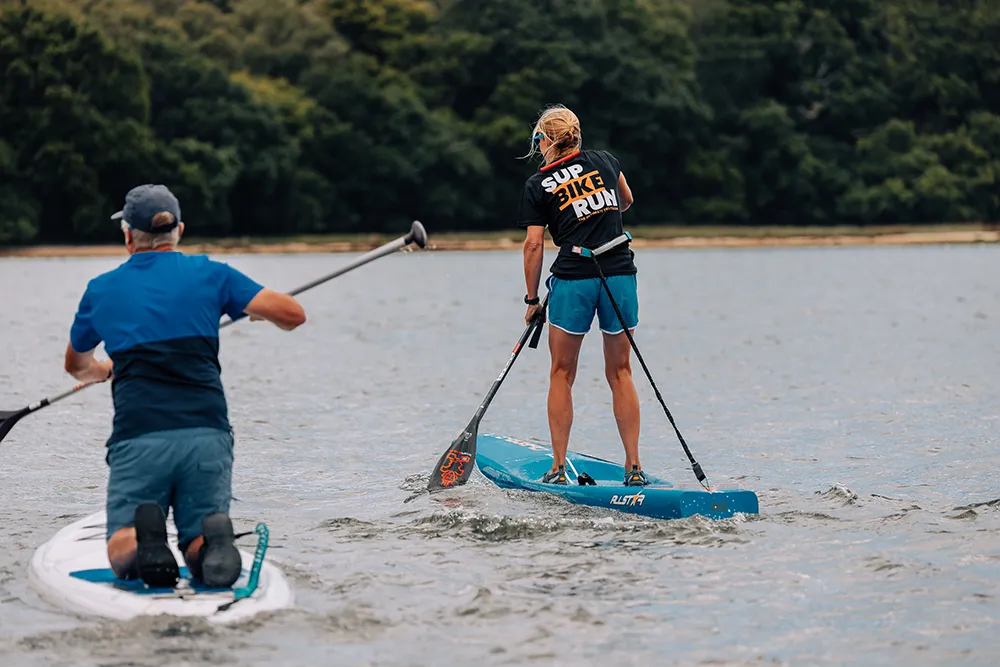
You do not need to train like a full-time athlete to get ready for this kind of race. You do need to be honest about what the day asks of you. If you are wondering how to train for sup bike run, the answer is not simply doing more miles. It is about blending three disciplines, handling transitions, and building confidence across water, wheels and trails without draining the fun out of it.
That matters because SUP Bike Run is not a standard triathlon with one discipline carrying the whole day. A strong cyclist who ignores paddle technique will leak time and energy early. A keen paddleboarder who skips trail running can feel great until the final section bites back. The best preparation is balanced, practical and built around consistency.
How to train for SUP Bike Run without overcomplicating it
Start by training for the event you are actually entering, not the fantasy version in your head. Most recreational athletes do better with three focused sessions a week and one longer mixed session than with a packed plan they cannot maintain. If you already ride or run regularly, your first job is usually to bring the paddle up to match. If you paddle well but your legs are less prepared, the bike and run need more attention.
A good week has one paddle session, one bike session, one run session and one brick or combination session. That gives you enough exposure to each discipline while teaching your body to change gears. Over time, increase duration or intensity gradually, but not both at once. You are training for a challenging adventure day, not trying to win a suffering contest in March.
Build the engine first
Before you chase speed, build aerobic fitness. That means steady work at a pace where you can still talk in short sentences. It is not glamorous, but it is what lets you hold form when your heart rate rises and your legs start asking awkward questions.
For paddling, that could be 40 to 60 minutes of continuous work on flat water, focusing on rhythm and efficiency. For cycling, an easy to moderate ride of 60 to 90 minutes does plenty of good. For running, especially on trails, start with manageable outings and add time carefully. Trail running loads the body differently from tarmac, so your fitness might feel better than your calves and ankles do.
If you are newer to endurance sport, a simple rule helps. Train often enough to feel familiar with each discipline, but finish most sessions feeling like you could have done a little more. Consistency beats heroics.
Technique matters more on the board than many expect
The paddle leg can either set you up for a strong race or leave you chasing the day. Fitness helps, but technique saves energy. If your stroke is short, rushed or all arms, you will work far harder than necessary.
Spend time on posture, reach and clean exits of the paddle. Keep your core engaged and let your hips contribute to the stroke rather than trying to muscle everything through your shoulders. Practise paddling into wind and chop if you can, because calm-water confidence does not always transfer when conditions get lively.
It is also worth practising remounts and starts. You do not need to become a stunt paddler, but being calm if you wobble or fall in can save stress and time. Confidence is part of race fitness.
Make your bike training race-specific
A long road ride is useful, but race preparation gets better when the training matches the demands of the course. If your event includes off-road or mixed terrain, train on surfaces that force you to handle changing grip, short climbs and shifting cadence. If you only ride smooth roads, the first technical section can feel like a rude surprise.
Use one weekly ride to build endurance and another to include efforts. Short hill repeats, blocks at tempo pace, or bursts above race effort all help. The point is not to smash every ride. The point is to be comfortable changing pace without blowing up.
Bike handling is part of fitness too. Cornering, climbing out of the saddle, eating while riding and staying relaxed over uneven ground all save energy. Small skills become big advantages when your heart rate is already elevated.
Train your run legs for tired starts
The run is where people often discover whether their training was well stitched together. Even strong runners can struggle if they have only trained on fresh legs. A SUP Bike Run finish asks you to run when your upper body and legs are already carrying the day.
That is why brick sessions matter. Try a bike followed by a short run, or a paddle followed by a bike if your logistics allow. The first ten minutes often feel awkward, and that is exactly the point. The more familiar that transition becomes, the less mentally draining it is on race day.
Trail-specific work helps too. Uneven ground, short sharp climbs and descents all demand stability as much as speed. Include some hill running and some time on proper trails rather than relying only on flat pavement miles.
A simple weekly structure that works
You do not need a spreadsheet worthy of a pro team. For most entrants, a repeatable rhythm works best. Paddle once with a focus on technique and steady effort. Ride once longer and steadier, then once shorter with some harder blocks. Run once on trails at an easy to moderate effort. Add one mixed session at the weekend, such as paddle to bike or bike to run.
If five sessions sound too much, reduce the harder work, not the routine. A short, regular touchpoint with each discipline is more useful than cramming everything into the weekend. And every third or fourth week, back off slightly to absorb the work.
Strength, recovery and the bits people skip
Adventure events reward durable athletes. That does not mean spending hours in the gym, but a little strength work goes a long way. Focus on legs, glutes, core, back and shoulders. Squats, lunges, deadlift variations, rows and anti-rotation work all support better paddling posture, stronger riding and more resilient running.
Recovery is not optional admin. Sleep, food and easy days are part of the plan. If your resting heart rate climbs, your mood drops and every session feels flat, you probably need to pull back. Better to arrive slightly undertrained and fresh than exhausted from trying to prove a point in training.
Nutrition deserves practice as well. Work out what you can eat and drink during longer sessions. Waiting until race morning to discover that your stomach hates a certain gel is a poor way to spend an otherwise brilliant event.
Kit familiarity beats fancy upgrades
There is always a temptation to buy speed. Sometimes better kit helps, but familiarity usually helps more. Train on the board, bike, shoes and clothing you are likely to use on the day. That is how you notice chafing, awkward footwear, fiddly hydration packs or anything else that could become irritating after an hour or two.
Transitions are worth rehearsing as well. Know how you will rack, change, refuel and move on. You do not need military precision, but you do want calm efficiency. A relaxed event atmosphere is part of the appeal, yet smooth preparation still pays off.
How to train for SUP Bike Run if you are short on time
If life is busy, focus on frequency and specificity. Three quality sessions can move you forward: one paddle, one bike-run brick, and one longer endurance session that rotates between disciplines. Add strength in short blocks at home. Keep the plan realistic enough that you can stick to it for eight to twelve weeks.
It also helps to train the discipline that worries you most when you are freshest. If paddling is your weak link, do not always leave it until the end of a busy week. Put it where your energy and concentration are best.
And if you are coming from a single-sport background, expect a temporary wobble. Cyclists often find the paddle more technical than expected. Runners can underestimate the bike. Paddlers may feel strong early and discover that leg endurance is another story. That is normal. The goal is not perfection across all three. It is competence, confidence and enough depth to enjoy the challenge.
There is a reason this format attracts people who want more than another standard start line. It asks for grit, adaptability and a sense of adventure, but it also rewards smart training and a steady head. Put the work in consistently, practise the joins between disciplines, and keep one eye on enjoyment as well as performance. When race day arrives, you want to feel ready to take it on, not relieved that training is finally over.