
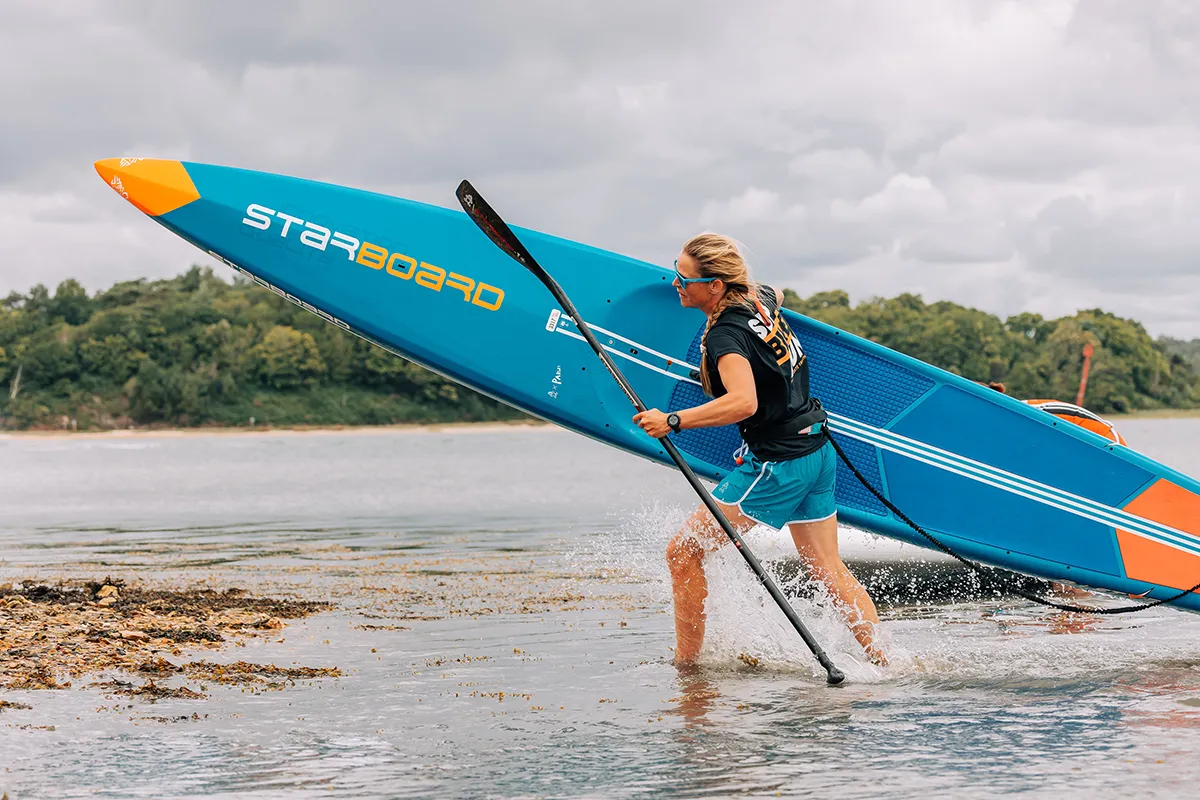
The start line feels different when it is floating.
That is the first thing most people notice about stand up paddleboard races. You are not boxed into lanes, staring at a painted line on tarmac, or waiting for a whistle in a leisure centre pool. You are balancing on open water, reading the wind, watching the chop, and trying to settle your nerves while everyone around you does exactly the same. It is competitive, yes, but it also feels bigger than that – more like an adventure with a timing chip.
That is a big part of the appeal. Stand up paddleboard racing sits in a sweet spot between endurance sport and outdoor culture. It gives you the challenge of a proper event, but with a looser, more natural energy than many traditional race formats. For plenty of people, that is exactly the point.
Why stand up paddleboard races keep pulling people in
A good paddleboard race is not just about who is strongest. It rewards judgement, rhythm, balance, pacing and the ability to stay calm when conditions turn awkward. Flat water can turn lumpy. A clean buoy turn can save seconds. A small mistake in stance can cost far more energy than people expect.
That mix is what makes the format so addictive. Two athletes with similar fitness can have very different races depending on how well they handle water movement, board control and race-day pressure. It feels physical, but never one-dimensional.
There is also the atmosphere. Paddle events tend to attract a crowd that loves challenge without needing all the ceremony. People are serious about performing well, but they are usually just as interested in the day out, the setting and the shared experience. You get competition, but not always the stiffness that can come with more conventional endurance scenes.
For UK racers especially, that matters. We do not always get postcard conditions. Sometimes the wind turns up. Sometimes the water is cold enough to sharpen your focus very quickly. Sometimes the forecast behaves like a forecast in Britain. Yet that unpredictability is part of the attraction. You are not racing in a vacuum. You are racing in real conditions.
What a stand up paddleboard race actually tests
At first glance, the sport can look simple. Stand on a board, paddle hard, get to the finish. In practice, races ask much more from you.
Balance under pressure
Training on calm water is one thing. Holding form while your heart rate climbs and other paddlers throw wash around you is another. Stability is not just about staying dry. It affects how efficiently you apply power with every stroke.
Technique, not just effort
You can muscle your way through a short distance, but inefficient paddling catches up with you fast. Clean catch, good posture and controlled recovery make a real difference over time. In races, technique is often what separates paddlers who fade badly from those who hold their pace.
Tactical awareness
Race lines matter. So does your start. So do buoy turns, spacing and how you respond to changing conditions. On open water, the fastest route is not always the most obvious one. That is especially true when wind and current begin to influence the course.
Mental composure
If you wobble, miss a stroke, or lose position early, panic helps nobody. The best racers reset quickly. They keep moving, trust their pace and avoid wasting energy on frustration.
Different formats, different demands
Not all stand up paddleboard races feel the same, and that is one reason the scene has grown. There is room for very different kinds of competitor.
Sprint races are sharp, fast and intense. They suit paddlers who enjoy explosive efforts, fast starts and aggressive positioning. They can look chaotic from the outside, but they reward precision.
Distance races are more measured. Endurance, pacing and water reading become increasingly important. This is often where recreational athletes discover they can compete well, even if they are not the quickest off the line.
Technical races add another layer. Expect multiple turns, shifting directions and a stronger emphasis on board handling. These can be brilliant to watch and even better to race if you like problem-solving under pressure.
Then there are multi-discipline events, where paddleboarding becomes part of a wider challenge. That format changes the mindset completely. Suddenly, your paddle leg is not an isolated performance. It is the opening move in a bigger day, and that creates a very different type of excitement. It is one reason events such as SUPBIKERUN appeal to people who want more than a single-discipline race.
Who stand up paddleboard races are really for
There is a persistent myth that races are only for elite paddlers with specialist kit and years of experience. That puts off a lot of people who would actually enjoy them.
The truth is more encouraging. Some races are highly competitive, of course, and the front end of the field can be seriously quick. But many events are built to welcome a much broader mix of participants. If you can paddle confidently, manage your effort and handle event-day nerves, there is every chance you can line up and have a strong day.
That does not mean every race suits every paddler. It depends on distance, conditions, cut-offs, safety cover and course design. A short inland event may feel accessible for a newcomer. An exposed coastal race in rough weather is a different proposition. The smart move is not to ask, “Am I good enough for racing?” but “Which race format suits me right now?”
That shift in thinking opens the door for far more people.
How to prepare without overcomplicating it
You do not need a laboratory approach to get race-ready, but turning up underprepared is a rough way to learn. The basics matter.
Time on the board comes first. General fitness helps, but race confidence is built on actual paddling. You need enough experience to feel stable when conditions are less than perfect and enough technical awareness to keep moving efficiently when tired.
After that, practise race-specific efforts. Short hard intervals help with starts and surges. Longer steady pieces build the engine you need for sustained pace. If your event includes turns, practise turns. If the water is usually windy, train in wind when you can. There is no great mystery here – train for what you expect to face.
Kit should support you, not distract you. Plenty of paddlers obsess over marginal gains when their bigger opportunity is simply becoming more comfortable on the board they already own. A race board can help in the right hands, but it can also be unforgiving. If you are tense and unstable, theoretical speed does not count for much.
Clothing needs a bit of realism too. In Britain, comfort and safety often beat minimalist race aesthetics. Dress for the actual conditions, not the idealised version in your head.
What makes race day brilliant
The best events understand that people remember more than their finish time.
Yes, the course matters. Timing matters. Safety cover matters. Clear briefing, sensible logistics and good marshalling matter a great deal. Nobody wants chaos disguised as adventure. But the races that stick with people usually get the wider experience right as well.
That means a start area with energy. It means support crews and volunteers who know what they are doing. It means an atmosphere that welcomes first-timers without diluting the challenge for experienced racers. It means spectators can follow the action and participants feel looked after from registration to results.
This is where paddleboard racing comes into its own when event organisers treat it as an experience rather than a transaction. People want to test themselves, but they also want a day worth talking about afterwards.
Why this format works so well in the UK
We have the terrain for it. Lakes, reservoirs, rivers, coastline and trail networks create huge scope for varied events. We also have an audience that increasingly wants sport to feel social, outdoorsy and a bit less boxed-in.
That does not mean everyone is turning away from traditional triathlon or road racing. It simply means there is growing appetite for events that feel more adventurous while still being properly organised. Paddleboard racing fits that shift neatly. It offers challenge, scenery and a stronger sense that the environment is part of the test.
For busy adults, that is powerful. Training for something unusual can feel more motivating than grinding away for another familiar start line. For groups, it can be even better. Shared challenge lands differently when it happens on water, in the open air, with a bit of unpredictability thrown in.
The real reason people come back
Some return to improve their time. Some want better race craft. Some simply want another crack at conditions that beat them last time. But underneath all that, many come back because stand up paddleboard races make endurance sport feel alive.
They ask you to be fit, adaptable and switched on. They reward grit, but not only grit. They give you a proper challenge without stripping away the fun. And when an event gets the balance right – tough course, friendly crowd, strong organisation, memorable setting – it becomes more than a result on a screen.
If you have been looking for a race format that feels less ordinary and more like an experience you will actually want to repeat, this is a very good place to start.