
The best adventure days start before the start line. A well-packed bag means less faff in transition, more confidence on the water, and enough comfort left in your legs to enjoy the trail. This guide to paddle bike run equipment is built for athletes who want to turn up prepared without buying a shed-load of specialist kit.
Paddle, bike and run events reward sensible choices over shiny extras. Your kit needs to work across changing terrain, unpredictable British weather and the practical reality of moving from water to wheels to trails. Start with the essentials, practise with them before race day, and always check the event rules for the equipment requirements that apply to your route.
Paddle bike run equipment: start with the non-negotiables
Your paddle board, bike, helmet, footwear and PFD (personal flotation device) are the foundations. Get those right first. Everything else should make the day safer, warmer, simpler or more enjoyable.
For the paddle leg, you will need a suitable stand-up paddle board, a paddle, a leash and a buoyancy aid. An inflatable board is a brilliant option for many recreational athletes: it is easy to transport, forgiving on the water and familiar to anyone who paddles on weekends. A hard board can be quicker, but only if you are already comfortable handling, carrying and transporting it. Race day is not the place to discover that your board does not fit on the roof rack.
Choose a paddle that feels manageable rather than aggressively long. A light paddle saves your shoulders over distance, but good technique matters far more than chasing marginal gains. Your leash must be appropriate for the venue and conditions, while a properly fitted buoyancy aid should allow full shoulder movement without riding up around your ears. For comfort, enjoyment, and safety we highly recommend the Spinlock ALTO safety pack.
For cycling, bring a road bike or mountain bike that suits your selected route and is in safe working order. The fastest bike is the one you can ride confidently on the surface in front of you. A road bike rolls beautifully on tarmac, while wider tyres, more grip and a relaxed position can make a mountain bike or gravel-style set-up the wiser call on rougher ground. A certified helmet is essential, full stop.
For the run, trail shoes are usually the sensible choice where paths are uneven, wet or loose underfoot. Look for a secure heel fit and enough grip for the ground, not the deepest lugs you can find. Heavy mud shoes can feel brilliant on a boggy climb and clumsy on firm tracks. It depends on the course and the forecast, so train in the shoes you plan to race in.
What to wear through all three disciplines
The cleverest clothing choice is rarely the most technical-looking one. It is the layer that still feels good when you are damp, breathing hard and changing disciplines in a hurry.
Many athletes choose a tri suit or close-fitting sports top and shorts for the whole event. This keeps transition simple and avoids wrestling with clothing over wet skin. If you prefer more coverage for paddling, a lightweight technical top can work well, provided it will not hold water or chafe once you are on the bike. Typically, if conditions are fair, what you wear for the bike, is what you wear for the duration.
Avoid cotton. It gets wet, stays wet and can turn a great day into a long one. Instead, choose quick-drying synthetic or merino layers that you have worn on longer training sessions. For cooler conditions, a thin windproof layer is one of the most useful items in your bag. It takes up little space but can make a huge difference after leaving the water or descending on the bike.
A wetsuit is a personal decision unless event guidance makes one compulsory. It adds warmth and confidence in cold water, but it can feel restrictive and takes time to remove. If you wear one, practise paddling in it first and make sure you can get out of it without a dramatic transition wrestle. A wetsuit designed for swimming may feel different when you are standing and using a paddle, so comfort through the shoulders is worth testing.
Sunglasses are useful in bright conditions, particularly on open water and exposed roads. Choose a secure pair with clear or low-light lenses if the day looks overcast. A cap or visor can help on the run, but only if it does not become a soggy nuisance after the paddle.
Socks, gloves and small comforts
Socks are a judgement call. Some athletes save seconds by cycling without them; most recreational competitors will be happier putting on dry, comfortable socks before the bike. Roll them down in advance so they are easy to pull on with damp feet.
Paddling gloves can protect hands, but they are not automatically better. If you have not trained in them, leave them at home. The same goes for padded cycling gloves. They are useful for longer or rougher rides, yet a new pair can create hotspots. Familiar kit wins.
Set up a transition area that works under pressure
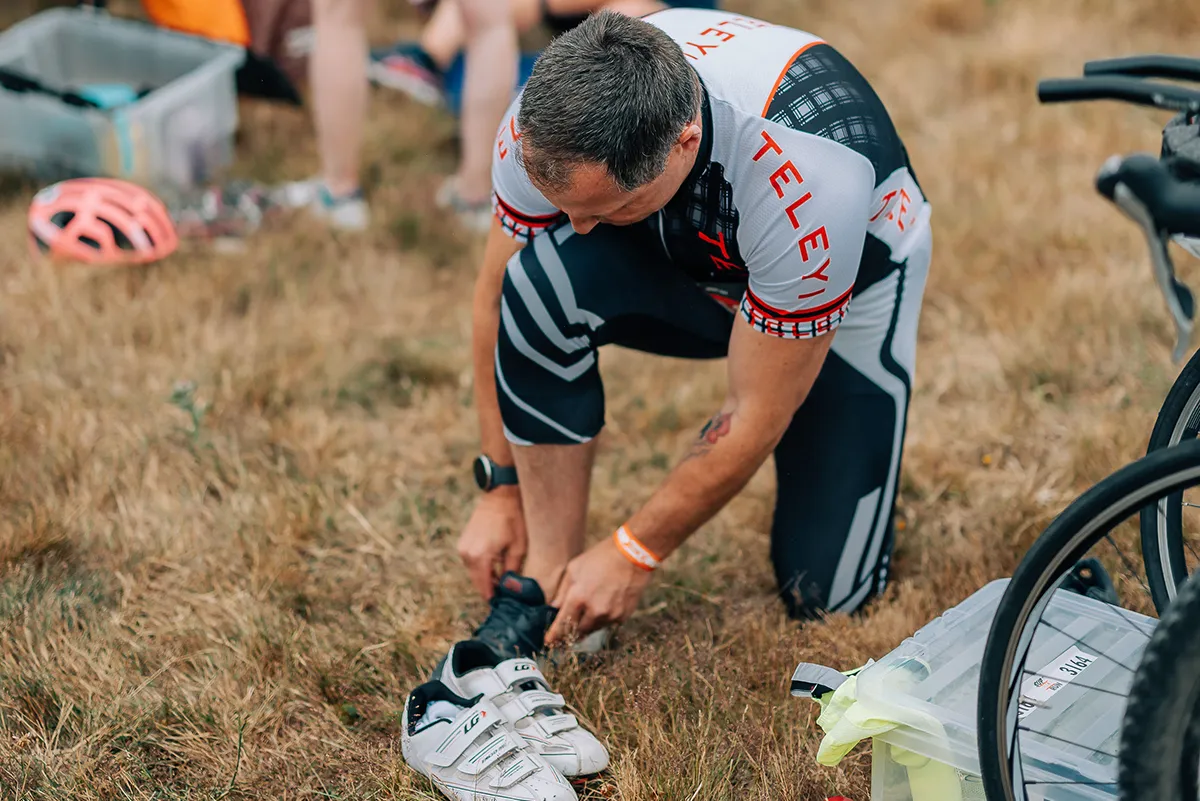
A tidy transition is free speed, but more importantly, it keeps your head clear. Lay out equipment in the order you will use it: bike shoes or trainers, helmet, race number if required, nutrition, then run kit. Put small items inside your helmet so they cannot disappear into the grass.
Use a small towel to define your space and dry your feet. Keep a spare layer and a dry pair of socks in a waterproof bag. If rain is likely, cover shoes rather than hoping they will stay dry. A simple plastic bag or waterproof kit bag can save a surprisingly miserable bike leg.
Before you leave home, check your bike with a short, practical routine: tyres inflated, brakes working, chain lubricated, gears shifting and bottles secure. Carry the means to fix a puncture, including a spare tube or tubeless repair option, tyre levers and a pump or CO2 inflator. Know how to use it. The kit itself will not rescue a flat tyre if it has never left its packaging.
Fuel and hydration without overcomplicating it
You do not need a pocket full of experimental gels to enjoy a paddle bike run. You do need enough fluid and carbohydrate for the time you expect to be moving.
Bring a bottle or hydration pack that you can comfortably use on the bike. For longer efforts, carry easy-to-open food you already know agrees with you: gels, chews, bars or small real-food options all have a place. Start eating before you feel empty. By the time your energy drops sharply, it is harder to recover your rhythm.
Conditions change the calculation. A cool day can still leave you dehydrated, while heat and wind increase what you need to drink. If the event provides feed stations, treat them as support rather than the only part of your plan. Pack what you rely on, then enjoy the boost of an extra top-up when it is available.
Do not forget safety, identification and post-race kit
A few small items make a big operational difference. Carry any required race identification, your phone if event guidance permits it, and emergency contact details. Waterproof phone protection is wise around the paddle stage. If you use prescription glasses, consider a retaining strap or a spare pair waiting in transition.
After the finish, your priorities will change quickly. Pack warm layers, dry underwear, a towel, comfortable footwear and something easy to eat. You may feel fine while the adrenaline is high, then get chilly once you stop moving. A changing robe or oversized warm layer is not glamorous, but it earns its place every time.
If you are travelling to an event weekend, label your kit and make a separate checklist for loading the car. Boards, paddles, helmets and shoes are exactly the sort of items that get left by the front door when excitement takes over.
A final check before race morning
Do one full rehearsal. Inflate or prepare your board, pack your transition bag, lay out your clothes and ride or run in the set-up you intend to use. You will spot what is missing, what rubs and what takes too long.
At SUPBIKERUN, the goal is not to look like a professional athlete in a catalogue. It is to arrive ready for a huge day outdoors, meet the challenge on your terms and share the finish-line feeling with people who came for the same reason. Choose kit you trust, keep it simple, and leave room in your bag for a dry layer and an even bigger grin.