
A fruit bowl in the kitchen will not fix a team running on empty. Neither will another wellbeing webinar squeezed between back-to-back calls. The most exciting corporate wellness trends are moving away from passive perks and towards experiences that get people moving, talking and doing something memorable together.
For active teams, that is good news. Wellness no longer has to mean a step-count competition or a discount code for a meditation app. It can mean fresh air, a proper challenge, muddy trainers, a shared finish line and the kind of conversation that does not happen in a meeting room.
Corporate wellness trends are becoming more active
Employers are under pressure to support wellbeing in a way people will actually use. The answer is not one-size-fits-all. A keen cyclist, a first-time trail runner and someone who simply wants a reason to spend more time outdoors will all arrive with different confidence levels.
That is why participation matters more than performance. The strongest workplace wellbeing ideas give people a choice of challenge, remove the fear of being judged and create a clear sense that everyone belongs. A corporate away day where only the fittest few feel comfortable is not a wellness initiative. It is just another exclusionary event with branded T-shirts.
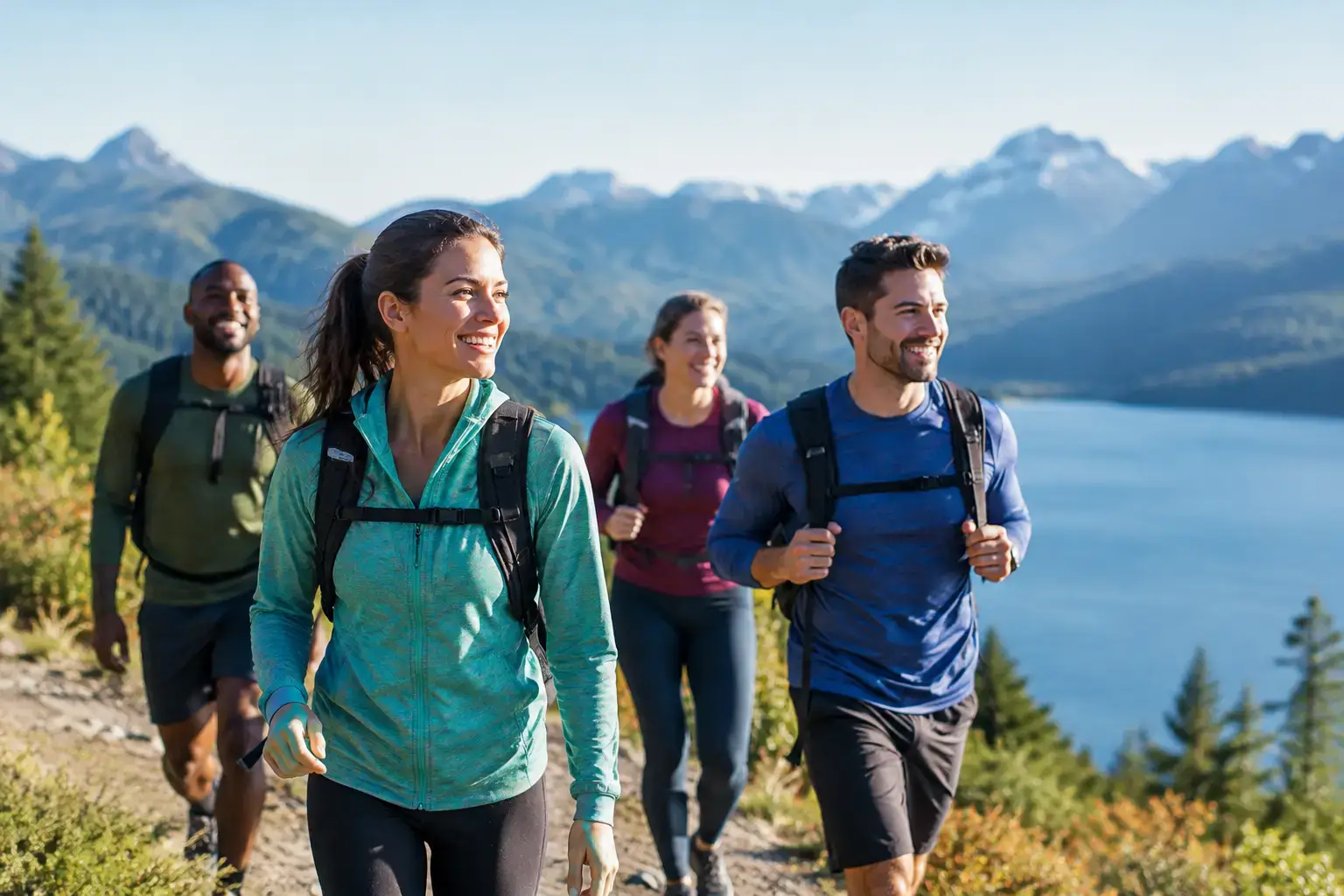
Outdoor activity works because it brings the body and mind into the same place. There is less temptation to check emails, fewer formal hierarchies and a practical reason to encourage one another. Whether the task is navigating a trail, getting balanced on a paddleboard or pushing through the last climb on a bike, people quickly see the value of steady support.
The shift from perks to shared experiences
Wellness benefits still have a role. Flexible working, mental health support and access to fitness facilities can make a real difference, particularly when they are easy to use and backed by good management. But they can be invisible, individual and easy to postpone.
A shared outdoor challenge is different. It creates a date in the diary and a reason to train, plan and turn up. It gives colleagues a story to take back to work. More importantly, it can help people meet beyond their usual department, job title or screen name.
This does not mean every company needs to send its whole workforce on a brutal endurance mission. The best approach depends on the group. A small, sport-loving team may be ready for a demanding multi-discipline event. A wider business may need entry-level options, relay formats, flexible distances or a mix of active and supporting roles. Volunteers, cheer squads and event-day helpers can be part of the experience too.
The goal is not to manufacture an extreme adventure. It is to offer a challenge people can own.
Why nature belongs in workplace wellbeing
There is a particular kind of reset that comes from being outside with a clear task ahead. A hill does not care about your inbox. A trail gives immediate feedback. On the water, you have to pay attention to balance, breathing and what is right in front of you.
That focus is valuable for people whose working days are full of notifications and competing priorities. Outdoor challenge gives teams permission to step away from the usual pace without making wellbeing feel soft or vague. It feels purposeful because it is purposeful.
It also makes achievement visible. At an event, every participant can see progress unfold: the first paddle strokes, the bike transition, the friend waiting at the top of the hill, the finish-line grin. Those moments build confidence in a way a slide deck rarely can.
For businesses, the return is not limited to a single day. Colleagues who have faced a challenge together often bring more openness back into everyday work. They know who stays calm under pressure, who lifts the mood and who quietly helps others get moving. That is team knowledge worth having.
Challenge should be inclusive, not intimidating
There is a fine line between exciting and overwhelming. Corporate wellness programmes can miss the mark when they assume everyone has the same fitness level, spare time, budget or appetite for risk.
A better model offers clear information well before the event. People need to know what the activity involves, what kit is required, what support is available and where they can adapt the challenge. Beginner-friendly guidance, realistic training suggestions and an organised event structure all make a huge difference to whether someone says yes.
It is also worth being honest about the trade-off. A more adventurous experience may require more preparation than a casual team lunch. That is part of its appeal, but it must be matched with good planning. Give people time to train, make participation optional and avoid presenting physical challenge as a test of loyalty.
The most successful teams tend to create their own version of success. One person may want a podium place. Another may be delighted to paddle confidently for the first time. Someone else may be there to support colleagues and enjoy a weekend outdoors. All of those reasons count.
Build momentum before event day
The event should not be the only moment a wellbeing plan comes alive. Give participants a simple reason to connect in the weeks beforehand. Arrange an easy after-work walk, share a cycling route, set up a relaxed training meet-up or encourage colleagues to swap practical tips.
Keep the tone light. No one needs another performance dashboard. A few shared sessions can help people feel less daunted while building anticipation. They also make it easier for newcomers to ask questions before nerves become a reason to drop out.
For teams entering an adventure triathlon, training together can become part of the reward. Paddle boarding, cycling and trail running each bring a different energy, which means people can find the discipline that sparks their interest. It is active, social and far more memorable than another lunchtime lecture.
What employees now expect from wellbeing
People are increasingly alert to the gap between a company talking about wellbeing and a company making space for it. A glossy initiative will fall flat if workloads remain unmanageable or employees feel guilty for taking time away from their desks.
That is why the best corporate wellness trends sit alongside, rather than replace, sensible working practices. Outdoor events can strengthen culture, but they are not a shortcut around burnout, poor leadership or unrealistic deadlines. Use them as part of a wider commitment: encourage breaks, respect boundaries and make support accessible all year.
When the foundations are in place, a shared challenge can add genuine energy. It signals that wellbeing is not only about fixing problems. It is also about creating more of the experiences that make people feel capable, connected and alive.
Make the day feel like an adventure, not an obligation
A corporate group day succeeds when logistics are handled properly and the atmosphere still feels free-spirited. Participants should know where to go, what to bring and who can help, while still getting the thrill of doing something outside their normal routine.
That balance matters at SUPBIKERUN. Combining paddle boarding, cycling and trail running gives teams a proper adventure, while clear event organisation and support make the challenge feel achievable. It is a chance to swap office small talk for a shared mission and discover what the team is made of beyond the desk.
The details shape the experience. Consider travel, changing facilities, food, kit hire, weather plans and how colleagues of different abilities will be included. If the event is in a destination worth staying for, an overnight trip or camping option can add to the sense of escape. Just make sure nobody is pressured to join every part of the social side.
Then leave room for the moments you cannot schedule: the unexpected confidence boost, the colleague who turns out to be brilliant on a bike, the finish-line photo everyone wants to share. Choose a challenge with enough edge to feel real, enough support to feel safe and enough space for every person to take something positive from it.