Turning up to your first paddle event with borrowed kit is a very different feeling from strapping your own board to the roof and knowing exactly how it handles. That is usually what people are really asking when they ask, do you need your own paddleboard? Not whether ownership is nice in theory, but whether it will genuinely make the sport easier, better and more enjoyable.
The honest answer is no, not always. Plenty of people start by hiring, borrowing or joining sessions where the board is provided. That can be the smartest move if you are still working out how often you will paddle, what type of water you enjoy, and whether you want relaxed sessions, fitness training or race day adventure.
But there is also a point where having your own board stops being a luxury and starts feeling like part of the experience. If you are training regularly, entering events, or building your weekends around water time, ownership can make everything simpler.
Do you need your own paddleboard for starting out?
If you are completely new to paddleboarding, buying straight away is not a requirement. In fact, it can be a slightly expensive guess. New paddlers often do not yet know whether they prefer a wider all-round board for confidence, a touring shape for distance, or something faster and narrower once technique improves.
Hiring first gives you room to test the sport without pressure. You learn basic balance, paddling rhythm and confidence on the water before committing money and storage space. It also helps you avoid buying the wrong type of board just because it looked good online.
For casual paddlers, that might be enough. If you go out a handful of times each summer on holiday or during warm weekends, hiring can remain the practical option. You skip transport, maintenance and the upfront cost, and you still get the fun.
The trade-off is consistency. Hired boards vary. One session you may get something stable and friendly, the next something soft, slow or badly suited to your size. That makes progress less predictable.
When owning a board starts to make sense
Once paddleboarding becomes part of your routine, owning your own board usually becomes the better call. Not because it is more serious or more impressive, but because it removes friction.
You are no longer checking availability, queuing at a hire centre or adjusting to unfamiliar equipment every time you want to get on the water. You can train when conditions suit you, paddle at your own pace and build proper familiarity with one setup.
That matters more than many people expect. Confidence grows faster when your board feels known. You learn how it turns, how it tracks, where it feels stable and how it responds when the wind gets awkward. If you are doing longer paddles, fitness sessions or event prep, that consistency helps.
For people entering paddle-based events, regular time on your own board is often a genuine advantage. It means fewer surprises on the day and more confidence under pressure. You do not need a fancy race machine, but you do benefit from knowing your kit.
Do you need your own paddleboard for events and races?
Not every event demands ownership. Some beginner-friendly formats are deliberately accessible and may allow hired or borrowed boards, especially where the goal is participation, challenge and enjoyment rather than pure speed.
That said, if you plan to race more than once, or train specifically for a paddle leg, your own board becomes much more valuable. Events reward rhythm and control as much as effort. A board you know well lets you settle faster, handle turns better and waste less energy fighting unfamiliar gear.
It is a bit like trail running in borrowed shoes or turning up to a sportive on a bike you have never ridden before. Possible? Yes. Ideal? Not really.
For adventure events with multiple disciplines, ownership can also help with logistics and preparation. You can practise transitions, test what clothing works, and build confidence in real conditions rather than hoping a hired setup feels right on the day. That does not mean you need top-end equipment. It means dependable equipment that suits you.
The real factors: cost, storage and convenience
Most people do not hesitate because of the paddling. They hesitate because of everything around it.
Cost is the obvious one. A decent board, paddle, leash, buoyancy aid and pump add up. If you are new, that investment can feel hard to justify. Hiring spreads the cost over time and keeps your options open.
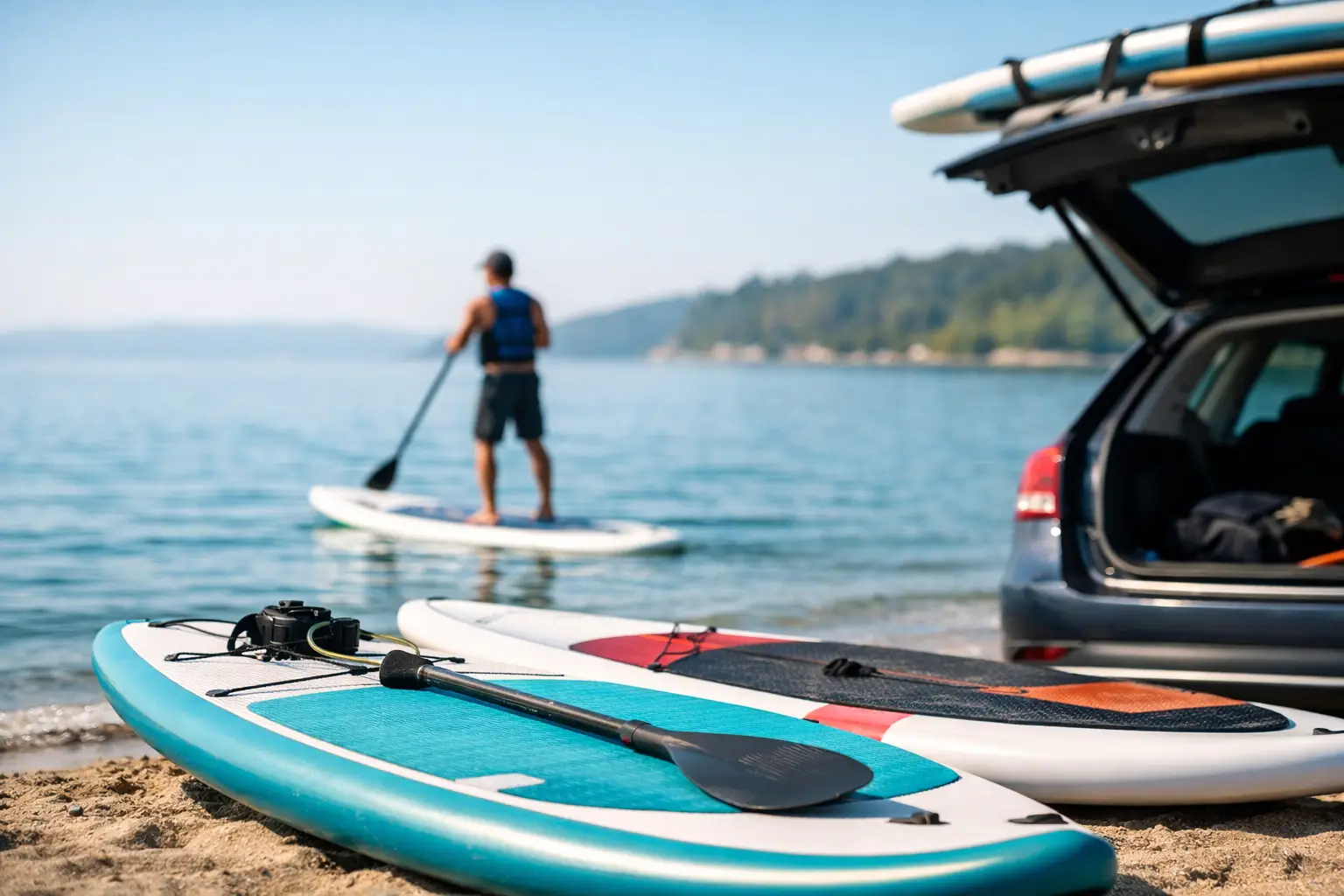
Storage is the next hurdle. If you live in a flat, have limited garage space or do not want a large hard board taking over the house, ownership can feel awkward. This is where inflatable paddleboards have changed the game for a lot of UK paddlers. They pack down, fit in a car boot and make transport far easier.
Convenience cuts both ways. Owning means you can paddle whenever you want, but you also need to rinse gear, dry it properly and keep it in good condition. Hiring means less responsibility, but also less spontaneity. If your ideal Saturday starts early on the water before the rest of the world wakes up, your own kit gives you freedom.
Buying too early versus buying too late
There are two common mistakes here.
The first is buying too early and choosing badly. That usually happens when someone falls for marketing, buys the cheapest option they can find, or picks a board based on speed before they have balance and technique. The result is often frustration rather than progress.
The second mistake is waiting too long when the signs are already obvious. If you are paddling regularly, searching for hire every weekend and shaping your training around availability, you are probably past the point where ownership makes sense.
A good rule is simple: if paddleboarding has become a habit rather than a novelty, your own board is worth serious thought.
What kind of paddler are you really?
This is where the answer gets clearer.
If you are a casual summer paddler, social adventurer or occasional holiday user, you probably do not need your own board yet. Hiring or borrowing keeps things easy.
If you are building fitness, training for a challenge, improving technique or entering events, ownership starts to pay off quickly. The more specific your goals, the more useful it is to have kit that feels consistent.
If you are somewhere in the middle, an inflatable all-round board is often the sensible bridge. It gives you access and flexibility without demanding expert knowledge from day one.
You also need to be honest about motivation. Some people like the idea of paddleboarding more than the reality of doing it regularly. Others try it once and immediately start planning the next session. If you are in that second group, you probably already know the answer.
A better question than do you need your own paddleboard?
Sometimes the better question is not do you need your own paddleboard, but what will help you paddle more often? If hiring gets you on the water consistently, that is a good solution. If owning removes excuses and makes training easy, that is a good solution too.
The sport should fit your life, not the other way round. For some people that means a board in the boot and dawn sessions before work. For others it means occasional hires, a laugh with mates and no pressure. Both count.
What matters is choosing the route that keeps the experience enjoyable. Paddleboarding is at its best when it feels like freedom, not admin.
If your goal is adventure, think beyond the board
There is also a bigger picture. Many people come into paddleboarding because they want more than just another gym routine or another standard race. They want challenge with scenery, effort with atmosphere, and something that feels a bit different from the usual start line.
If that sounds like you, your board is only part of the equation. Fitness, confidence, water awareness and time outdoors matter just as much. A great paddler on a sensible board will nearly always have a better day than an underprepared paddler on expensive kit.
That is why for event-focused paddlers, the smartest move is not always to buy the most advanced board. It is to buy the right board, use it regularly, and build real confidence on the water. That approach goes a lot further than chasing gear for the sake of it.
At SUPBIKERUN, that spirit matters. Adventure sport should feel welcoming, challenging and brilliantly memorable, whether you are stepping onto a board for the first time or turning up ready to push yourself.
If you are still undecided, do not force the purchase. Try a few sessions, borrow if you can, and pay attention to what happens next. If you keep finding reasons to get back on the water, your own paddleboard will probably stop feeling like a question and start feeling like the obvious next step.