
A great team day should leave people talking about more than the meeting room, the buffet or who won the quiz. This guide to corporate outdoor challenge packages is for teams that want fresh air, proper shared effort and a story that lasts long after the muddy trainers have been cleaned.
The right outdoor challenge can bring out the best in a group: encouragement under pressure, unexpected leadership and plenty of laughs when plans get tested. But the best package is not necessarily the hardest one. It is the one that gives your people a meaningful challenge, while making them feel looked after from arrival to finish line.
What makes a corporate outdoor challenge package worth booking?
A corporate challenge package is more than an activity with a company logo attached. It should create a genuine shared experience, with clear planning, experienced event support and enough flexibility for different fitness levels.
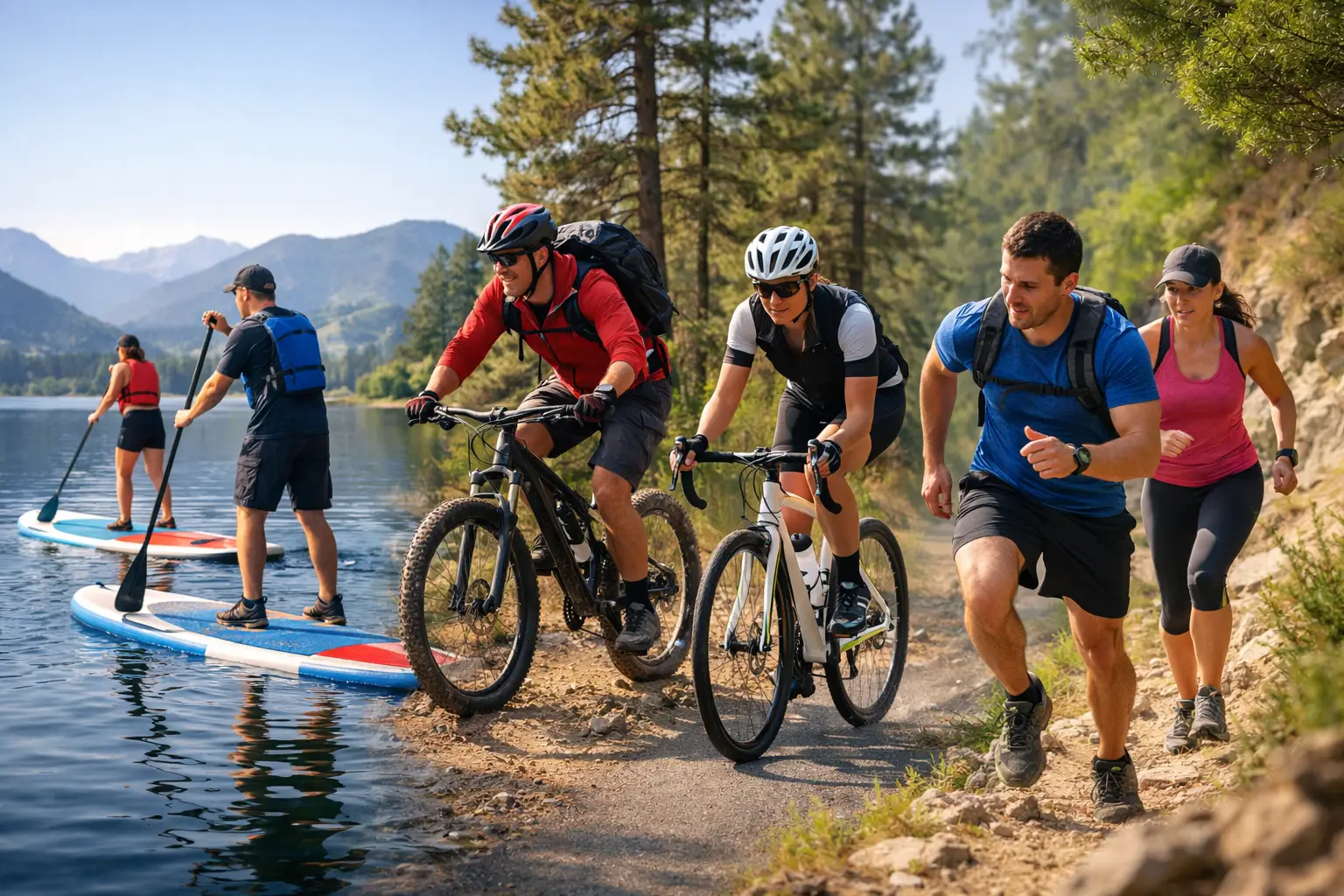
For active teams, an adventure format combining paddle boarding, cycling and trail running can offer far more energy than a standard away day. Each discipline asks something different of participants. One colleague may be strongest on the bike; another may thrive on the trail; someone who is quieter at work may become the person who keeps the group moving when the weather turns.
That variety matters. A single-discipline event can feel intimidating if participants believe they are either good at it or not. A well-designed multi-activity challenge creates more ways to contribute. It also gives teams the satisfaction of getting through something properly memorable together.
At the same time, adventure needs organisation. Routes, safety cover, equipment guidance, timings, changing facilities and participant communication are not glamorous, but they are what allow everyone to enjoy the big stuff. A professionally run event should feel relaxed because the important details have been handled.
Start with the result you want from the day
Before comparing corporate outdoor challenge packages, decide what success looks like. Is this a reward for a hard-working team? A way to welcome new starters? A fundraising target? Or a chance to bring people together who usually work in different locations or departments?
If the aim is team connection, choose an experience where people naturally spend time alongside one another rather than disappearing into separate competitive lanes. If you want to recognise high performers, a bigger event weekend with camping, spectators and post-event celebrations may suit the occasion better.
Be honest about the group too. A room full of regular runners and cyclists may love a demanding course and an ambitious target. A mixed group may get more from an accessible challenge with pace options, clear cut-off information and permission to take part without racing flat out. There is no prize for booking a package that makes half the team anxious before they have even set off.
Competition or shared completion?
A little friendly rivalry can lift the atmosphere. Team time trials, relay formats and fundraising leaderboards all add a spark. Yet the strongest corporate events usually put shared completion ahead of individual glory.
Consider setting team goals that reward more than speed. You might recognise the best supporters, the most enthusiastic fancy dress, the strongest fundraising effort or the colleague who encouraged others through a difficult section. That keeps the focus where it belongs: on the group experience.
Choose a challenge that people can say yes to
The ideal package sits just beyond the comfort zone, not miles outside it. Participants should feel a flutter of nerves and a real sense of achievement, but they also need to understand what they are signing up for.
Give people straightforward information before booking: expected distances, terrain, water confidence requirements, bike type, likely event duration and what is included. Avoid selling an outdoor challenge as a gentle stroll if it involves hills, uneven trails or a demanding paddle. Clear expectations build trust and help people prepare properly.
For a SUPBIKERUN-style adventure triathlon, the appeal is that the challenge has variety built in. Paddling demands balance and focus, cycling brings pace and leg power, and trail running adds that satisfying final push. It feels proudly different from a conventional triathlon, without losing the buzz of crossing a finish line.
Location can shape the whole experience. Mid Wales, Devon and the Lake District offer the kind of scenery that makes people put their phones away for a while and get stuck in. Still, stunning surroundings should not distract from practicalities. Check travel time, parking, accommodation, camping options and whether the schedule works for your team.
What to ask before you commit
A corporate outdoor challenge should be exciting, not a logistical puzzle dropped onto one enthusiastic organiser. Ask providers how they support group bookings and what happens if numbers change. The answers will tell you a lot about how easy the day will be to manage.
Look for clarity around registration, payment deadlines, substitutions, cancellation policies and pre-event communications. If you have colleagues travelling from different offices, ask whether the organiser can provide a simple timetable you can circulate internally.
Safety questions deserve equally clear answers. Find out about qualified marshals, water safety, medical cover, route marking, weather plans and participant briefings. Outdoor sport always carries an element of unpredictability – that is part of its appeal – but a reliable event team prepares for changing conditions without draining the fun from the experience.
It is also worth asking what participants need to bring. Some packages include equipment or hire options; others expect everyone to arrive with their own kit. For a mixed-experience group, practical guidance on clothing, footwear, hydration and bike checks can make the difference between confident participants and last-minute panic.
Make preparation part of the team experience
The event day should not be the only moment your team comes together. Once the booking is confirmed, create a light-touch build-up that welcomes both keen athletes and total beginners.
Set up optional lunchtime walks, after-work rides or a shared training plan. Pair people who know the discipline with those who are new to it. A confident paddleboarder can help a first-timer get comfortable on the water, while an experienced cyclist can run through basic bike checks without turning it into a lecture.
Keep the tone encouraging. Not everyone wants to post every training session, and not everyone has the same free time. Celebrate progress, answer practical questions and make it clear that the event is about turning up for each other, not proving who is the fittest person in the office.
Give every participant a role
A corporate challenge becomes more inclusive when contribution is not limited to finishing fastest. Some people will drive the training chat; others will organise travel, lead the fundraising or become the loudest supporters on the day.
If colleagues are attending as spectators, involve them properly. A well-placed cheer squad, signs at key points and a post-finish meet-up can lift the whole event. The people taking part may be the ones on course, but the atmosphere belongs to everyone.
Build in time to enjoy the finish
Rushing everyone back to the car park minutes after the last person finishes wastes the best part of an outdoor challenge. Leave room for food, photos, swapped stories and the inevitable comparison of muddy legs, near misses and personal victories.
A finish-line gathering gives managers a natural moment to thank the team without making it feel like a speech at a corporate function. It is also where the quieter benefits become visible: colleagues who barely knew each other chatting easily, someone who doubted they could do it standing taller, and a team realising it handled a tough day brilliantly.
If the budget allows, turn the challenge into a short break rather than a rushed day trip. Camping or local accommodation can add a festival feel, especially for teams travelling together. It will not suit every group, particularly those with caring commitments or limited availability, so offer choice rather than assumption.
A challenge people will carry back to work
The best corporate outdoor challenge packages do not force team-building exercises onto people. They create the conditions for teamwork to happen naturally: a hill that needs encouragement, a route that requires focus, a teammate waiting at the finish and a shared feeling of, “We did that.”
Choose an event with real adventure, sensible support and room for every participant to find their own win. Then give your team permission to get outside, get involved and come back with a little more confidence in themselves and each other.