
A team lunch is nice. A shared finish line, muddy trainers, big grins and stories that last far beyond Friday afternoon? That is something else entirely. So, can companies book race entries for a team? Absolutely – and for many businesses, an adventure race is a far more memorable way to bring people together than another indoor away day.
Corporate race entries give colleagues a reason to train, travel and take on a proper challenge as one group. Whether your team is packed with experienced endurance athletes or people who simply fancy doing something bold, the right event can turn a company outing into a genuine shared achievement.
Can companies book race entries for a team event?
Yes. Companies can usually book race entries for employees, clients, partners or a mix of all three. The precise process depends on the event organiser, the number of places required and whether your group needs extras such as camping, parking, branded kit, hospitality or a dedicated team area.
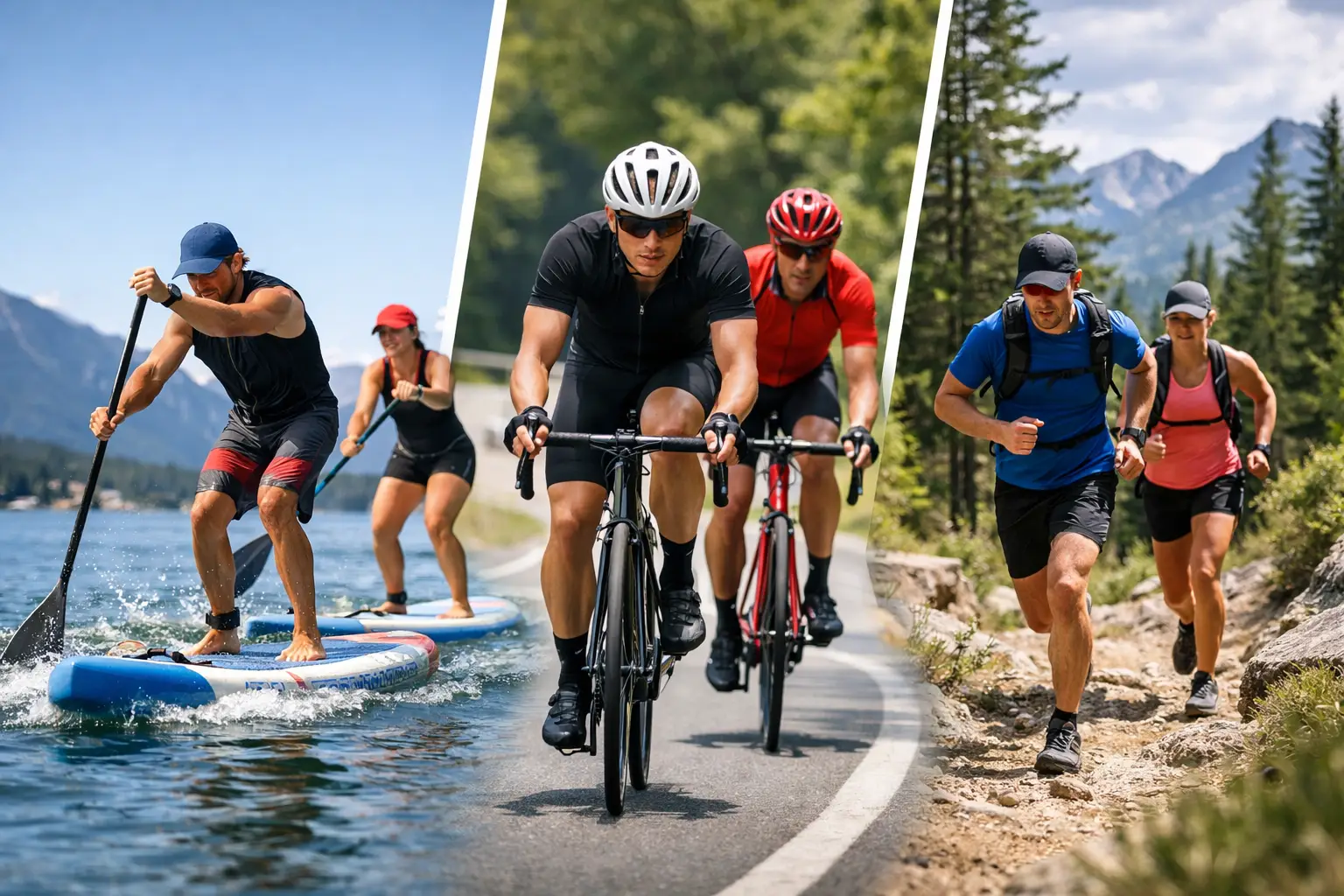
At SUPBIKERUN, the appeal is not just getting a group through registration. It is giving them a weekend adventure built around paddle boarding, cycling and trail running – with the atmosphere, event support and sense of occasion to match. It is a challenge, but it is not a sterile corporate exercise.
A corporate booking may involve purchasing entries in one transaction, reserving a block of places before participant details are confirmed, or arranging a tailored package for a larger group. Do not assume every race has the same rules. Some events allow name changes up to a set date; others require every participant to be confirmed when the booking is made. Ask early, especially if you are planning around a busy team calendar.
Why race entries work for company teams
A race asks something different of people. It gets colleagues away from desks, group chats and job titles. On the course, people see the colleague who quietly keeps going on the climb, the one who brings the morale at the toughest point, and the one who has never considered themselves sporty but finishes anyway.
That matters. A well-chosen challenge creates connection without forcing it. Training plans become conversation starters. Car sharing becomes part of the build-up. Race day creates a common goal that is not tied to quarterly targets.
For client or partner groups, an event can be equally powerful. It gives everyone a relaxed setting in which to spend real time together, rather than trying to make small talk across a conference table. The key is to make the invitation feel inclusive, not like an elite fitness test disguised as hospitality.
There is a trade-off, of course. An adventure race will not suit every person in every business. Some employees may have caring commitments, injuries, limited confidence in the outdoors or no interest in endurance sport. That does not make the idea a non-starter. It means the organiser needs to offer choice, communicate clearly and avoid treating participation as an obligation.
Choose the challenge before you book
The strongest corporate race bookings begin with an honest answer to one question: what do you want your team to get from this?
If the aim is a high-energy reward for an already active group, a full multi-discipline event may be exactly the point. If you are hoping to bring together a broad mix of fitness levels, look for accessible distances, relay options where available, or a weekend format that lets non-racers come along to cheer, camp and join the social side.
Adventure triathlon has a particular advantage here. Paddle boarding, cycling and trail running feel fresh to people who may be bored by conventional gym challenges. It is still a serious physical test, but it has more personality than laps in a pool and a finish line in a city centre.
Before committing, check the route profile, distance, cut-off times, equipment requirements and expected level of self-sufficiency. Mountain biking is not the same as a gentle spin on a canal path, and trail running demands a little more respect than a flat road 10K. Clear expectations protect confidence and help everyone prepare properly.
Ask the organiser the useful questions
You do not need a forty-page proposal. You do need answers that make planning straightforward. Ask whether there is a group-booking process, when names must be supplied, what happens if a participant can no longer attend, and whether entries can be transferred.
Also ask about payment terms. Some companies need an invoice, a purchase order or time for internal approval, while others can pay by card immediately. Confirm what is included in the entry price and whether optional items such as camping, parking or spectator access should be booked separately.
Finally, find out how the event team supports participants on the day. Good race infrastructure – clear briefings, signposting, safety cover, feed points, transitions and a reliable event schedule – is what lets your group focus on the adventure rather than the admin.
Make the booking easy for everyone
The most common mistake is booking places first and figuring out the people part later. Start by appointing one internal organiser who can collect details, share key dates and act as the point of contact. That person does not need to be the fittest in the office. They just need to be organised and enthusiastic enough to keep momentum moving.
Give colleagues a clear outline of the commitment: the event date, location, likely travel time, estimated costs beyond entry, kit expectations and the level of training involved. Be upbeat, but do not oversell it as effortless. People are more likely to say yes when they know exactly what they are saying yes to.
Budgeting deserves a little thought too. A company can cover full entries, subsidise part of the cost, or ask participants to pay while providing travel, accommodation or a team meal. There is no single right model. Full funding makes the event feel like a genuine reward, while a contribution can help confirm that people are committed to turning up and training.
If you are inviting a larger group, set a registration deadline earlier than the organiser’s deadline. It gives you room to sort last-minute questions without creating pressure for the event team or your colleagues.
Turn race day into a proper team experience
A corporate place is only the starting point. What people remember is the build-up and the feeling at the finish.
Create an optional training rhythm in the weeks before the event. A lunchtime run, a weekend ride, a paddleboarding taster or a shared training chat can help first-timers feel supported. Keep it welcoming. The quickest person should not dictate every session, and no one should feel embarrassed for starting from a lower base.
On the weekend, make space for both focus and fun. Arrange travel plans early, agree a meeting point and decide whether the group is camping or staying nearby. Bring a team flag, matching tops if that suits your culture, and a plan for the post-race celebration. The small details make the group feel like a team before anyone reaches the start line.
Support matters just as much as participation. Colleagues who are not racing can still be brilliant spectators, volunteers or morale crew. A loud cheer at a transition or finish can change the whole day for someone who is digging deep.
Keep inclusion at the centre
The best company race days are ambitious without being exclusionary. Make participation voluntary, avoid tying it to performance reviews or social pressure, and be open about alternatives for people who cannot or do not want to race.
That could mean inviting them to the weekend social, asking them to support the team, or choosing a future activity with a different physical focus. A culture of adventure is not about proving who is toughest. It is about giving people the confidence to try something meaningful.
It is also worth considering practical access needs early. Speak to the event organiser if a participant has a medical condition, requires adjustments or needs clarity on any part of the course. Early conversations tend to produce better options than last-minute surprises.
Book with a reason, not just a headcount
Companies book race entries because they want more than a day out. They want a challenge with a pulse: fresh air, shared nerves at the start, encouragement when things get tough and a finish line everyone can talk about on Monday.
Choose an event that matches your people, make the logistics simple, and let the challenge do what it does best. A team that has paddled, pedalled and run through a proper adventure together will have earned more than a medal.