
A finish-line banner is easy to spot. A great outdoor sponsor campaign is harder to miss because people feel it long after they have packed down their tent, washed the mud from their trainers and posted their event photos. For brands, that is the real opportunity: becoming part of an adventure people are proud to talk about.
Outdoor events bring together a rare mix of focus, adrenaline and shared effort. Participants are not simply passing an advert on their commute. They are committing time, training, travelling and stepping outside their comfort zone. A sponsor that adds something useful, memorable or genuinely fun can earn attention in a way traditional advertising rarely does.
Start with the experience, not the logo
The quickest route to a forgettable sponsorship is treating an event as a collection of empty spaces for a logo. A bib, finish arch or social post has value, but visibility alone is not a campaign. The question should be: what will participants, spectators and volunteers be glad we helped make happen?
For an adventure triathlon, that might be a well-stocked recovery area, a secure kit point, a brilliant campsite moment or practical support that makes first-time competitors feel ready to take on paddle boarding, cycling and trail running. The strongest ideas fit the day rather than interrupt it.
That does not mean every sponsor must give away products. Sometimes expertise is the useful contribution. A local bike specialist can provide pre-ride checks. A nutrition partner can help athletes understand fuelling without turning the experience into a sales pitch. An employer bringing a corporate team can create a crew hub that gives colleagues a base, a cheer point and a reason to stay for the whole day.
When the activity makes the event better, the brand association follows naturally.
What makes an outdoor sponsor campaign worth backing?
A good partnership sits where the event audience, the brand and the environment overlap. Adventure participants are switched on. They can tell when a brand understands the practical realities of being outside, and when it has simply arrived with a gazebo and a box of leaflets.
The campaign needs a clear role. It might help people prepare, feel confident on course, recover afterwards or celebrate what they have achieved. It could also bring a new audience into the sport by supporting accessible entry points, team participation or volunteer recognition. The role will depend on the brand, but it should be easy to explain in one sentence.
For example, a brand focused on outdoor kit could own the confidence-building side of the journey. Rather than only displaying its latest range, it could offer a simple pre-event packing guide, practical kit checks on site and a place to dry off or recharge after the finish. Participants receive something useful at each stage, while the brand earns repeated, relevant moments of contact.
There is a trade-off here. Big spectacle can generate striking content, but it can also feel wasteful or misplaced in a countryside setting. Smaller, thoughtful activations can have more meaning, especially when they reduce friction for athletes or respect the location. The best choice depends on the campaign goal, the event footprint and what the audience will genuinely value.
Build the campaign around the full participant journey
Race day is the high point, not the whole story. People begin researching an event weeks or months before they arrive. They want training motivation, route reassurance, kit advice and a reason to believe they belong on the start line. That creates far more opportunity than a single activation window.
Before the event: be useful early
The lead-up is where a sponsor can become a trusted part of preparation. Useful content could focus on getting started with a stand-up paddleboard, choosing a sensible layer for changeable weather, preparing a bike for mixed terrain or finding a training partner. Keep the advice practical and honest. Not everyone is chasing a podium, and that is exactly the point.
A pre-event challenge can work well when it is inclusive. Invite people to share a training milestone, support a mate or commit to their first outdoor endurance event. Avoid making it all about the fastest split or the most polished social feed. Community grows when beginners and experienced competitors both have a reason to join in.
At the event: solve a real problem
On-site activity needs to work under real event conditions. Athletes may be cold, tired, wet, excited and short on time. Spectators may need somewhere to gather, something to do or help understanding where their person is on course. Volunteers need clear information and appreciation.
This is where event infrastructure matters. A sponsor campaign should be planned alongside the event team, not bolted on after the course map is finalised. Consider power, weather protection, queues, vehicle access, waste, staffing, safeguarding and where people naturally pause. A brilliant idea in a presentation can become a bottleneck if it blocks a transition route or relies on perfect weather.
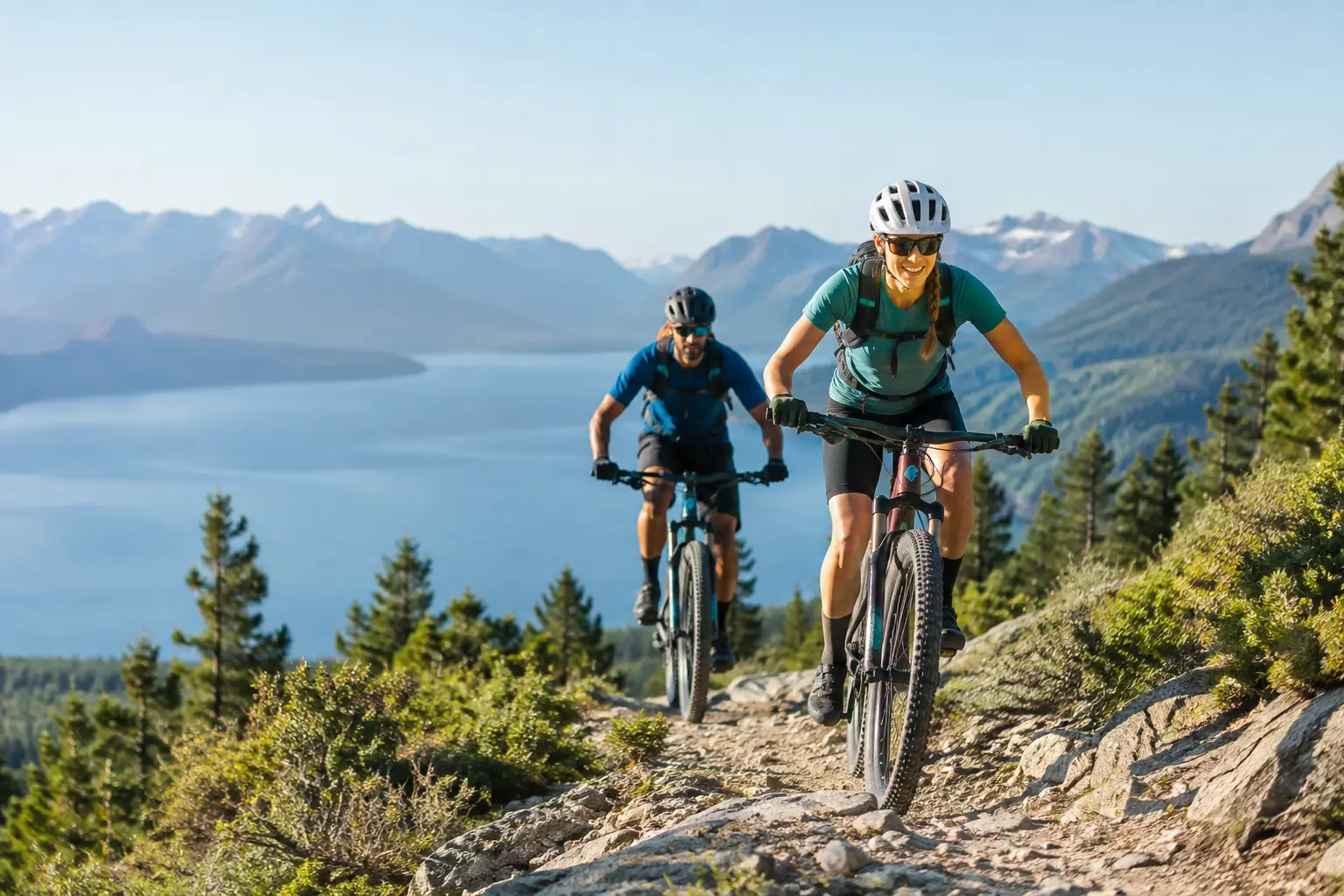
At SUPBIKERUN, the format itself gives partners plenty of natural touchpoints: the anticipation before the paddle, the concentration of the bike leg, the shared grind of the trail run and the release of crossing the finish line. The campaign should add energy to those moments without getting in the way of the challenge.
After the finish: give the story somewhere to go
The post-event window is often overlooked, even though participants are most likely to share photographs, compare stories and decide what challenge comes next. A sponsor can continue the conversation by celebrating personal achievements, sharing helpful recovery advice or recognising team and volunteer effort.
Ask for content with care. The best event stories are not forced testimonials. They are the muddy smiles, the first finishers, the friends who waited at the line and the colleague who did far more than they thought possible. Give people a reason to share, then let their voice do the work.
Measure more than reach
Reach matters, especially for a brand that needs awareness. But an outdoor sponsor campaign should not be judged by logo impressions alone. A crowded finish area may create thousands of potential views, yet the more useful question is whether people interacted, remembered and associated the brand with a positive part of their day.
Agree the measures before the campaign begins. These might include participant engagement, opt-ins, samples used, competition entries, social content created, brand recall, redemption of an event-specific offer or leads from corporate groups. If the aim is community credibility, qualitative feedback matters too. Did people find the activation helpful? Did it feel right for the event? Would they want it back next year?
Be realistic about data. People at an outdoor event should never feel cornered into handing over details when they are trying to race, support someone or enjoy the atmosphere. Make consent clear, collect only what is useful and offer a fair exchange for their time. Trust is worth more than a rushed email address.
Choose partners that belong outdoors
The best sponsor is not always the one with the largest budget. Brands that value movement, wellbeing, travel, responsible outdoor access, nutrition, recovery, equipment or team experiences are often a natural fit. So are organisations with local roots and a credible reason to show up for the community.
Values matter as much as category. Outdoor audiences notice waste, unnecessary single-use giveaways and claims that do not match a brand’s behaviour. If sustainability is part of the proposition, show it through practical choices: reusable infrastructure, thoughtful stock planning, responsible travel guidance and clear site clean-up. Do not make the environment a backdrop for a message that ignores it.
A partnership also needs enough time to work. A one-off appearance can be valuable for a product launch or local campaign, but longer relationships usually create more trust. They allow the sponsor to support training, race day and return participation rather than chasing a single burst of attention.
Make it a partnership people can feel
The goal is not to make an event feel more commercial. It is to make the experience feel better because the right brands got involved. Give athletes something that helps them take the next step, gives supporters a stronger day out or gives volunteers the recognition they deserve.
If your brand can bring that kind of value to an outdoor event, do not ask where your logo will go first. Ask what people will remember when they get home. Build the answer around that, and the logo will have earned its place.