
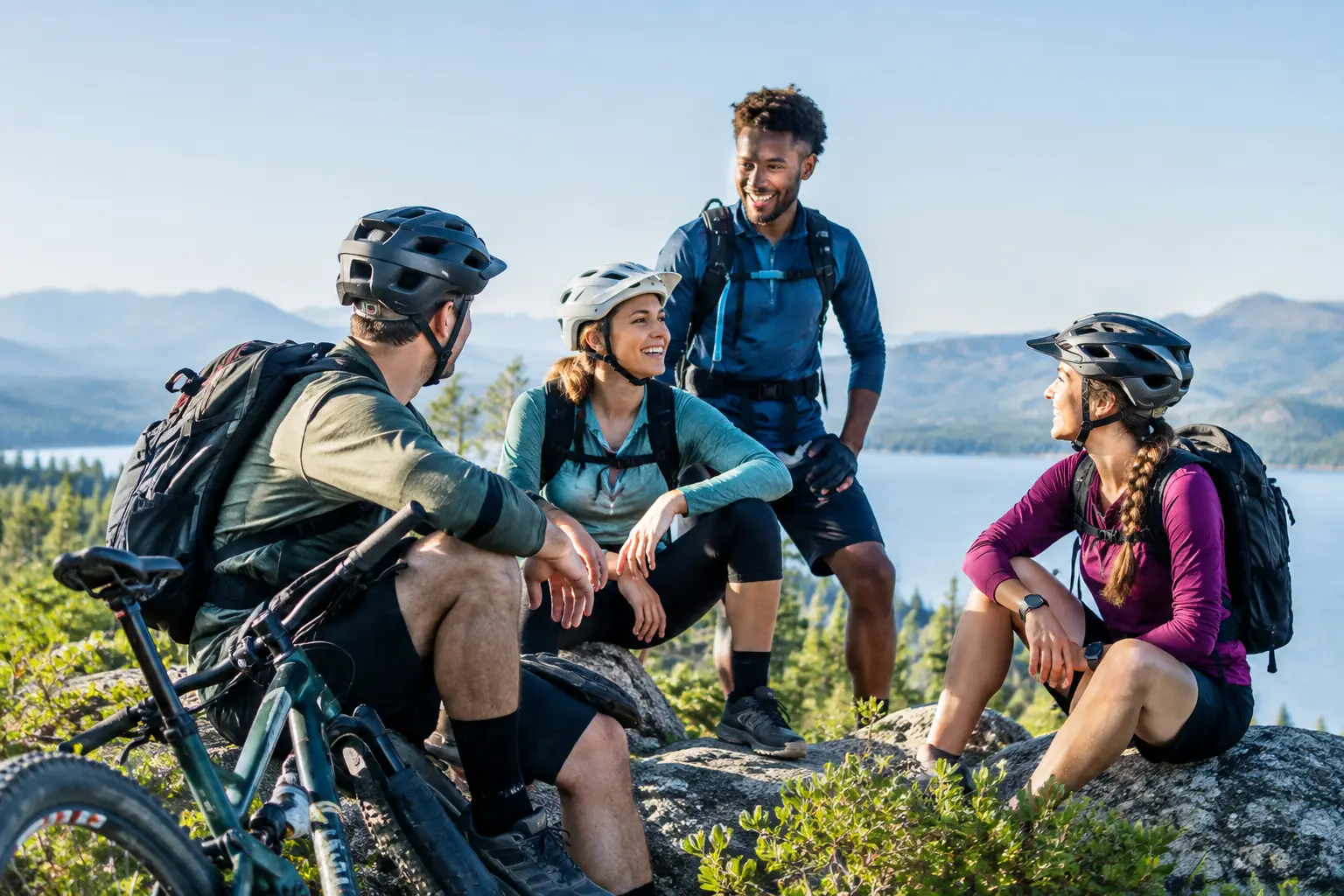
A shared challenge works best when nobody arrives feeling like they have been volunteered for a forced march. To prepare corporate teams for an outdoor adventure, give people clarity, choice and a reason to get involved well before race day. Get that right and the day becomes more than an away day with muddy trainers. It becomes the story people bring back to the office.
For teams used to meetings, screens and packed calendars, a paddleboard, bike and trail route can feel brilliantly different. It can also feel daunting for someone who has not ridden off-road since childhood, is new to running, or simply does not know what to expect. Good preparation makes room for every one of those people without draining the challenge from the experience.
Start with a challenge people can believe in
Corporate adventure should feel ambitious, not exclusive. The strongest teams are rarely made up entirely of endurance athletes. They are colleagues with different confidence levels, fitness backgrounds and reasons for taking part. Some will be chasing a personal best. Others will be there for the laughs, the fresh air and the chance to know their colleagues beyond their job title.
Set the purpose early. Are you celebrating a big year, bringing together remote colleagues, raising money for a cause, or building momentum after a difficult period? A clear reason turns training from another item on the to-do list into something shared.
Be honest about the event too. Explain the disciplines, the likely terrain, the expected time commitment and the support available. Outdoor challenge events are meant to bring a few nerves. Nobody needs mystery added to the mix.
Give people routes into the experience
Not every participant needs the same target. One colleague may want to complete all three disciplines; another may prefer to focus on the bike section or take part as part of a relay. Build a plan that recognises those differences.
The goal is not to lower the bar. It is to make the starting line feel accessible enough that people actually step over it. A team that includes beginners, returners and experienced racers often gets more from the day than a group of equally fit people who already know one another well.
Prepare corporate teams with a simple training plan
You do not need to turn the office into a boot camp. A practical training plan is about consistency, confidence and shared accountability. Start six to 10 weeks before the event where possible, leaving enough time for people to build gradually without panic-training their way into an injury.
Encourage two or three manageable sessions a week. That might mean a lunchtime walk or easy run, a weekend bike ride, and a paddleboard session for those tackling the water. People who are already active can add distance or intensity, but the team plan should never make beginners feel as though they are failing.
A useful rhythm is to set one informal group session each week. Meet for a trail jog, a cycle on a local route, or an after-work walk that ends with a coffee. The pace matters less than the habit. Shared sessions turn names on a video call into teammates, and teammates are far more likely to keep showing up.
If your group is preparing for paddleboarding, include time to practise getting on and off the board, turning, paddling in a straight line and recovering after a wobble. Falling in is not a disaster. Learning that beforehand is part of the fun.
For cycling, make sure everyone understands the basics: helmet fit, braking, gears, puncture preparation and riding with space around other people. On trails, practise looking ahead rather than staring at the front wheel. For running, focus on time on feet and getting comfortable with uneven ground. Trails ask for patience, not just pace.
Make kit guidance reassuring, not overwhelming
The fastest way to put someone off an adventure event is a kit list that reads like an expedition to Everest. Keep it focused on what people genuinely need, then explain why it matters.
A well-fitted helmet, comfortable trainers or trail shoes, weather-appropriate layers, water and a way to carry essentials will cover a lot of ground. For paddleboarding, participants need clothing that works when wet and a buoyancy aid if required by the event. For cycling, a bike that has been checked and is suitable for the route is more valuable than the latest upgrade.
Encourage people to test their kit before the day. New shoes on race morning are a classic error. So is discovering that a rucksack rubs, a waterproof is not waterproof, or a bike tyre has barely any tread left.
There is a trade-off here. Being prepared helps people relax, but overthinking equipment can make the event seem technical and intimidating. Keep the message clear: bring safe, suitable kit, ask questions early, and do not assume you need to spend a fortune to take part.
Build the team before the start line
A corporate group can travel together, wear matching tops and still behave like individuals on the day. Build connections beforehand by giving the team small shared jobs and goals.
Ask experienced cyclists to host a basic bike-check session. Let confident paddlers share a few water tips. Create mixed-ability training groups rather than allowing the quickest colleagues to disappear ahead every time. The aim is not for experts to take over. It is for knowledge to circulate.
It also helps to agree what support looks like. Will faster participants wait at key points? Who will keep an eye on the person feeling nervous? Is the team measuring success by finish times, funds raised, everyone finishing, or all three? Put the answer into words before the event, rather than hoping the culture will sort itself out under pressure.
The best team-building moments tend to be unplanned: someone lending a spare layer, a colleague talking another through a steep climb, or the loudest cheer coming from the person who finished first. You create room for those moments by setting a generous tone from the beginning.
Plan the practical details that protect the fun
Adventure events feel relaxed when the organisation behind them is sound. Assign one team organiser to coordinate arrival times, transport, accommodation or camping, and any shared equipment. That person does not need to carry every task alone, but they should be the point of contact for important information.
Check the event briefing, registration requirements, parking arrangements, cut-off times and safety rules in advance. Build extra time into the journey. Turning up rushed can unsettle even the most capable participant, while a calm arrival gives people time to register, use the facilities, sort kit and take in the atmosphere.
Food deserves a plan too. Recommend a familiar meal the night before, a straightforward breakfast and easy snacks for the day. This is not the moment to experiment with an enormous fry-up or a new energy gel. A refillable bottle, snacks and a post-event meal plan go a long way towards keeping morale high.
For a SUPBIKERUN corporate group, the attraction is not just the finish line. It is the chance to paddle, pedal and run through proper outdoor terrain with colleagues who are up for giving it a go. Make space in the schedule to enjoy that, whether it is a team photo, a post-race drink or an evening around camp.
Let leadership take part, not take over
When leaders join the challenge, they send a powerful message that wellbeing and connection are not just posters on a wall. But there is a difference between participating and turning the day into a performance review in sportswear.
Leaders can set the tone by being open about their own nerves, encouraging the quieter members of the group and celebrating effort as much as pace. A director who admits they are still learning to paddle is often more useful to the team than one who races off at the front.
If leaders are highly competitive, agree the team culture beforehand. Competition can add energy, especially between friendly departments, but it should not leave newer participants feeling like extras. Set optional challenges for those who want them and keep the main win centred on shared achievement.
Give the day a life after the finish
Do not let the experience disappear into a folder of photos and a few tired messages on Monday morning. Share pictures, celebrate personal milestones and ask people what surprised them. You may discover that the colleague who was most hesitant is already planning their next event, while your strongest runner loved the paddleboard section most.
That feedback makes the next adventure better. It also gives the team a reminder of what they achieved together when work gets busy again.
A good outdoor challenge leaves people with more than sore legs and a medal. It gives them proof that, with the right support, they can try something unfamiliar, look after one another and finish stronger than they started.