
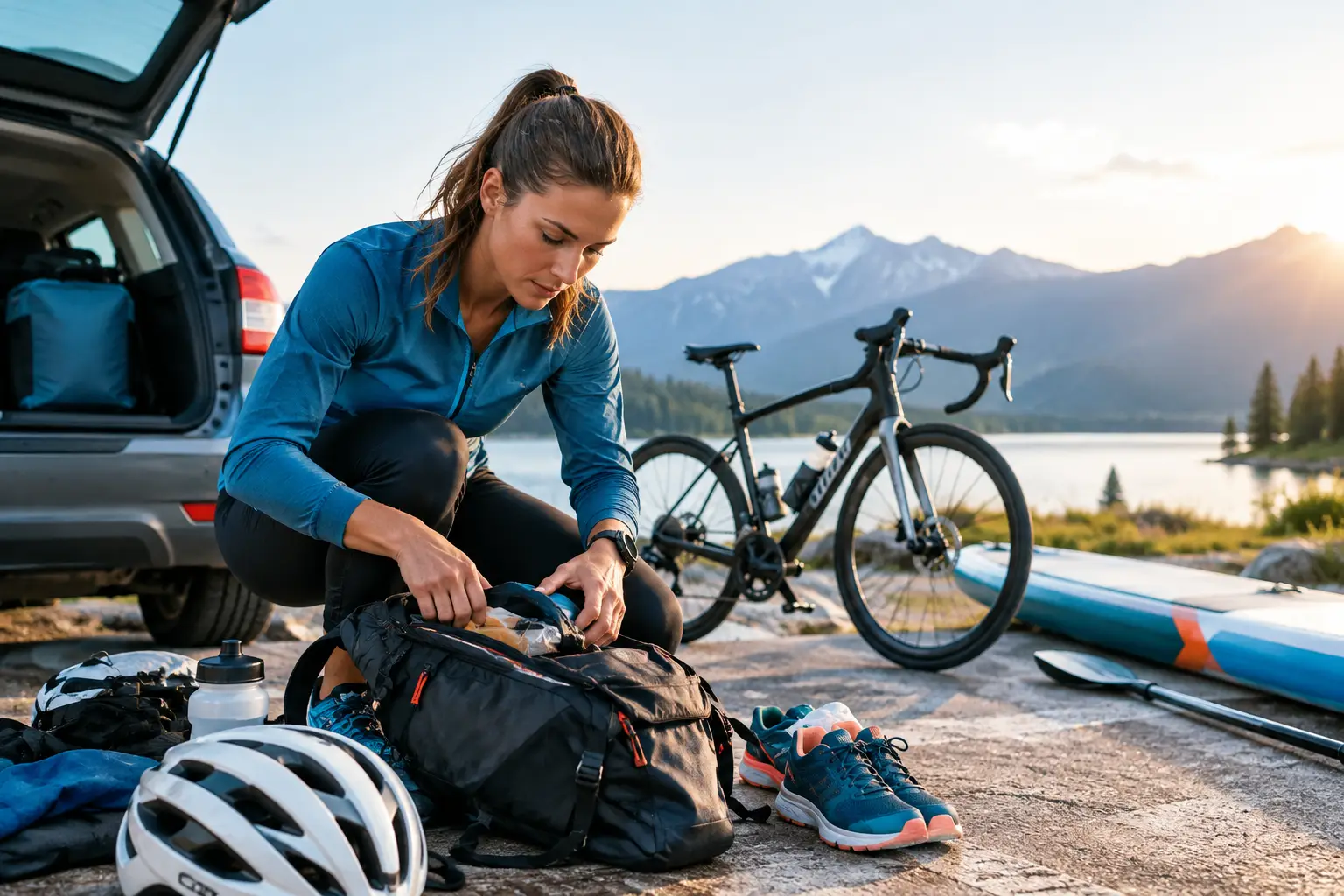
The alarm is set, your kit is ready and your legs feel good. Then race morning arrives and the car park is busier than expected, your pump is missing, and you cannot remember whether your running shoes are in the boot or still by the front door. Knowing how to plan race-day logistics turns that frantic final hour into part of the adventure – and leaves you free to enjoy the paddle, bike and trail ahead.
For an adventure triathlon, logistics are more than getting yourself to the start line. You are moving kit across multiple disciplines, dealing with the British weather, navigating transition, and possibly staying overnight with friends, family or teammates. A little planning creates a calmer start and a much stronger day out.
Start with the event information, not your assumptions
Read the participant information properly as soon as it lands. Not the night before while trying to charge three devices. Check registration times, parking arrangements, start waves, transition layout, cut-off times, mandatory kit, spectator access and the rules around paddleboards and bike equipment.
Every event site works differently. One venue may have parking close to registration but a walk to transition; another may require a shuttle, a specific drop-off point or an earlier arrival for athletes with oversized kit. If you are bringing a paddleboard, factor in inflation time and the distance you need to carry it. A board bag, pump and buoyancy aid soon become awkward when you are rushing.
At SUPBIKERUN, the aim is a big adventure with proper event infrastructure behind it. Your job is to use that information to build a plan that works for you, rather than hoping the usual race routine will cover every detail.
Build backwards from your start time
Take your assigned start time and work backwards. Allow time for parking, registration, toilet queues, transition setup, a warm-up, kit checks and a few minutes to breathe. Then add a buffer. Ten minutes disappears quickly when you are looking for a missing timing chip or helping a mate find the bike entrance.
If your wave starts at 9.00am, arriving at the event car park at 8.45am is not an arrival plan. It is an unnecessary gamble. Your confirmation email should tell you the earliest practical arrival time. Aim for that, particularly if you need to rack a bike, inflate a board or speak to the team about any accessibility or equipment question.
Plan travel like it is part of the race
A great course can be in a wonderfully remote place, which is exactly why you should not rely on a postcode and wishful thinking. Check the route a few days beforehand, including the final roads into the venue. Rural lanes, event traffic and limited mobile signal can all slow things down.
If you are travelling from a distance, decide whether an early start or an overnight stay will leave you fresher. The cheapest option is not always the best option if it means driving for three hours before paddling, cycling and running. Camping can make the weekend feel more social and remove race-morning mileage, but only if you are comfortable sleeping well outdoors. If rain, cold or a restless campsite will leave you drained, book somewhere nearby instead.
Travelling with others has obvious benefits: shared fuel, shared nerves and someone to hold your bike while you sort a stubborn rack strap. Agree your departure time in advance, and make it the time the car leaves – not the time everyone starts packing.
Give your kit its own travel plan
Do not treat adventure triathlon equipment as one giant pile. Pack by when and where you will need it. Keep your registration essentials together: photo ID if required, confirmation details, timing chip information and any medical notes. Put your paddle kit in one bag, bike kit in another, and running gear somewhere you can access without unpacking the whole car.
Your bike deserves particular attention. Check tyre pressure, brakes, chain and lights if you are travelling in low light. Secure it properly for the journey and bring the key for any lock or rack. For your board, check fins, leash, pump, paddle and buoyancy aid. A brilliant board is no use if the fin is still at home on the kitchen table.
A compact race-morning bag is worth its weight in gold. It should hold the items you need after leaving the car: phone, keys, wallet, layers, water, nutrition, sun cream, plasters and a small towel. Keep it simple enough that you can hand it to a supporter or place it in the designated bag-drop area without wondering what you have forgotten.
How to plan race-day logistics around transition
Transition is where preparation becomes time. Before race day, practise laying out your kit in the order you will use it. You do not need a military display, but you do need to know what happens after each discipline.
Think through the changes. After the paddle, will your feet be wet and cold? Are your cycling shoes easy to put on? Do you need a small towel? After the bike, can you grab your trail shoes, race belt and cap in one movement? If conditions are muddy, an extra pair of socks may be worth carrying. If they are hot, sun cream and extra fluid may matter more.
Keep your transition area tidy. Place only what you need by your bike or in your allocated space, and keep loose packaging out of the way. A clear setup reduces faff and helps you spot a missing item quickly. It also makes the experience better for everyone moving through the same space.
There is a trade-off here. Carrying every possible backup item can make your setup cluttered, while packing too light can leave you short when conditions change. Prioritise safety, comfort and the kit that prevents a race-ending problem. Leave the just-in-case clutter in the car where event rules allow.
Fuel for the real day, not the ideal one
Race nutrition starts before the gun goes. Eat a familiar meal the evening before, organise breakfast that travels well, and pack more water than you think you will need for setup. Avoid trying a new energy drink, gel or café breakfast because it looks convenient on the day.
Plan your fuel around duration, intensity and weather. A shorter, fast effort may need little more than a good breakfast and water, while a longer adventure demands a clear plan for fluids, electrolytes and easy-to-eat energy. Bring food you know works for you, then check where aid stations are and what they provide. Treat event nutrition as useful support, not the foundation of your plan, unless you have used it before.
Put on-bike nutrition where you can reach it, and avoid overloading pockets so badly that you cannot find anything. If you are racing with a friend, do not assume you will eat and drink at identical times. Encourage each other, but stick to your own needs.
Prepare for British weather without packing the whole house
Check the forecast repeatedly in the final week, then check it again the evening before. Wind can change the feel of a paddle section, rain can affect bike handling, and a bright day can become surprisingly cold once you are wet and moving on exposed trails.
Your answer is layers and options, not panic-buying. Bring a warm post-race layer, a waterproof outer layer, dry socks and a change of clothes. Pack sun cream even when the forecast looks undecided. A hat, gloves or clear glasses can be sensible depending on the venue and season.
For wet-weather racing, protect the things that must stay dry. Use a waterproof pouch or simple sealable bags for your phone, car key and spare clothing. If you are bringing supporters, remind them to prepare too. A comfortable, warm crew is far more likely to enjoy cheering you through the finish.
Make space for the people around you
Adventure events are better with a crew, whether that means a corporate team, family members, training mates or the stranger who lends you a track pump. If people are coming to watch, tell them your likely finish window, where they can park and any areas they cannot access. Race tracking and schedules help, but explain that timings can move with conditions and course pace.
If you are racing as a group, sort the practical details before the weekend: travel, accommodation, shared tools and a meeting point after the finish. The person who brings a pump, tyre levers and chain lube will become very popular. So will the person who suggests a proper post-race meal plan.
The night-before check that saves your morning
Lay out everything before bed, then use a short final check:
- Board, paddle, fin, leash, buoyancy aid and pump
- Bike, helmet, shoes, bottles, nutrition and repair basics
- Running shoes, race belt, layers and weather protection
- Registration details, phone, keys, wallet and travel directions
Charge your phone, watch and lights if you need them. Set more than one alarm. Put breakfast where you can see it. Then stop tinkering. The final hour before bed is for getting organised, not changing tyres, testing brand-new kit or convincing yourself you need another complicated plan.
Race-day logistics are not the glamorous part of an adventure triathlon, but they are what let the best part happen. Arrive early, know your route, keep your kit simple and give yourself room for the unexpected. When you reach the start line calm, prepared and surrounded by good people, the day is already off to a flying start.