
Corporate Outdoor Challenge Day That Lands
The problem with most team days is not effort. It is energy. You can book a nice venue, lay on decent food and still watch people drift back to work unchanged. A corporate outdoor challenge day works differently because it gives people something real to do together. There is a shared goal, a bit of pressure, plenty of laughter and the kind of stories that still get mentioned months later.
For active teams, or for businesses that want something less predictable than the usual away day, outdoor challenge events hit a sweet spot. They feel purposeful without becoming stiff, and competitive without shutting people out. Done well, they build trust, lift morale and give colleagues a proper sense of achievement. Done badly, they can feel chaotic, too demanding or like a forced march in branded fleeces. The difference is in the design.
What makes a corporate outdoor challenge day work
The best events are built around shared experience, not just a schedule. That means choosing activities that ask people to think, move and support each other, while keeping the atmosphere open and encouraging. You want challenge, but not a survival test. You want structure, but not military drill.
That balance matters because corporate groups are rarely made up of one type of participant. You may have confident runners, casual cyclists, total beginners and people who have not touched a paddleboard in their lives. If the day only suits the fittest ten per cent, you lose the room early. If it is so soft that nobody feels stretched, it becomes forgettable. A strong format sits in the middle and lets people surprise themselves.
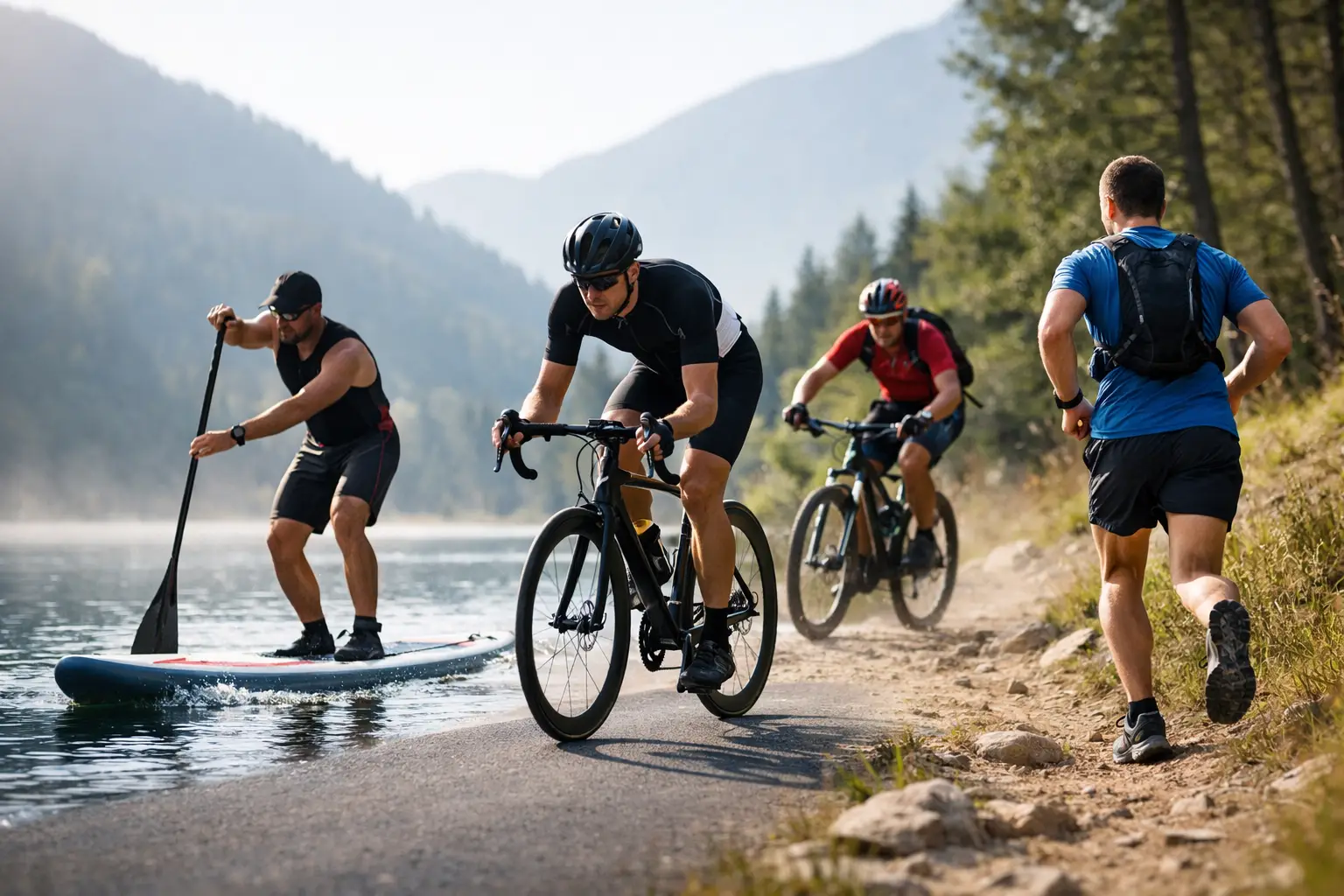
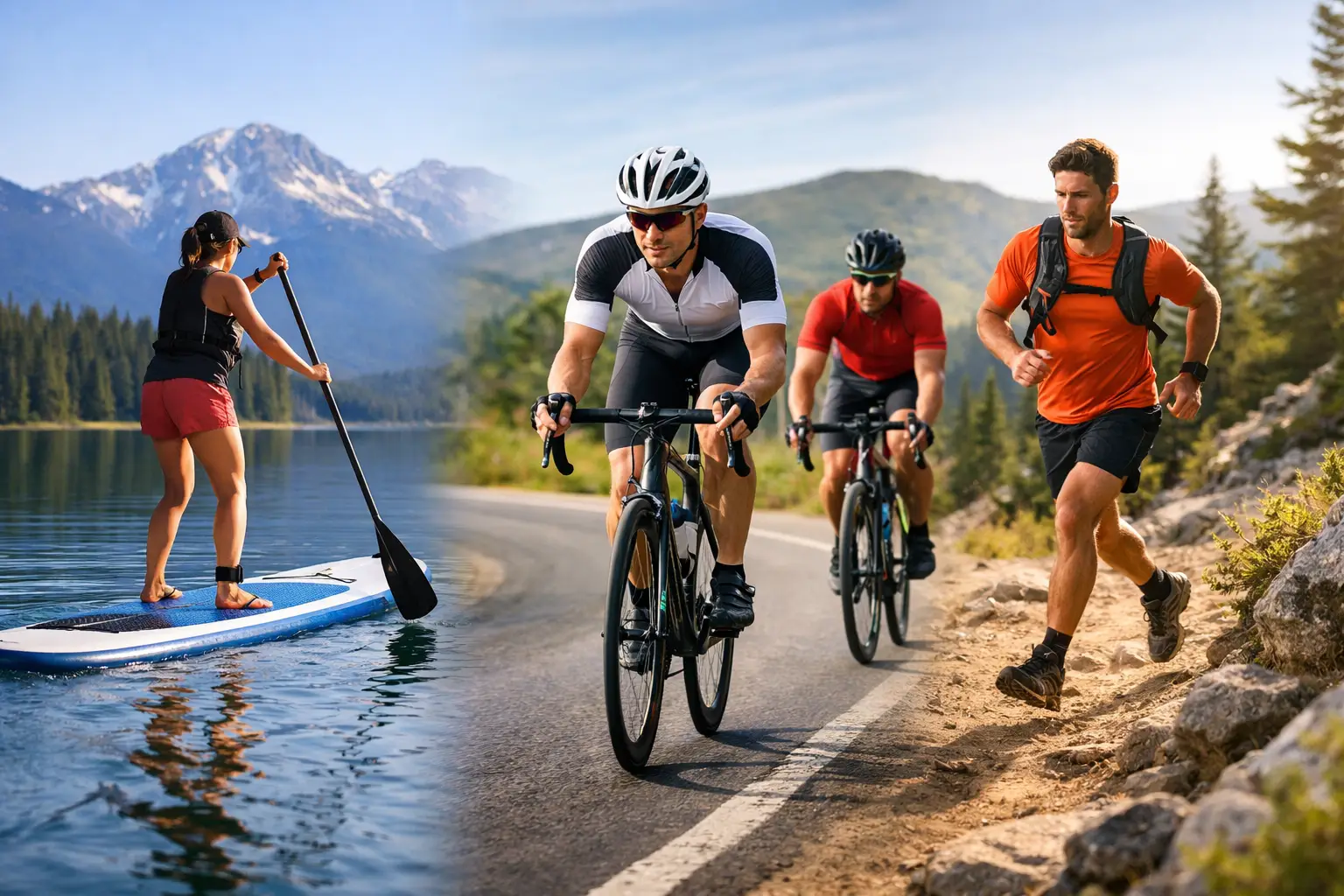
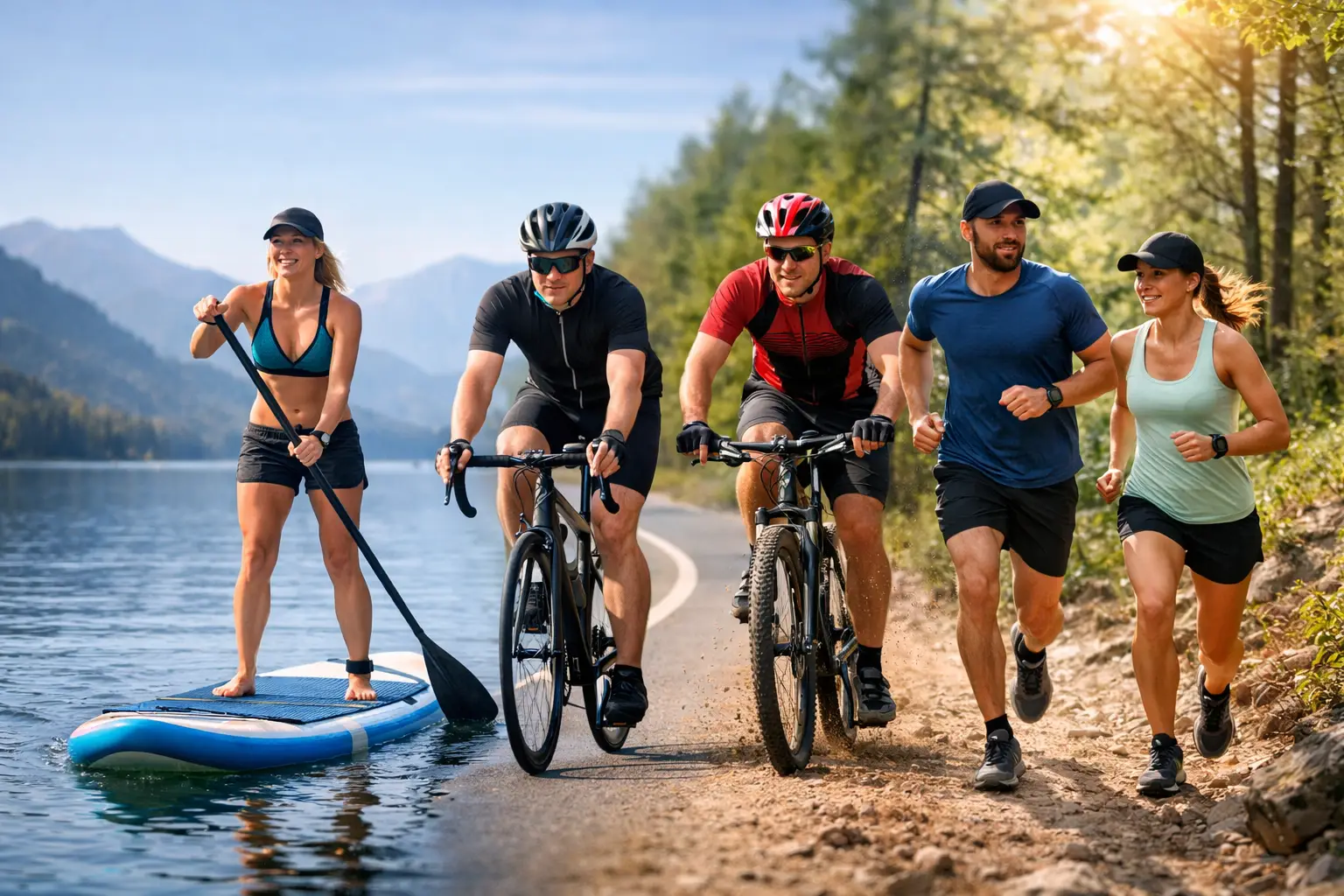
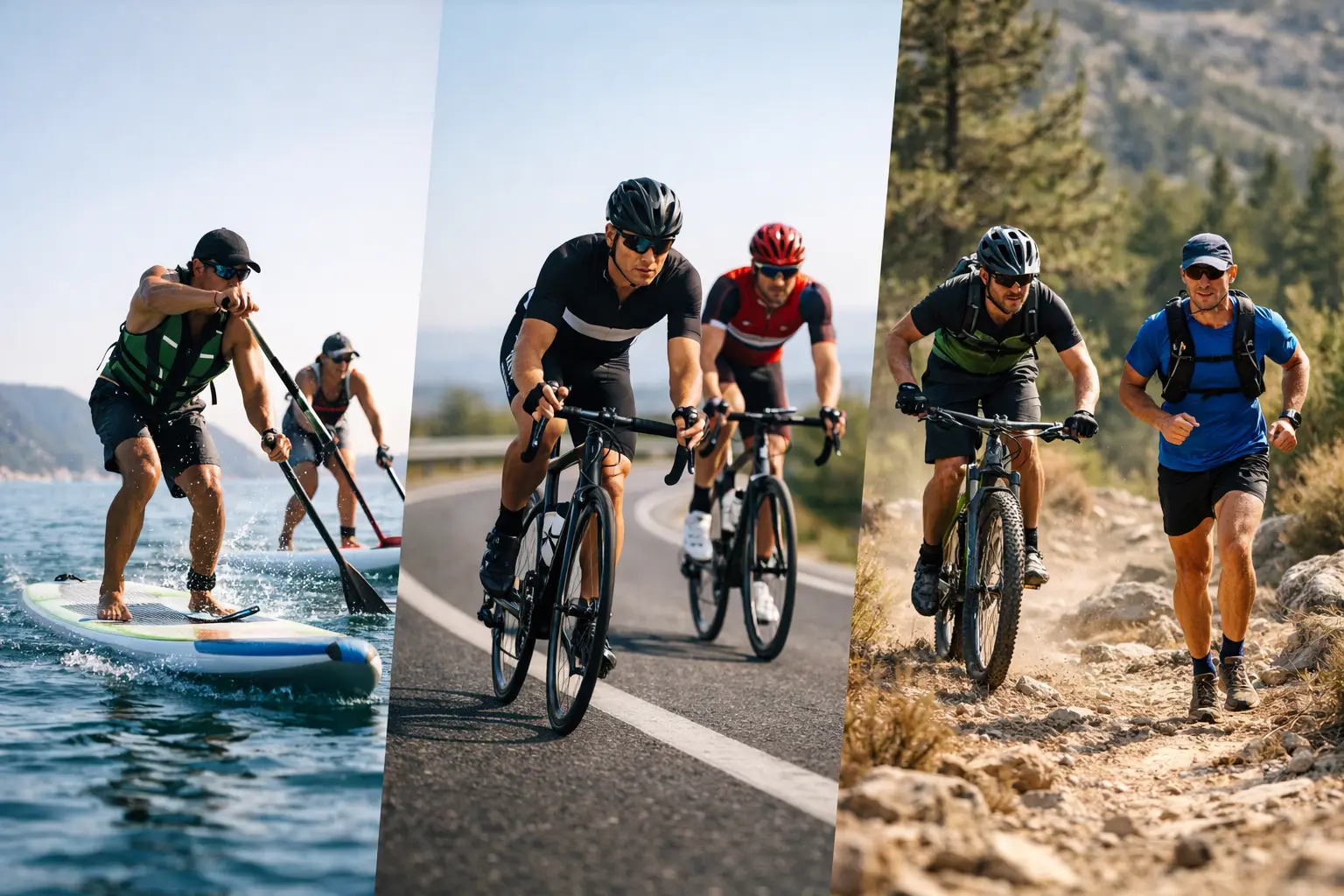
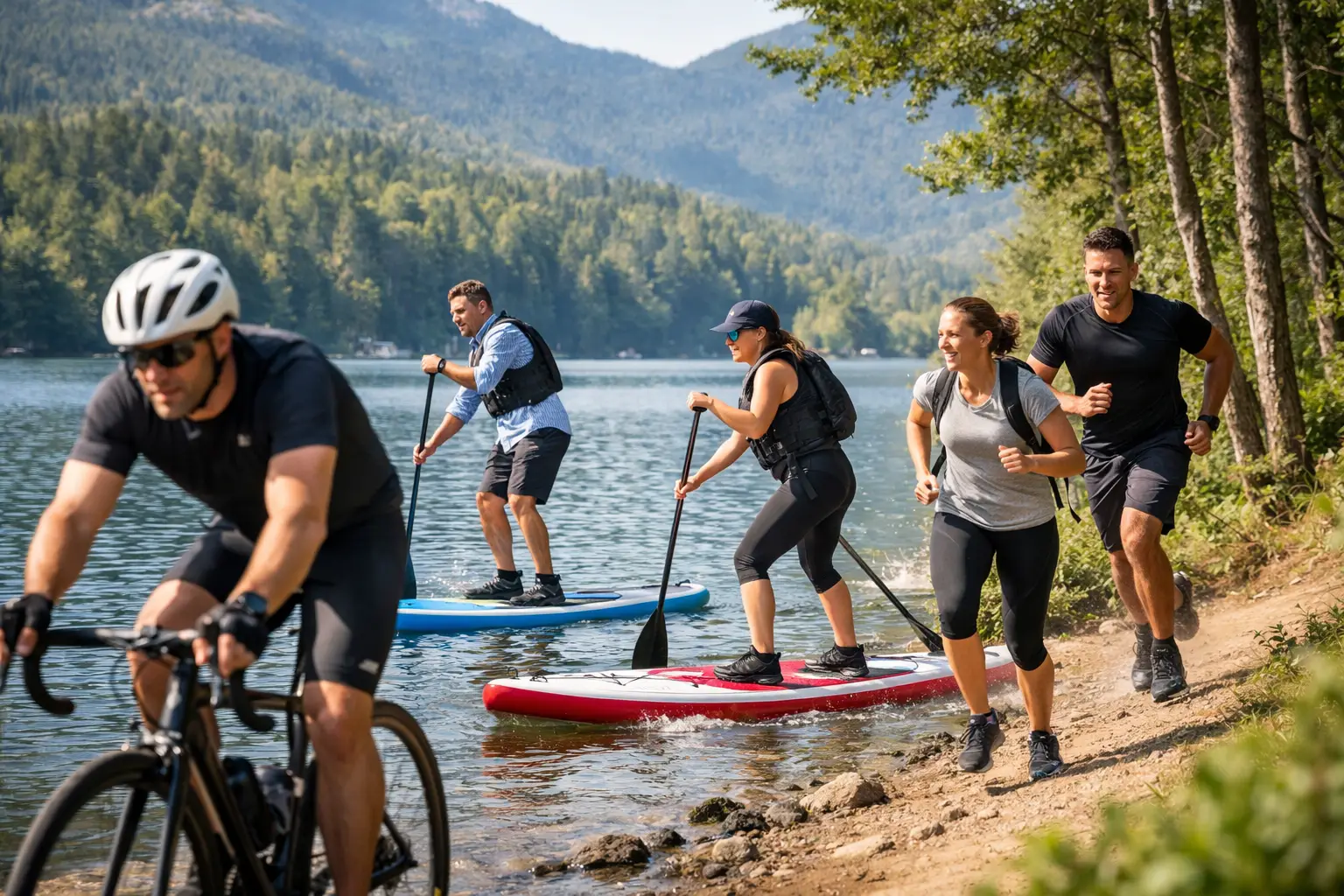
Outdoor multi-discipline events are particularly good at this. When teams move between activities such as paddleboarding, cycling and trail running, different strengths come into play. One person keeps calm on the water, another sets the pace on the bike, someone else becomes the encourager on the run. That variety gives more people a chance to lead.
Why outdoor challenge beats the standard away day
There is a reason adventurous formats tend to stick. They create a mild level of uncertainty, and that is where teams often become more honest. People communicate more clearly when they are navigating a course, managing transitions or deciding how to tackle a section together. Titles matter less. Habits show up faster. You get a clearer picture of how colleagues actually operate under pressure.
There is also a morale benefit that should not be dismissed. Fresh air, movement and a setting that does not look like a conference suite can change the feel of a whole team. People loosen up. Conversations become more natural. The day feels earned rather than staged.
That said, outdoor challenge is not automatically better for every business. If your team is dealing with injury, low confidence around physical activity or a culture that is wary of overt competition, the format needs more thought. A challenge day should stretch people, not alienate them. The strongest events make space for different effort levels while keeping everyone part of the same experience.
Choosing the right format for your team
If you are planning a corporate outdoor challenge day, start with one question: what do you want people to leave with? Better collaboration? A reward after a big quarter? A stronger company identity? A memorable client experience? The answer should shape the event.
For some teams, a timed challenge with clear results works brilliantly. It gives the day momentum and taps into healthy competition. For others, a points-based format with optional intensity is smarter. People can still push themselves, but there is less fear of letting the team down.
The venue matters just as much as the activity mix. Open water, woodland trails and bike-friendly routes create a natural sense of adventure, but they also need proper safety management, clear briefing and competent event support. A relaxed atmosphere only works when the logistics are nailed down underneath it.
This is where specialist operators earn their keep. A good provider does not just supply kit and a whistle. They think about wave starts, route marking, welfare, registration flow, transition areas and contingency planning. That operational side may not be the exciting bit, but it is the reason participants can throw themselves into the day without worrying about what happens next.
Inclusivity is not the opposite of challenge
One of the biggest mistakes in corporate event planning is assuming inclusivity means removing difficulty. It does not. It means building the challenge so more people can take part with confidence.
That could mean offering shorter and longer route options, allowing team strategies that balance stronger and less experienced participants, or briefing the day in a way that makes beginners feel welcome from the first minute. It can also mean choosing activities with a fast learning curve. Paddleboarding, for example, often looks intimidating from the bank and then becomes one of the most talked-about parts of the day once people realise they can do it.
Language matters too. If the whole event is framed around elite performance, plenty of people will mentally opt out before they arrive. If it is framed as a proper challenge with room for all abilities, you get a very different level of buy-in. The goal is not to pretend everyone is equally prepared. The goal is to make the experience feel accessible, well-supported and worth attempting.
Building a day people actually enjoy
There is no shortage of corporate events that tick the box and miss the point. The best challenge days have rhythm. They move. There is a strong arrival, a clear briefing, enough action to feel exciting and enough breathing room to keep people smiling.
Pacing is often underestimated. If the day starts with too much standing around, energy drops before the event has properly begun. If everything is crammed too tightly, people feel herded. A good flow gives teams time to settle in, take on the challenge and enjoy the social side afterwards.
That social finish is not an extra. It is where much of the value lands. Food, a drink, a results moment, a few photos and the chance to replay the best bits all help turn the event into a shared memory rather than a one-off activity. If you want the day to strengthen culture, build in space for people to talk once the hard bit is done.
Safety, support and the details that matter
Adventure should feel exciting, not uncertain for the wrong reasons. Any outdoor event for a corporate group needs proper risk management, competent marshals or instructors, quality equipment and a venue that can handle the format. The fun starts sooner when people can see the event is under control.
Practical details matter more than many planners expect. Are changing facilities adequate? Is there somewhere secure for bags? How easy is parking? What happens if the weather turns? Are there clear comms on what to bring and what to expect? None of this is glamorous, but all of it shapes the participant experience.
For UK businesses, weather is always part of the equation. That does not mean outdoor plans are fragile. It means the event should be designed with flexibility and realism. Light rain is usually part of the adventure. High winds on open water are a different matter. A capable event partner will know the difference and have options ready.
Why multi-sport formats stand out
A single activity can work well, but multi-sport challenge days often deliver more. They feel bigger. More distinctive. More like an event people chose to be part of rather than an item in the calendar.
Combining paddleboarding, cycling and trail running creates variety and keeps teams engaged throughout the day. It also brings out different personalities. Someone who is cautious at the start may find their stride later on. Someone highly competitive might discover they are just as valuable when they are encouraging others through a tough section. That mix is where team building becomes more than a buzzword.
It is also where brands like SUPBIKERUN fit naturally. The format already blends challenge, outdoor culture and strong event organisation, which is exactly what many corporate groups want. Not a stiff hospitality day. Not a gimmick. A genuine experience with proper infrastructure behind it.
Making the business case
Corporate event budgets are under more scrutiny than they used to be, so the case for an outdoor challenge day needs to be stronger than “it will be fun”. The good news is that the return is often visible.
You get a clearer boost in engagement than from passive events. You create better cross-team interaction because people are doing, not just talking. You give staff something that feels like a reward without losing the developmental side. And if your business wants to reflect values such as resilience, wellbeing and community, an active outdoor event says that far more clearly than a slide deck ever will.
Still, it depends on timing. Drop a challenge day into the middle of a stressful period with no proper communication and it may feel like another demand. Position it well, explain the format clearly and make the day feel like an opportunity, and the response is usually very different.
A corporate outdoor challenge day should leave people tired in the right way – energised, proud and already talking about next year. If your team is ready for something bolder than the standard away day, choose the format that gets people involved, gives them a real challenge and lets them finish with a grin on their face.