
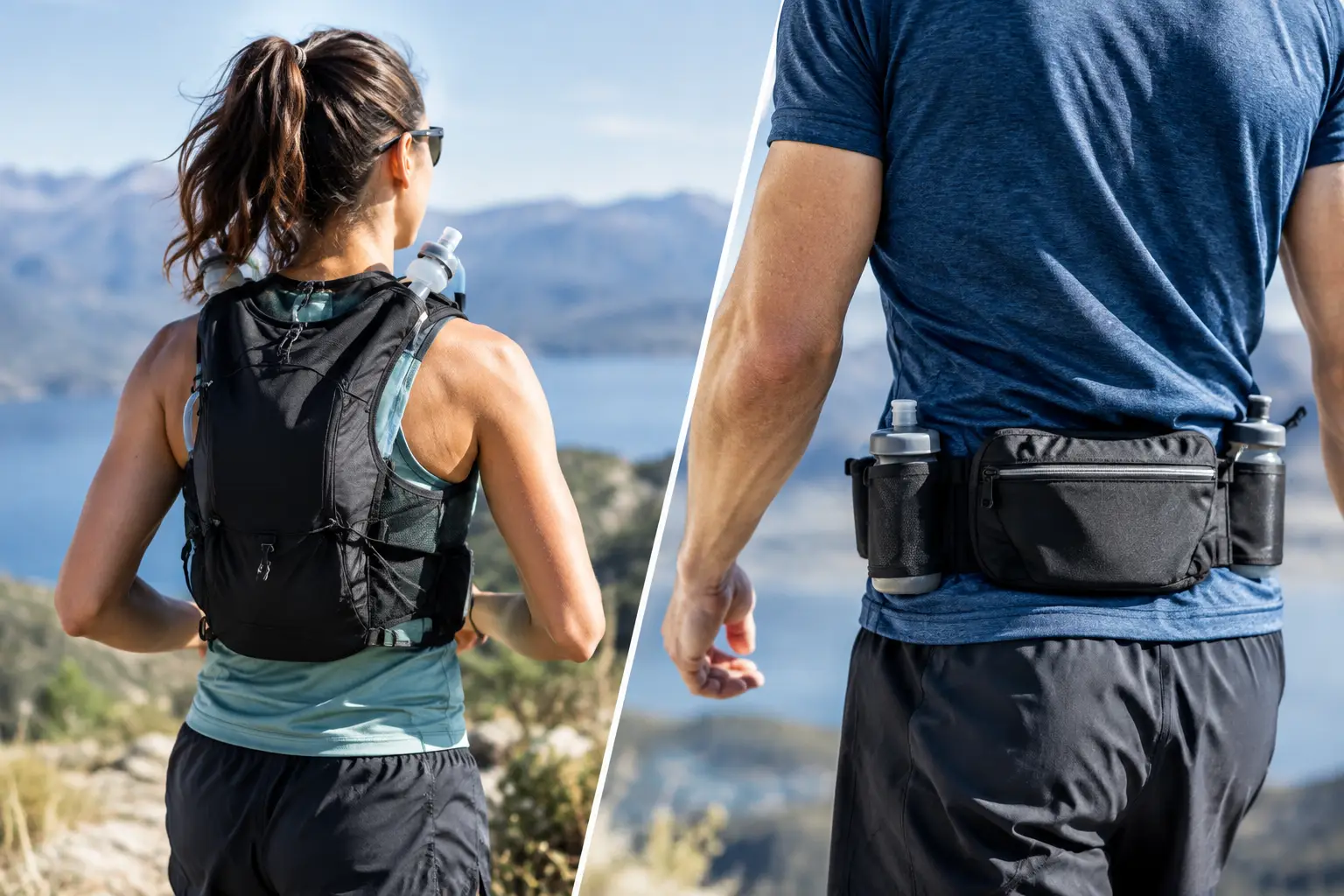
You are three miles into a hilly trail run, the sun has appeared, and the water station is still nowhere in sight. That is when the hydration vest versus belt decision stops being kit-chat and starts affecting your day. The right option should let you drink, move and enjoy the challenge without constantly fiddling with straps or wondering whether you have brought enough water.
For adventure athletes, there is no universal winner. A belt can feel brilliantly light and liberating on a short, supported run. A vest can be the dependable choice when the route is longer, rougher or more exposed. Your distance, conditions, pace and personal preference matter far more than what looks fastest on the start line.
Hydration Vest Versus Belt: The Real Difference
A hydration belt carries water around your waist, usually in one or two bottles. It is a minimalist setup designed to keep your upper body free. Some models also have a small pocket for gels, keys and a phone, although capacity varies wildly.
A hydration vest sits over your shoulders and upper torso, distributing weight across your chest and back. Most use soft flasks in front pockets, a bladder in the back, or both. They generally carry more water, more food and a few essentials such as a lightweight jacket, buff, first-aid basics or mandatory kit.
The difference is not simply how much each can hold. It is how the load feels after an hour of climbing, jogging along uneven ground or pushing through the final miles when your form is less tidy than it was at the start.
When a belt feels best
For a short run with regular aid stations, a belt is hard to beat for simplicity. It gives you access to water without another layer over your shoulders, which can be a relief in warm weather. If you dislike the feeling of fabric around your chest or tend to overheat, a belt may feel noticeably more comfortable.
Belts can also work well for runners who only need a small amount of fluid between stops. A 5K, a local 10K, a supported trail event or a familiar loop close to home rarely demands the carrying capacity of a full vest.
The catch is bounce. A belt that feels fine while standing in the kitchen can shift, rub or thump against your lower back once you start descending. Bottle belts are especially prone to movement when they are fully loaded or worn over slippery technical fabrics. The best fit is snug, but not so tight that it restricts breathing or causes chafing around the waist.
When a vest earns its place
A vest comes into its own when self-sufficiency matters. Longer trail runs, hot days, remote routes and events with widely spaced water stations all favour having more fluid and supplies close by. Soft flasks on the front are easy to reach, so you can take small, regular sips without breaking stride.
Weight distribution is the biggest win. A well-fitted vest spreads its load across the upper body rather than concentrating it at the waist. That usually feels more stable over technical ground, particularly when you are climbing, scrambling around muddy sections or jogging downhill on tired legs.
For SUPBIKERUN-style adventure, where the day is about more than a single flat run, a vest can also give you useful space for the extras that make outdoor events more comfortable. That does not mean filling every pocket just because it is there. It means carrying what the route, forecast and event guidance genuinely call for.
Capacity: Carry Enough, Not Everything
Choosing between a hydration vest and a belt often comes down to a simple question: how long might you be without a refill?
A belt carrying 500ml to one litre can be ample for a cool-weather run with reliable support. If you know there is water every few kilometres and you are comfortable using it, travelling light is a sensible move. It keeps the experience simple and reduces the temptation to pack like you are heading into the wilderness for a week.
A vest is more useful when one litre will not comfortably bridge the gap. In warm conditions, on exposed trails, or during a long effort where you will also need fuel, two front flasks or a bladder provide reassurance. You can carry electrolytes in one flask and plain water in another, which is handy if you have a nutrition routine that works for you.
Do not treat capacity as a reason to carry litres you will never drink. Water is heavy. One litre weighs one kilogram, and that weight is more noticeable on hills than it is in a shop. Check the event information, study the likely weather, and be honest about your pace. A runner out for two hours needs a different plan from someone finishing in 45 minutes.
Comfort Matters More Than Clever Features
The most feature-packed piece of kit is useless if it rubs your skin raw. Fit should lead the decision.
With a vest, adjust the side and chest straps while it is loaded with the amount of water you expect to carry. It should sit close enough not to bounce, while still allowing a full, relaxed breath. Test it on hills, not just a flat pavement run. A vest can behave very differently once the flasks are half empty and your body is moving through a bigger range of motion.
With a belt, pay attention to where it naturally settles. Some runners prefer it low on the hips; others are happier with it higher around the waist. Neither is automatically right. The right position is the one that stays put without digging in or riding up.
Chafing is rarely dramatic at the start. It builds gradually through sweat, rain, salt and repeated movement. Use anti-chafe balm on known problem areas, choose clothing you have already tested, and do not debut a new hydration system on race day. That rule is gloriously boring, but it saves a lot of suffering.
Access to Fuel and Essentials
A vest wins comfortably if you need regular access to gels, chews, electrolyte tablets or a phone. Front pockets make it easy to eat little and often, which many runners find easier on the stomach than taking in a lot at once. You can also keep your phone protected but accessible for route checks or photos when the view is worth stopping for.
A belt is less convenient for carrying a full nutrition plan, though a simple pocket can handle a couple of gels and a key. If that is all you need, its restraint is part of the appeal. There is something satisfying about heading out with only the essentials and no excess kit flapping around.
Consider practical details before buying. Can you open the pockets with cold or muddy hands? Are the bottles easy to remove and replace while moving? Does the phone pocket fit your actual phone, rather than an imaginary tiny one from 2014? Small frustrations become big ones during a long day outside.
Match Your Choice to the Day
A belt is often the smart pick for short, supported sessions, cooler conditions and runners who want the least kit possible. It is also a good option for training runs where you can refill easily or cut the route short if plans change.
A vest is usually the stronger choice for longer trail days, changeable weather, remote terrain and events where you need food, layers or compulsory items. It is also the better bet if a belt has repeatedly bounced or rubbed, even after careful adjustment.
There are grey areas. On a hot 10K, a small vest may be more useful than a belt if you know you drink heavily. On a cool half marathon with frequent aid stations, a belt may feel unnecessary too. Let the route and your own experience make the call.
Test It Before You Need It
Whatever you choose, train with it loaded. Drink from it, refill it, practise opening pockets and find out whether it remains comfortable after the point when you are sweaty and tired. Use the same fuel you intend to use on event day, because hydration and nutrition are a team effort, not separate plans.
The best carrying system is the one you stop noticing. Pick the setup that keeps your water close, your movement natural and your attention where it belongs: on the trail, the challenge and the people sharing the day with you.