
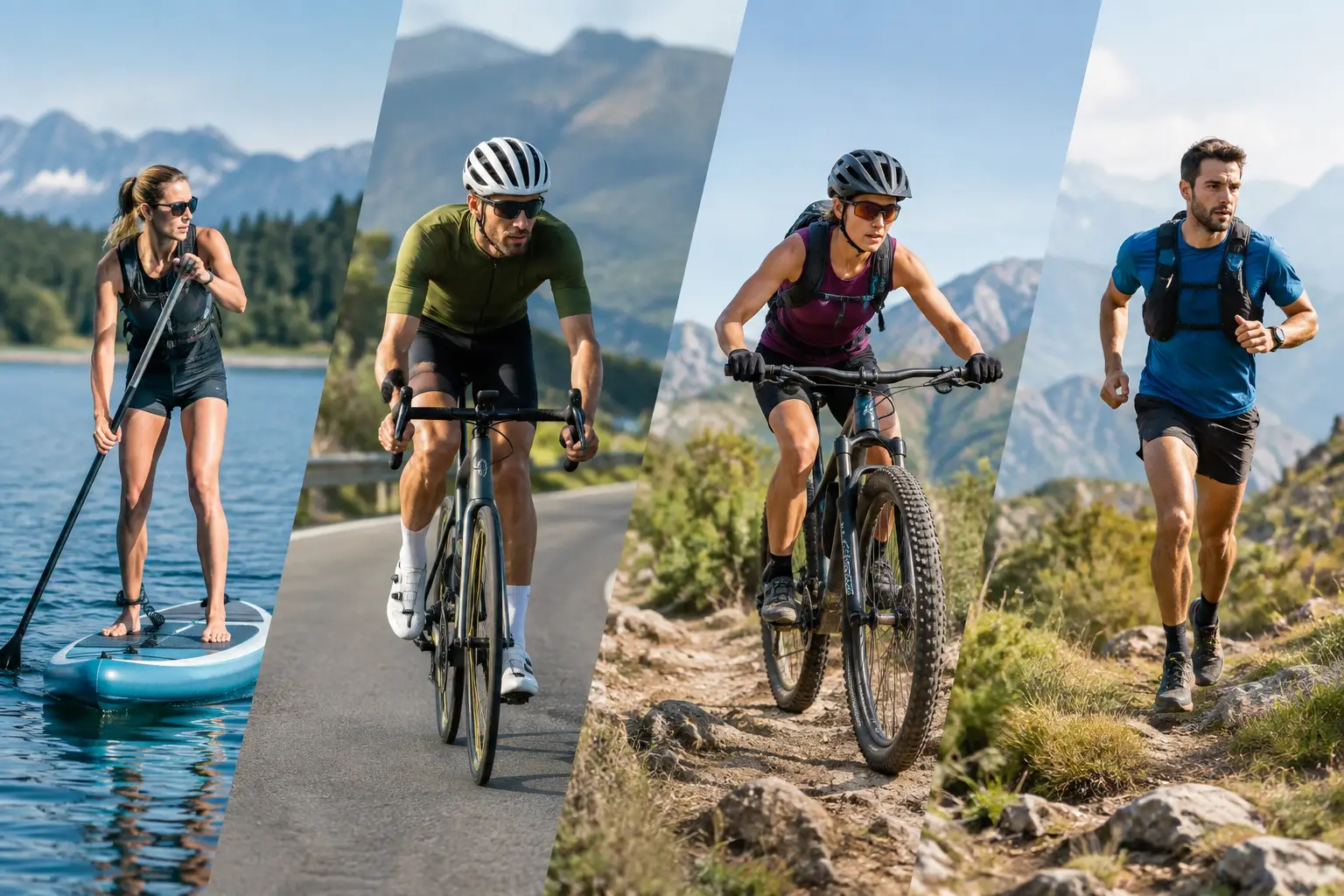
The bike leg should feel like an adventure, not a compromise you regret at the first muddy climb. If you are asking what bike for mixed terrain race day, start with the ground beneath your wheels: a route that moves between tarmac, gravel tracks, woodland trails and loose descents asks for a bike that can adapt without draining your energy.
There is no single magic answer. The right choice depends on how technical the off-road sections are, how much road sits between them, the weather and the bike you already ride with confidence. For most riders, the goal is simple: choose a set-up that keeps you moving efficiently while giving you enough grip and control to enjoy the rough stuff.
What bike for a mixed terrain race?
A hardtail mountain bike is usually the safest, most confidence-building choice for a genuinely mixed-terrain race. It gives you front suspension for roots, ruts and rocky tracks, predictable handling when conditions turn slippery, and tyres wide enough to keep you upright when the surface stops behaving.
That does not mean a mountain bike is automatically best for every course. If the route is mainly firm gravel, smooth trails and road, a gravel bike can be quicker and feel more responsive. A hybrid can work for an accessible, non-technical route, particularly if it has room for wider tyres. But once the trail includes uneven ground, steep loose descents or mud, a hardtail earns its place very quickly.
Forget the idea that you need the lightest or most expensive bike. A bike you can steer confidently, climb comfortably and brake reliably will beat a nervous, highly strung machine every time.
Start with the terrain, not the label on the bike
Look beyond phrases such as ‘mixed terrain’. They can cover a huge range of riding. A course with 70 per cent road and well-packed paths requires a different approach from one with forest singletrack, roots, wet grass and long rocky climbs.
If the off-road sections are short, dry and non-technical, a gravel bike fitted with sensible tyres may be the fast option. Its riding position is efficient on open roads, and drop handlebars offer several hand positions over a longer distance. The trade-off is reduced control when the surface gets rough and less forgiveness from your body on repeated bumps.
If the route is more evenly split, a cross-country hardtail is the all-rounder. It rolls well enough on the road, climbs strongly and offers more margin for error on trails. For many first-time adventure racers, that margin is worth far more than a small speed gain on the tarmac.
A full-suspension mountain bike is brilliant on technical terrain, but it can be more bike than you need for a route with substantial road sections. It is generally heavier, can feel less direct when pedalling on smooth surfaces and needs more maintenance. Choose it when the course genuinely rewards the extra suspension, not simply because it looks ready for anything.
Why a hardtail often wins
The hardtail is popular for good reason. Front suspension takes the sting out of rough ground, protects your hands and shoulders, and helps the front wheel track through loose corners. With no rear shock, it also remains efficient when you are pushing over firmer tracks or connecting sections of road.
Look for a bike with around 100-120mm of front suspension travel. That is plenty for most race routes without turning the bike into a slow, heavy trail machine. A lockout is useful, but do not become obsessed with it. On a bumpy climb, leaving the fork active can preserve traction and make the ride more comfortable.
Wheel size matters less than fit and confidence, although 29-inch wheels are now common for mixed-terrain riding. They roll smoothly over roots and stones and maintain speed well on rough surfaces. Smaller riders may prefer the feel and fit of 27.5-inch wheels, while many modern hardtails make 29-inch wheels work across a broad range of frame sizes.
Tyres are your biggest performance upgrade
Before buying a new bike, look at your tyres. They have a bigger effect on comfort, grip and confidence than many riders expect.
For mixed conditions, a mountain-bike tyre around 2.1-2.4 inches wide is a strong starting point. Choose a reasonably fast-rolling centre tread with more defined side knobs. That combination keeps the bike moving on hardpack and tarmac while giving you something to lean on in loose bends and wet woodland.
A gravel bike needs more volume than a narrow road-style set-up. Tyres in the 40-45mm range can transform how it handles uneven paths. If the route is likely to be wet or loose, favour tread and grip over an ultra-fast file pattern.
Pressure is just as important as tyre choice. Too much pressure makes the bike bounce, lose grip and batter you over every root. Too little raises the risk of punctures or rim damage. Your ideal pressure depends on rider weight, tyre width, whether you use inner tubes or tubeless, and the surface. Test it before race day on a local route, changing only a little at a time.
Tubeless tyres can be a smart upgrade for riders who are comfortable setting them up. They allow lower pressures and can seal many small punctures automatically. They are not essential, though. Fresh inner tubes, a repair kit, tyre levers and a working mini-pump are perfectly capable race-day companions.
Gearing should make the climbs manageable
Mixed terrain has a habit of hiding its hardest climbs just when your legs are beginning to complain. Choose gears that let you spin rather than grind.
For a hardtail, a one-by drivetrain with a wide-range cassette is simple and effective. A lowest gear around a 30-34 tooth chainring paired with a large 50 or 51 tooth sprocket gives most recreational riders a useful escape gear for steep, slippery climbs. If you are buying or borrowing a bike, do not be seduced by a big top gear you may barely use. Easy climbing gears are more valuable.
Gravel bikes vary widely. Some are geared close to road bikes, which can leave you walking when a loose climb pitches up. Check the lowest available gear, especially if you are carrying kit, racing on tired legs or expecting mud.
Fit and control beat race-bike fashion
Your bike should feel like an extension of you, not a piece of kit you are trying to manage. You need enough room to move around on climbs and descents, a reach that does not strain your back or shoulders, and handlebars you can control when your arms are tired.
If you are between sizes, do not guess. Try both where possible. A slightly shorter, more upright position often inspires more confidence off-road than a stretched-out race fit. Set your saddle height for efficient pedalling, then make sure you can get behind the saddle on a descent without feeling trapped.
Brakes deserve proper attention. Hydraulic disc brakes offer strong, consistent stopping power in wet and muddy conditions, but well-maintained mechanical discs can also do the job. Whatever system you have, check pad wear, rotor condition and lever feel before the event. Descending is much more fun when you know your brakes will answer the call.
Make your existing bike race-ready
You do not need a new bike to take on an adventure challenge. A dependable existing mountain bike, serviced and fitted with appropriate tyres, is often the best option. Spend your budget first on maintenance: a clean drivetrain, fresh brake pads if needed, properly adjusted gears and tyres in good condition.
Carry the essentials without overloading yourself. A spare tube, pump or CO2 inflator, tyre levers, multi-tool and quick link cover the most common mechanical hiccups. Bring enough water and fuel for the distance, particularly if the day is warm or the route is hilly. Practise accessing your food and kit while riding before race day, rather than discovering a stubborn pocket halfway through the course.
Most importantly, ride the bike on terrain that resembles the event. Learn how it feels under braking, how much grip the tyres have on wet grass, and whether your gearing is low enough for a steep climb. Skills and familiarity create free speed.
At SUPBIKERUN, the bike section is part of the story, not just the bit between the paddleboard and the run. Pick the bike that lets you embrace every surface, stay in control when conditions get lively and arrive at the next discipline smiling. That is a far better result than chasing a few seconds on the road and spending the trails wishing you had brought more bike.