
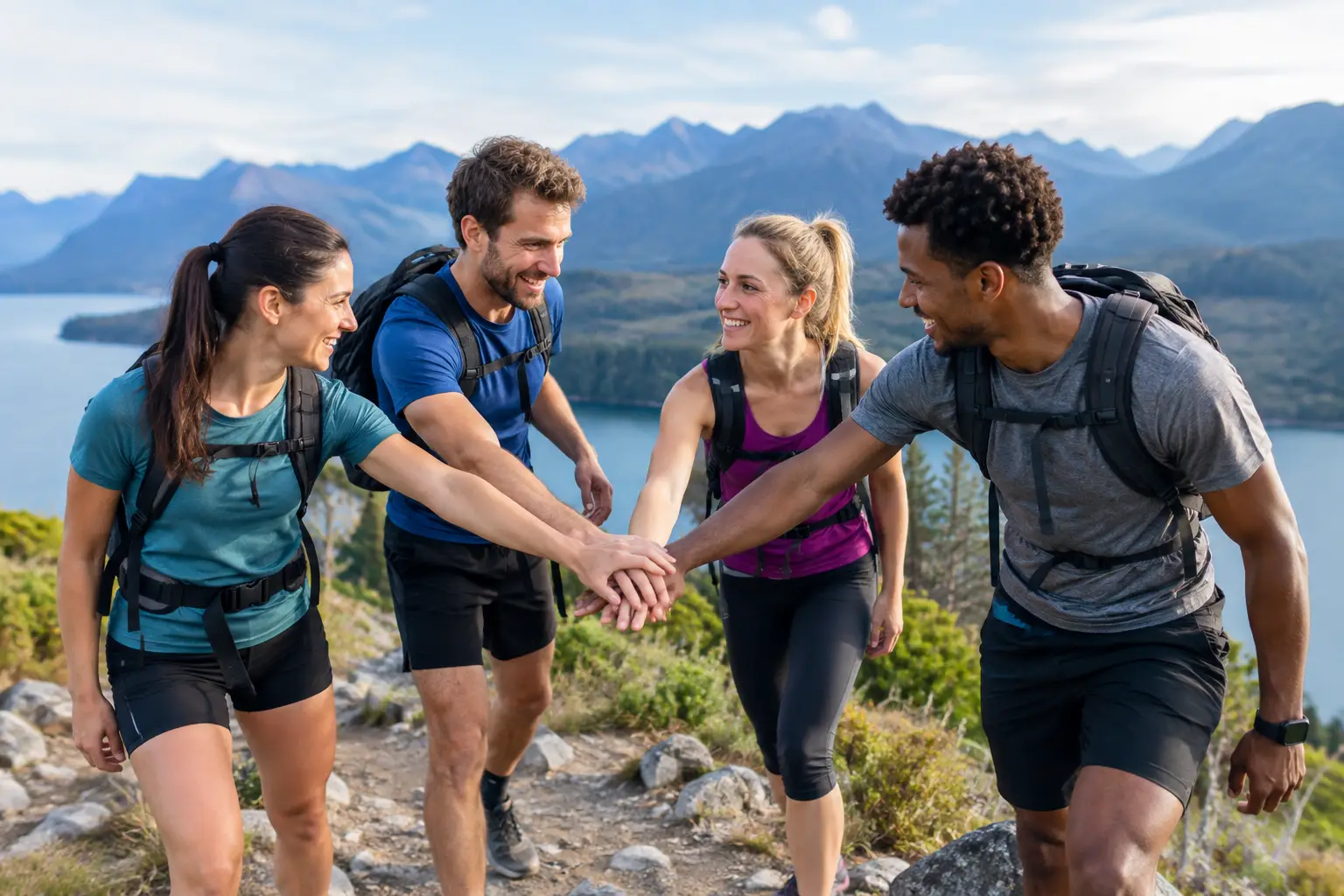
A brilliant corporate team challenge event example does not begin with a PowerPoint, a conference room or an awkward icebreaker. It begins outside, with a shared route, a clear goal and a challenge that gives every person a reason to pull together.
For a team used to separate diaries, screens and deadlines, an adventure challenge creates a different kind of conversation. Someone takes the lead on a climb. Someone spots the best line through a trail section. Someone who has been quiet in the office becomes the person keeping morale high when legs start to tire. That is where the good stuff happens.
The strongest corporate days are not about finding the fittest person in the business. They are about giving colleagues a genuine shared experience, with enough adventure to feel memorable and enough support to make participation achievable.
A corporate team challenge event example that works
Picture a team of 24 colleagues split into four mixed-ability groups. Their challenge is to complete a multi-discipline outdoor course over one day: paddle boarding on calm water, cycling on a chosen route and trail running or hiking to a finish-line gathering point.
Each group starts with the same overall mission but has small decisions to make along the way. They must pace their strongest and newest participants sensibly, collect checkpoints, complete light-hearted team tasks and get every member across the finish line. Timing can be part of the day, but it should not be the whole point. A points system that rewards teamwork, route choices, encouragement and completed challenges keeps the atmosphere competitive without turning it into a sufferfest.
Start with a proper event briefing. Cover the route, safety procedures, equipment, weather plan, support points and the simple rule that nobody gets left behind. Then let the teams get moving.
The paddle board section immediately changes the dynamic. It is unfamiliar enough to be exciting, but manageable when led by qualified staff and supported with the right kit. Colleagues have to communicate, laugh off a wobble and help each other find confidence. The bike leg brings momentum and problem-solving. The trail section rewards steady pacing, conversation and the collective push towards the end.
Finish with food, a drink and time for people to swap stories while the adrenaline is still buzzing. Recognition can be given for the fastest team, but the best awards usually celebrate things that matter more: best team spirit, calmest problem-solvers, strongest support crew or biggest personal breakthrough.
Why outdoor challenges land better than forced fun
A corporate event should feel like a break from normal working life, not a compulsory fun day with branded mugs. Outdoor adventure has a useful way of stripping back job titles. On a trail, nobody cares who is the loudest in a meeting. They care who has remembered the snacks, who is checking on the group and who is willing to give the next section a go.
That shift builds trust because it is earned in real time. Participants see how their colleagues respond when plans change, energy dips or a route looks tougher than expected. There is room for leadership, but it does not only come from managers. The person with the most relevant experience may lead a section, while someone else becomes the steady voice when the group needs encouragement.
There is also a lasting benefit in the shared reference points that come afterwards. A difficult hill, an unexpectedly funny paddle board moment or the collective finish becomes part of the team’s language. These moments cannot be replicated by another round of drinks after work.
Build challenge without excluding people
The most common mistake is choosing an event that is too hard for most of the group, then labelling it team building. If half the team spends the day anxious about being left behind, the challenge has missed its mark.
Set the ambition according to the people taking part, not the most competitive colleague. A mixed-ability format works best when there are route options, sensible cut-off points, qualified event staff and a clear support plan. People should be able to push themselves without feeling exposed.
That does not mean making everything easy. The best days have a little edge. A steep climb, a new discipline or a long final push gives people a chance to surprise themselves. The difference is that the event provides choices. A participant might walk parts of the run, choose a shorter cycle route or pair up with a teammate who can offer extra confidence on the water.
Accessibility needs thinking about early too. Ask participants about injuries, medical needs, swimming confidence, cycling experience and any barriers to taking part. A well-organised provider will help shape an event that feels fair, safe and genuinely inclusive.
What to include in the day
A strong event programme has a clear rhythm. People need enough activity to feel the challenge, but enough downtime to connect and recover. For most teams, one full day is plenty.
Begin with registration, kit checks and a welcoming briefing. Build in a warm-up or a simple first challenge that gets groups talking before the main event. During the course, provide visible marshals, water points, route signage and access to first aid. Those practical details matter. Adventure feels far more enjoyable when participants trust the infrastructure behind it.
Keep the team tasks short and relevant to the setting. Navigation choices, checkpoint questions, photo challenges or basic outdoor problem-solving all work well. Avoid overcomplicating things with endless rules. The course itself is already the main event.
The finish should feel earned. Music, food, medals or a shared post-event meal give everyone a moment to celebrate. If the group is staying over, camping or local accommodation can turn a challenge day into a proper team escape rather than a rushed dash home.
Choosing the right location and format
The setting does a lot of the work. A lake, forest trail, country lane or hillside route makes the day feel different before anyone has started. Mid Wales, Devon and the Lake District all offer the kind of terrain that can turn a standard away day into a story worth retelling.
But dramatic scenery should not override logistics. Consider travel times, parking, changing facilities, meeting space, toilets, food options and wet-weather arrangements. A remote location may look perfect on paper, yet be the wrong choice for a group travelling from several offices or arriving by public transport.
It also depends on the purpose. If the goal is a big reward for an adventurous team, a longer endurance format can be spot on. If the aim is to bring together a newly merged department, shorter stages and more shared tasks may be better. For leadership groups, introduce more route-planning and decision-making. For a broad company celebration, prioritise participation and atmosphere over technical difficulty.
SUPBIKERUN-style multi-discipline events are especially effective because paddle boarding, cycling and trail running offer a challenge that feels proudly unconventional, while still giving teams a clear structure and a brilliant shared finish.
How to make the impact last beyond the finish line
Do not let the event become a nice photo folder that nobody opens again. Give teams a chance to reflect while the experience is fresh. At the finish, ask what helped the group work well, where communication got better and what surprised people about themselves or their colleagues.
Keep it informal. A few good questions over food will get more honest answers than a formal debrief. Managers can then carry the best observations back into work: clearer handovers, greater confidence in asking for help or more willingness to share responsibility.
Photos and short video clips are useful too, particularly for recognising participation internally. Keep the focus on the people and the effort, not on polished corporate messaging. The muddy shoes, the finish-line smiles and the teammate who thought they could not do it are the proof that the day mattered.
Give your team something real to take on together. Choose a challenge that asks for effort, celebrates every finish and leaves people already talking about the next adventure.