
A finish-line banner is easy to buy. A place in somebody’s best weekend of the year has to be earned.
That is the real opportunity in event sponsorship. For outdoor brands, it is not simply a logo on a race number or a mention over the tannoy. Done well, it puts your product, people and purpose into the middle of an experience participants have trained for, travelled for and will talk about long after they have washed the mud off their trainers.
Adventure events attract people who notice the details. They remember the brand that helped them solve a problem at 7am, kept them warm after a hard finish, or gave their mates a reason to stay for one more drink in the event village. They also spot a lazy logo placement a mile off.
Why event sponsorship works for adventure brands
Mass-participation events bring together a rare combination: a clearly defined audience, a shared emotional high and time away from the usual scroll-and-forget marketing noise. Riders, runners and paddlers arrive ready to take part, not just watch. They are invested in the day before the starter’s horn sounds.
That makes outdoor event partnerships particularly powerful for brands in fitness, nutrition, kit, travel, wellbeing, vehicles, technology and hospitality. The audience is already living the lifestyle your brand wants to be associated with. The challenge is to add something useful rather than interrupt it.
A good partnership can do several jobs at once. It can build awareness among an active, relevant community; create credible content; give your team face-to-face conversations with potential customers; and offer practical benefits for staff or clients through corporate entries. The strongest results usually come from combining those aims, not chasing a single vanity metric such as social reach.
There is a trade-off. A headline partnership with broad visibility may be right when brand awareness is the priority. A smaller, more hands-on activation can be better when you need product trials, data capture or direct feedback. Neither is automatically the better choice. It depends on what you want people to do, think or feel afterwards.
Event sponsorship should improve the participant journey
The simplest test is brutally effective: if the sponsor disappeared on event day, would participants notice for the wrong reasons?
The best activations remove friction or add a moment of genuine enjoyment. Think of charging points where people actually need them, a practical kit-care station, warm post-race food, photo moments worth keeping, recovery support or a useful reward for volunteers. These are not gimmicks when they fit the event and meet a real need.
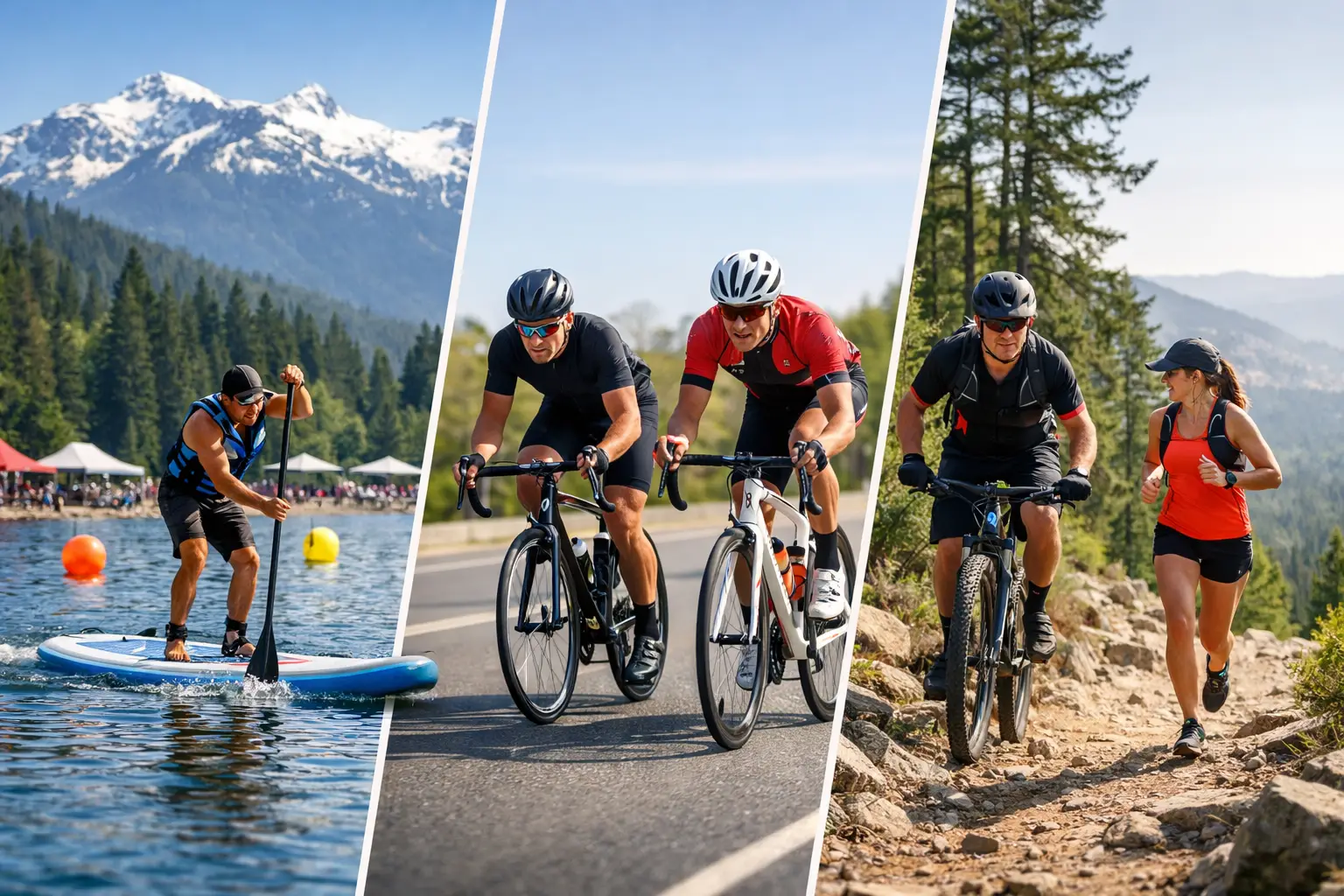
For an adventure triathlon, that relevance matters even more. A paddleboarder has different concerns from a road cyclist. A trail runner finishing in rain needs something different from a spectator waiting with a dog and a coffee. The right sponsor starts with the route, the timetable and the people on site, then creates an activation around the reality of their day.
That might mean a hydration brand supporting refill points rather than handing out excess single-use packaging. It could mean an outdoor clothing partner creating a dry, welcoming recovery area. A local food business may make a far bigger impression by feeding exhausted participants well than by putting a small advert on a fence.
Useful does not have to mean serious. A well-run challenge, a brilliant DJ at the finish, a team photo station or a playful prize can be memorable too. The point is that it belongs there. Outdoor communities are generous with enthusiasm, but they expect brands to show up properly.
Build before race day, not just at the finish line
The event itself is the peak, not the whole campaign. Participants make decisions weeks or months in advance: whether to enter, how to train, what kit to buy, who to invite and where to stay. Sponsors that appear only on the day miss much of the story.
Work with the organiser on content that feels useful to entrants. Training advice from qualified voices, kit checklists, route inspiration, group-entry incentives and behind-the-scenes preparation can all create value before anyone arrives. Keep the brand role clear but light-touch. Nobody needs a sales pitch disguised as a safety briefing.
Afterwards, give people a reason to stay connected. Celebrate their achievement, share high-quality event imagery promptly and create an offer that genuinely relates to what they have just experienced. A discount with no relevance feels transactional. Early access to a product trial, an invitation to another community session or useful recovery guidance feels considered.
Choose an event whose community matches your values
Audience numbers matter, but they are not the whole picture. A packed event with the wrong crowd will not suddenly make your brand credible. Look beyond registrations and ask who attends, why they come and how they behave as a community.
Are participants competitive specialists, first-time challengers, families, club athletes or workplace teams? Is the atmosphere fiercely performance-led, festival-like, inclusive or technical? Does the event take environmental responsibility seriously? What is the volunteer culture like? These answers shape whether a partnership will feel natural.
At SUPBIKERUN, for example, the blend of paddle boarding, cycling and trail running attracts people who want a proper physical challenge without leaving the fun behind. That creates room for partners that understand adventure, camaraderie and time outdoors – but only if they support the experience with the same energy.
Location also changes the proposition. A weekend in Mid Wales, Devon or the Lake District can give a sponsor a strong connection to landscapes, local communities and outdoor escape. But do not treat the setting as scenery for a campaign. Respect access, weather, logistics and the people who live there. A brand that understands the place will always feel more credible than one that merely borrows its backdrop.
Ask the operational questions early
A confident sponsorship idea still needs to work on the ground. Ask how much space is available, what vehicles can access the site, when your team can build, where power comes from and what happens if conditions turn wet or windy. Check insurance requirements, sampling rules, data permissions and waste plans before you promise anything publicly.
Good organisers will be open about what is realistic. That is not a limitation – it is how great partnerships avoid last-minute compromises. The most memorable activations are often the ones designed with event operations, safety and participant flow in mind from the start.
Measure what matters, then act on it
Counting impressions alone can make a busy weekend look successful without proving much. Agree measures that match the job you need the sponsorship to do. If you want awareness, track recall and reach. If you want engagement, count meaningful conversations, samples tried and time spent in the space. If the goal is sales or lead generation, make the route from interaction to follow-up simple and permission-based.
It also pays to collect the human evidence. Ask participants one short question: what did they find most useful? Speak to volunteers. Listen to your event team. Read comments and notice what people choose to photograph or share without being asked. These signals can reveal whether your activation added value far better than a spreadsheet can.
Four checks keep the review honest:
- Did the partnership reach the right people, not merely a large number of people?
- Did it make the event better for participants, spectators or volunteers?
- Did the brand team have enough time, stock and support to do the job well?
- Would people welcome the activation back next year?
That final question is a strong benchmark. If the answer is yes, you are building more than a one-weekend campaign. You are becoming part of a community’s ritual.
Bring something worth talking about
The best sponsors do not try to own the event. They help make it happen, then let participants own the achievement. Be visible, be generous and be useful. Bring people who are pleased to be there, not a pop-up stand that feels detached from the mud, the nerves, the laughs and the finish-line relief.
Choose an event with a community you genuinely want to spend time with. Then create a contribution that participants would miss if it were gone. That is where a logo stops being a logo, and starts becoming part of the adventure.