
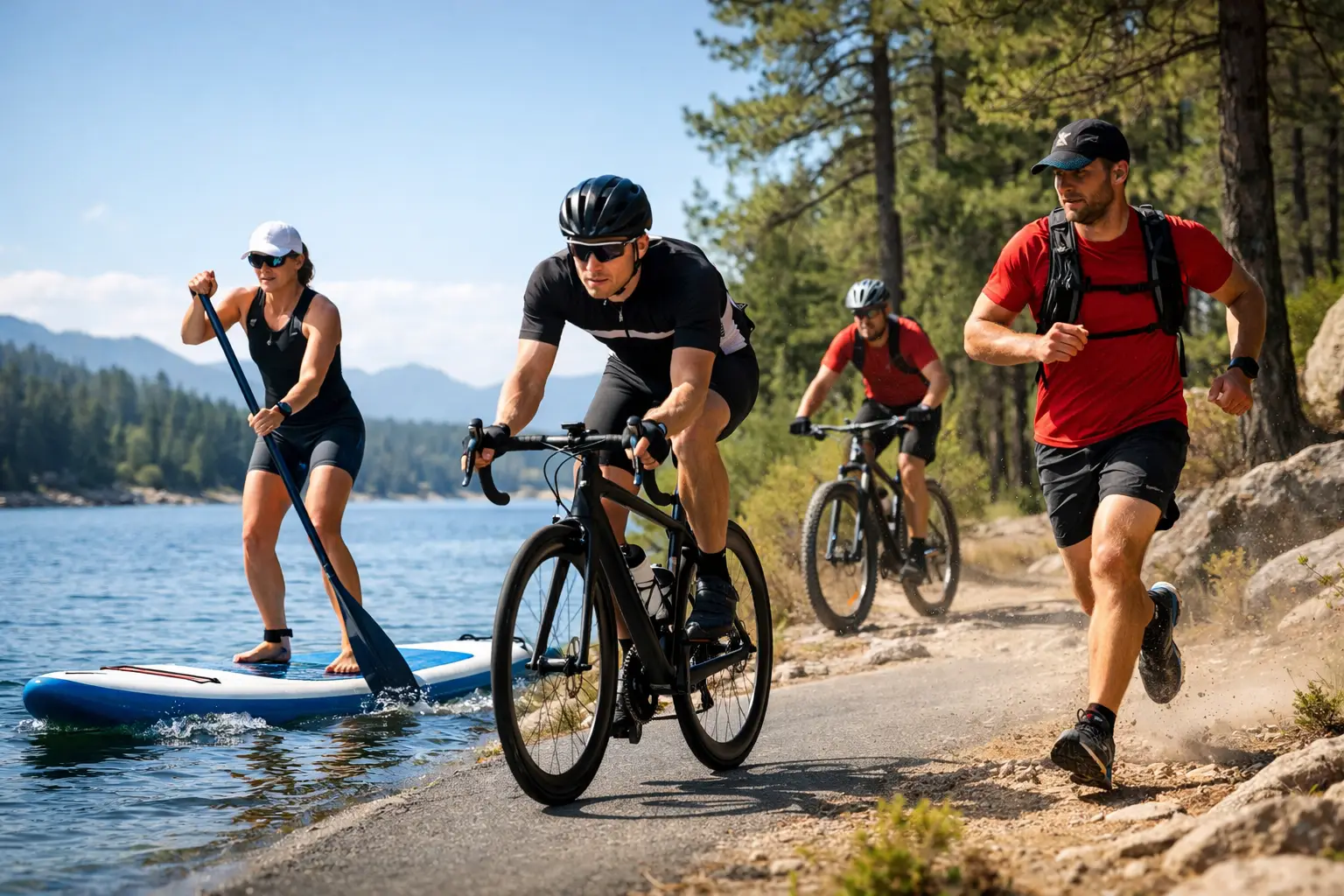
A start line should feel like the beginning of an adventure, not an exam you have spent months revising for. That is why the future of alternative triathlon events looks so exciting. More people want to test themselves outdoors, share the day with mates and finish with stories worth retelling – without needing to fit the traditional swim-bike-run mould.
For some, that means swapping pool lanes for open water and a paddleboard. For others, it means leaving the tarmac behind for a trail, adding a mountain bike, camping for the weekend or taking on a challenge with the whole office. The appetite is not for easier events. It is for events that feel more alive.
Why conventional rules are no longer enough
Traditional triathlon remains a brilliant test of endurance, and there will always be athletes chasing a personal best over a familiar course. But a growing number of active people are looking beyond split times and standardised distances. They want the buzz of competition with more freedom, personality and connection to the landscape.
Alternative formats meet people where their interests already are. Paddleboarders want a reason to train towards a bigger day out. Trail runners want technical ground, views and a proper sense of journey. Cyclists want routes that reward skill as much as speed. Put those disciplines together and the result is not a novelty. It is a challenge with its own character.
That matters because entry into endurance sport can feel intimidating. A highly technical race environment, specialist kit expectations and an intense focus on performance can put off capable people before they even register. A well-designed adventure triathlon offers another route in: take the challenge seriously, but do not take yourself too seriously.
The future of alternative triathlon events is experiential
The strongest events of the next few years will not just sell a place on a start list. They will create a full weekend people want to plan around. The race is still the headline, but the experience begins when participants arrive, pitch a tent, collect their event pack and realise they are surrounded by people who are up for the same thing.
Camping, spectator spots, food, music, recovery areas and clear pre-event information all play a part. None of these replaces a great course. They make a great course feel like a complete adventure. For busy professionals and parents, that distinction is huge. If a challenge earns a weekend away with friends or family, it becomes far easier to commit to.
This is also where the UK has a real advantage. We have lakes, forests, moorland, bridleways and coastlines that can turn a multi-discipline race into something unforgettable. A route in Mid Wales, Devon or the Lake District should feel shaped by its setting rather than dropped onto it. The terrain is not just a backdrop. It is part of the test.
More choice, without losing the point
More varied event formats do not mean every race needs to become complicated. The best choices are purposeful. A shorter course can give first-timers a realistic target; a longer route can give experienced endurance athletes the day they have been waiting for. Relay options can bring friends and colleagues into the action. A road bike route and an off-road alternative may suit different confidence levels, provided the event team can manage both safely.
The trade-off is clarity. Too many options can confuse participants, especially when equipment, transitions and cut-off times are involved. Organisers will need to explain exactly who each course is for, what kit is required and how the day runs. Adventure should begin on the course, not in a muddled registration process.
Safety and support will define the best events
Paddleboarding, cycling and trail running bring real variables: changing weather, uneven ground, water conditions and fatigue. That is precisely what makes the format exciting, but it also makes professional organisation non-negotiable.
As alternative triathlons grow, participants will expect better briefings, sensible kit guidance, qualified water safety teams, well-marked routes and responsive marshals. They will also expect organisers to make sensible calls when conditions change. A shortened paddle, revised bike section or delayed start can be frustrating, but it is far better than forcing a plan that no longer fits the conditions.
Good event infrastructure does more than protect people. It gives participants confidence to push themselves. When transition areas are clear, timing works, aid stations are where they should be and volunteers know the course, athletes can focus on the moment in front of them. That balance of freedom and reassurance is central to SUPBIKERUN and should become the standard across the sector.
Community will matter as much as competition
The next generation of adventure events will be built around belonging. Plenty of participants enjoy racing hard, but few want an atmosphere that suggests they do not belong unless they are at the front. A supportive start line makes room for the racer chasing a podium, the paddleboarder doing their first multi-discipline event and the group of colleagues raising money for a cause.
That starts with language. Talk about preparation, not perfection. Celebrate finishers as well as winners. Make volunteering visible and valued. Give spectators enough to enjoy so they become part of the energy rather than waiting in a car park for hours.
Corporate teams are a particularly exciting part of this shift. A shared outdoor challenge can reveal more than a team lunch ever will. Someone takes the lead on a climb; someone else stays calm in the transition; another person brings the encouragement when legs begin to fade. The right event gives people a genuine challenge while still being accessible enough that the whole team can take part.
Competition still has a place
Inclusive does not mean watered down. There is room for serious competitors in alternative triathlon, especially as participation grows and course design becomes more refined. Accurate timing, sensible wave starts and clear category results allow athletes to race properly without changing the welcoming spirit of the event.
It depends on what each participant wants from the day. Some will train for months to beat last year’s time. Others will measure success by completing every discipline with a grin. A great event gives both groups a reason to come back.
Smarter choices will protect the places we race
Outdoor events rely on healthy landscapes and good relationships with local communities. The future cannot be about putting bigger crowds into fragile places without care. Organisers need to think about route rotation, erosion, waste, transport, local permissions and how participants are briefed to respect the environment.
That may mean capped entries in certain venues, avoiding sensitive periods for wildlife or choosing routes that spread impact sensibly. It can also mean asking athletes to bring reusable bottles, take their litter home and travel together where possible. These are not marketing extras. They are practical choices that help ensure an event can return year after year.
Participants increasingly notice this. They want the excitement of a wild setting, but they do not want to leave it worse than they found it. The events that earn long-term loyalty will make that responsibility visible in the way they operate, not just in a line of copy.
What this means for your next challenge
If you have been curious about a triathlon but put off by the usual formula, this is your invitation to look again. Start with the discipline that already excites you most, whether that is paddling, riding or running, then build confidence in the others. You do not need elite credentials to enjoy a big day outdoors. You need sensible preparation, the right kit and a willingness to give it a go.
Choose an event with clear course information, proper safety support and an atmosphere that makes you want to bring people along. Train for the terrain rather than just the distance. Practise transitions before race day. Most of all, leave room for the unexpected moments that make adventure sport special: the calm before the start, the mud on your calves, the stranger who cheers you up a climb and the finish line you were not sure you would reach.
The next great triathlon experience may not involve a pool at all. Find a challenge that feels like your kind of weekend, put a date in the diary and give yourself something properly exciting to work towards.