
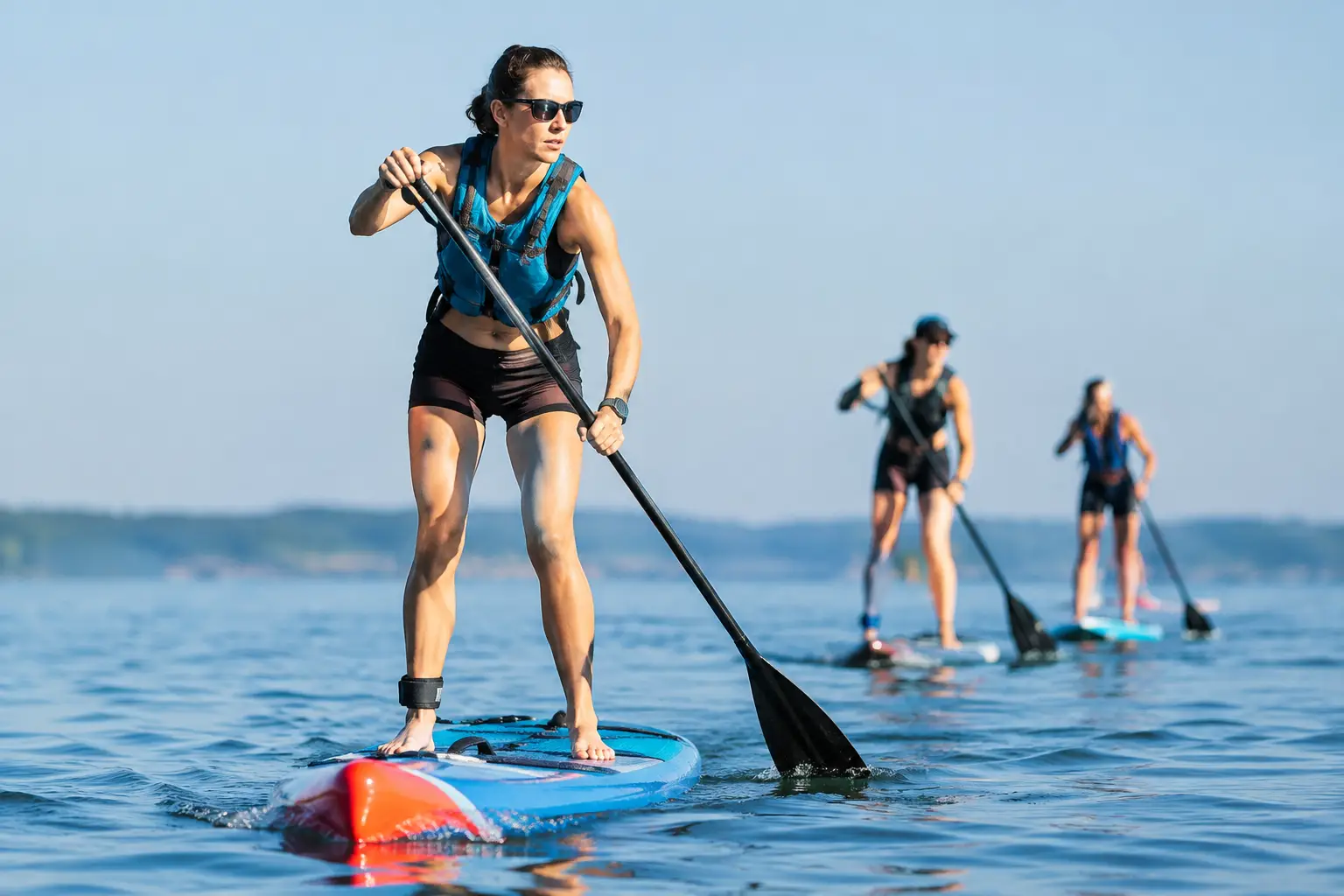
The best paddleboard races feel brilliantly simple: board on the water, lungs working, competitors alongside you and a finish line worth chasing. But a great day begins before the start horn. This paddleboard race safety guide is about arriving prepared, making sharp decisions when conditions change and helping everyone enjoy the challenge from launch to finish.
Safety starts before you reach the water
Race day is not the day to discover that your board has a slow leak, your leash is frayed or your buoyancy aid rides up around your ears. Set your kit out the night before, inflate your board to the manufacturer’s recommended pressure and check the valve is closed properly. If you are racing on a hard board, inspect it for damage and make sure your fin is secure.
Your paddle matters too. A loose handle, cracked blade or poorly adjusted length can become a real problem once you are committed to the course. Bring the kit specified in the event information, including any required personal flotation device, leash, timing device and clothing. Rules can vary by venue, water type and forecast, so the organiser’s briefing is always the final word.
Do not treat compulsory kit as dead weight. A properly fitted buoyancy aid gives you confidence in choppy water and buys valuable time if you need help. Dress for the water temperature, not the temperature in the car park. A warm morning can still mean cold water, wind chill and a long wait after you finish.
Read the conditions, not just the forecast
Weather apps are useful, but the water tells the fuller story. Wind direction, gusts, current, water temperature, visibility and boat movement can all alter how a course feels. A downwind stretch may feel fast and playful on the way out, then turn into a tough headwind grind when fatigue has set in.
Arrive early enough to look at the start area and watch the surface. Are there small wind waves? Is the launch slippery? Where are the turns, safety boats and likely bottlenecks? If you are unsure, ask a marshal. That is what they are there for.
Conditions can also dictate sensible choices about equipment. On enclosed, sheltered water, an ankle leash may be appropriate if the event requires it. On moving water, a quick-release waist belt may be the safer option because it can be released quickly if a leash becomes snagged. Never assume one set-up suits every race. Follow the event’s specific rules and speak up if you do not understand them.
A paddleboard race safety guide for the start line
The first few minutes are often the busiest part of the day. Boards bunch together, paddles cross and everyone wants clear water. You do not need to win the race in the first 50 metres.
Choose a start position that matches your confidence. Faster, experienced racers may be comfortable near the front, while newer paddlers will often have a safer and more enjoyable time starting slightly wider or further back. You will lose far less time by avoiding a collision than you will by falling in, retrieving your paddle and restarting under pressure.
Keep your head up. Look beyond the board in front of you, give others room at turns and avoid sudden sideways moves. If someone falls, steer clear of their board and paddle unless they need immediate assistance. Alert a marshal or safety crew if necessary, then continue only when it is safe to do so.
A calm start is not a timid start. It is a smart one.
Know what to do when you fall in
Falling off is part of paddleboarding, particularly when racing brings wind, wash and tired legs into the mix. The key is to respond without panic. Hold on to your paddle if you can, locate your board and get yourself back onto it quickly. Your board is your biggest flotation aid, so stay with it.
Practise remounting before race day in the clothing and buoyancy aid you intend to wear. The basic movement is simple: approach the board from the side, reach across the middle, kick your legs behind you and pull your chest onto the deck before bringing your knees up. It feels very different in cold water or when you are breathing hard, which is exactly why practice matters.
If you cannot remount, feel unwell, are becoming cold or have lost essential equipment, signal for help. Raise one arm, call clearly and attract the attention of a safety boat, marshal or another paddler. There is no prize for carrying on when you are not safe to do so.
Fuel, hydration and pacing are safety tools
Safety is not only about what happens in an emergency. It is also about avoiding the bad decisions that come with dehydration, low energy and going out too hard. Eat a familiar meal beforehand, carry fluid if the race duration and rules call for it, and avoid trying new gels, caffeine products or breakfast experiments on the morning.
Pace the opening section with intent. Adrenaline makes almost everyone feel stronger than they are. Settle into a rhythm you can hold, then build if you still have plenty in reserve. This is especially important if your paddle leg sits within a multi-discipline event, where you still need enough energy and focus for the bike and trail run ahead.
If you have asthma, diabetes, allergies or another medical condition, make sure your information is current and tell the event team what they need to know. Carry medication according to the event guidance. It is a small bit of preparation that makes a big difference if something goes wrong.
Respect the course and the people on it
A marked race route is there to protect participants as much as it is to measure performance. Take turns as directed, stay clear of exclusion areas and listen for instructions from marshals, especially if conditions change. If the course is shortened, delayed or altered, that is not a failure of the adventure. It is experienced event management putting participants first.
Water is a shared space. Be aware of other paddlers, swimmers, anglers, wildlife and any permitted water users. Do not cut across another competitor’s line at a buoy, and do not use your paddle to push away from somebody else’s board. A little courtesy keeps the racing clean and the atmosphere exactly where it should be: competitive, supportive and fun.
At SUPBIKERUN, that community spirit is part of the challenge. Thank marshals, make room for a nervous first-timer and check whether a nearby paddler is okay if they look distressed. You can race hard without racing selfishly.
Your quick pre-race check
Before heading to the water, take two minutes for these essentials:
- Board inflated or inspected, with fin, leash and valve checked.
- Buoyancy aid fitted snugly and any mandatory kit packed.
- Paddle adjusted, secure and easy to identify.
- Course, weather changes and safety signals understood.
- Fuel, hydration, medication and warm post-race layers ready.
This is not about making race morning feel fussy. It is about clearing the small problems before they become distractions on the water.
Finish strong, then look after yourself
Crossing the line can make it tempting to stop paying attention. Keep moving through the finish area as directed, stay clear of incoming competitors and collect your board only when it is safe to do so. Put on warm layers promptly, drink, eat something familiar and let your body come down gradually.
If you took a knock, swallowed a lot of water, feel unusually dizzy or cannot get warm, speak to the medical team. The same applies if you spotted an issue on the course that organisers need to know about. Good feedback helps make the next race safer for everyone.
Prepare well, listen carefully and give the water the respect it deserves. Then you can put your head down, enjoy the buzz of the pack and earn every bit of that finish-line feeling.