
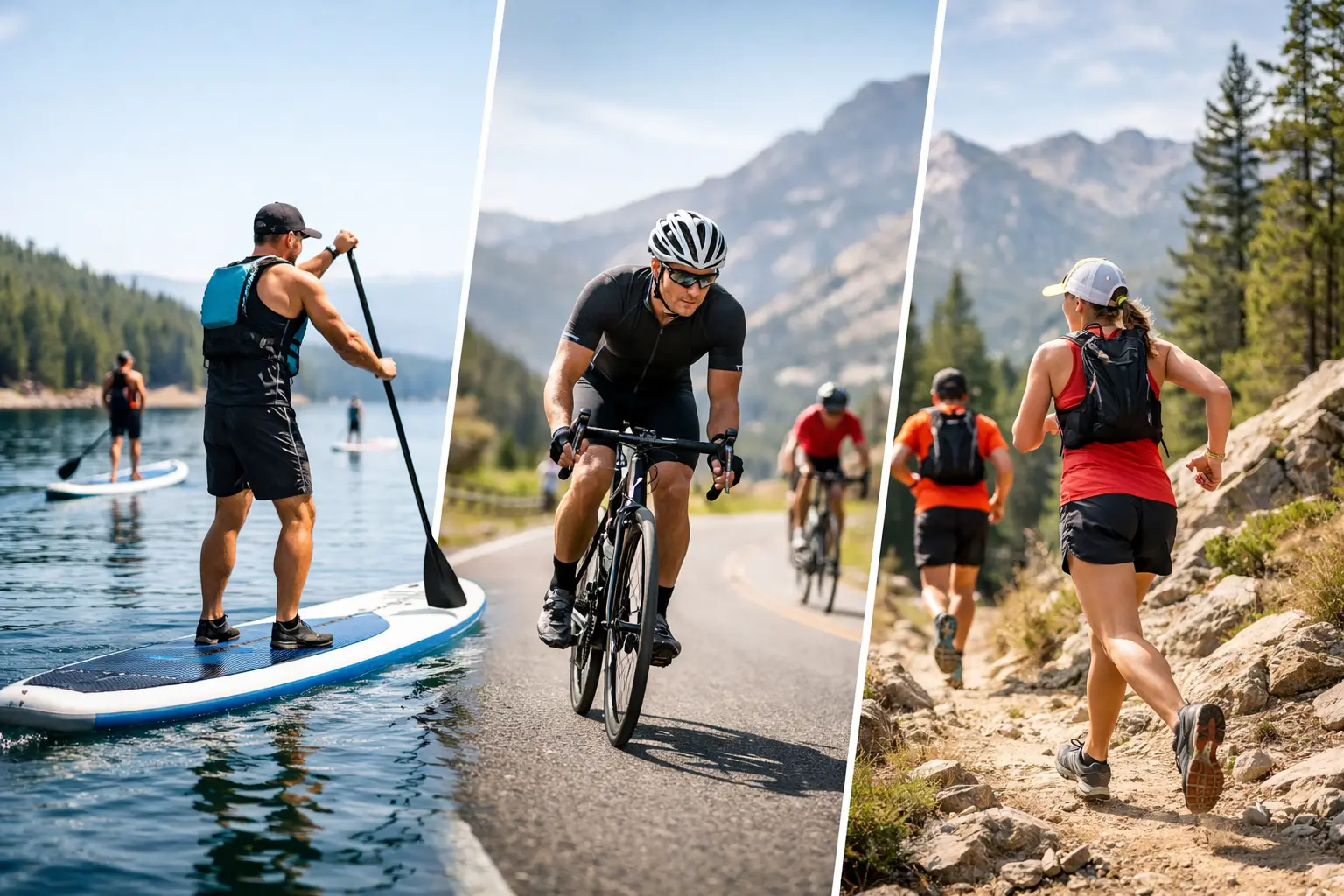
A branded flag at the finish line is easy to photograph. A moment that makes someone try paddleboarding for the first time, find a new training mate or stay for the post-race stories is what they remember. The strongest outdoor brand activation trends are moving well beyond logo placement. They are about giving people a proper reason to get outside, get involved and feel part of something.
For adventure events, that is good news. Our participants do not turn up to be marketed at. They turn up for the buzz of the start line, the satisfaction of a tough climb, the encouragement on the trail and the feeling that a big weekend was worth making time for. Brands that add to that experience earn attention the right way.
Outdoor brand activation trends are becoming more useful
The old model was simple: bring a gazebo, hand out samples, collect a few email addresses and hope the crowd remembers you. It can still have a place, especially when the product is genuinely useful. But people are more selective with their time, and event organisers are more protective of the participant experience.
The activations that cut through now solve a real need. Think a bike-care station that gets a muddy drivetrain moving again, a recovery area with knowledgeable staff, a waterproof mobile phone-charging point, or a refuel stop that helps competitors tackle the next stage. The branding is there, but the value comes first.
That does not mean every activation needs to be serious. A great outdoor event should have personality. The difference is that the fun needs to feel earned. A challenge, a shared photo moment or a friendly competition works when it fits the crowd and the landscape, rather than interrupting the day with noise for noise’s sake.
Participation beats passive exposure
People remember what they do more clearly than what they see. This is why hands-on experiences are becoming a stronger choice than static displays. A footwear brand might offer a short trail technique session. A nutrition partner could run a practical tasting station that lets athletes work out what agrees with them before race day. An outdoor retailer might host kit-drop sessions, where newcomers can ask the questions they have been too embarrassed to ask elsewhere.
The best version is accessible at different confidence levels. Not everyone wants to race for a fastest time, perform in front of a crowd or sign up to a complicated challenge. Give people a quick, low-pressure way in, alongside an option for those who want to push harder. That is how an activation feels welcoming rather than exclusive.
Community is the real prize
Outdoor sport has always had a social side, but brands are increasingly treating community as the activation rather than a by-product. That means showing up before and after the main event weekend, not just during the busiest few hours.
Local run clubs, cycling groups, paddleboard communities and workplace teams can help turn a one-off interaction into a relationship. A brand that supports a beginner ride-out, hosts a skills evening or helps a club bring first-timers to an event is building trust over time. The immediate reach may look smaller on a report, but the connection is usually much stronger.
For organisers, the same principle applies. Partners should understand the people they are meeting: recreational athletes with busy lives, first-time adventurers, competitive regulars, friends supporting from the side-lines and families making a weekend of it. They are not one audience with one motivation.
At SUPBIKERUN, the format naturally brings together people who may arrive with different strengths. One person loves the bike leg, another cannot wait to get on the board, and someone else is there to prove they can finish. A partner activation that celebrates that shared challenge will land far better than one that assumes every participant is chasing a podium.
The spectator experience deserves attention
Spectators are often overlooked, despite being some of the most engaged people on site. They have travelled, they are invested in someone’s day, and they need reasons to stay energised between start, transition and finish.
This is a chance for brands to create useful moments: route-side encouragement points, family-friendly mini challenges, warm drink stations when the weather turns, or simple guides that help supporters understand what is happening next. It should never block the course or distract competitors, but it can turn waiting around into part of the adventure.
Smaller, better moments beat oversized stunts
Big builds can create excitement, but outdoor settings demand a lighter touch. A giant installation may be visually impressive, yet it can be expensive to transport, difficult to power and completely wrong for a sensitive rural site. It may also struggle in high winds, rain or uneven ground. The outdoors has a way of exposing plans that look brilliant on a pitch deck.
More brands are opting for compact, adaptable activations that can work across varied venues. That might mean modular signage, staff who can deliver a great conversation without a huge footprint, and equipment designed to cope with mud, wet grass and changing weather. It is not less ambitious. It is smarter event craft.
There is a sustainability benefit too. Reusable infrastructure, local suppliers, lower-volume giveaways and fewer single-use items make practical sense. However, sustainability claims need to be backed up by decisions people can see. A recycled-paper leaflet means little if the rest of the activation generates bags of waste.
Content should capture the feeling, not hijack it
Outdoor events produce brilliant content without forcing it. The early-morning nerves, a teammate helping with a wetsuit zip, the surprise of a steep trail section and the finish-line relief all tell a real story. Brands want to be part of that energy, but there is a fine line between documenting a moment and turning participants into unpaid props.
The better approach is clear consent, quick delivery and content that is genuinely worth receiving. A short finish clip, a professionally captured team photo or a personalised event recap can extend the experience long after the kit is dry. If participants share it because they love it, the reach follows naturally.
Live content also has a role, particularly for people following from home. But it should not demand that athletes stop mid-flow for an interview or repeat a finish-line reaction. The race belongs to the participant. Brands and organisers are there to make the day better.
Data collection needs a fair exchange
Registration forms, competitions and QR codes make it easy to gather data. They can also make an activation feel transactional very quickly. If someone is handing over their details, they should know what they are getting and what will happen next.
A useful offer might be priority access to a skills session, a route-planning resource, a recovery guide or an entry into a competition with a worthwhile prize. A vague promise of “exclusive updates” is less compelling, particularly when people are standing in the rain with a bike to collect.
Keep the process short and be straight about consent. Trust is a valuable part of any outdoor community, and it is hard to rebuild once it has been treated casually.
What makes an activation right for an adventure event?
Before committing to a partnership, ask one simple question: would participants be pleased this is here? If the answer is unclear, the idea needs work. The right activation should support the event’s atmosphere, respect the venue and give people something useful, memorable or genuinely enjoyable.
It also needs to work operationally. Consider arrival times, queue space, staffing, weather plans, power, waste, accessibility and how close the experience can sit to the action without causing congestion. The best ideas are not just creative. They are deliverable under pressure.
Outdoor brand activation trends will keep changing, but the standard stays simple: bring energy, bring value and understand the people pulling on their trainers, loading their bikes and choosing to spend their weekend outside. Give them a story they will want to tell on Monday, and your brand becomes part of the adventure rather than a logo beside it.