
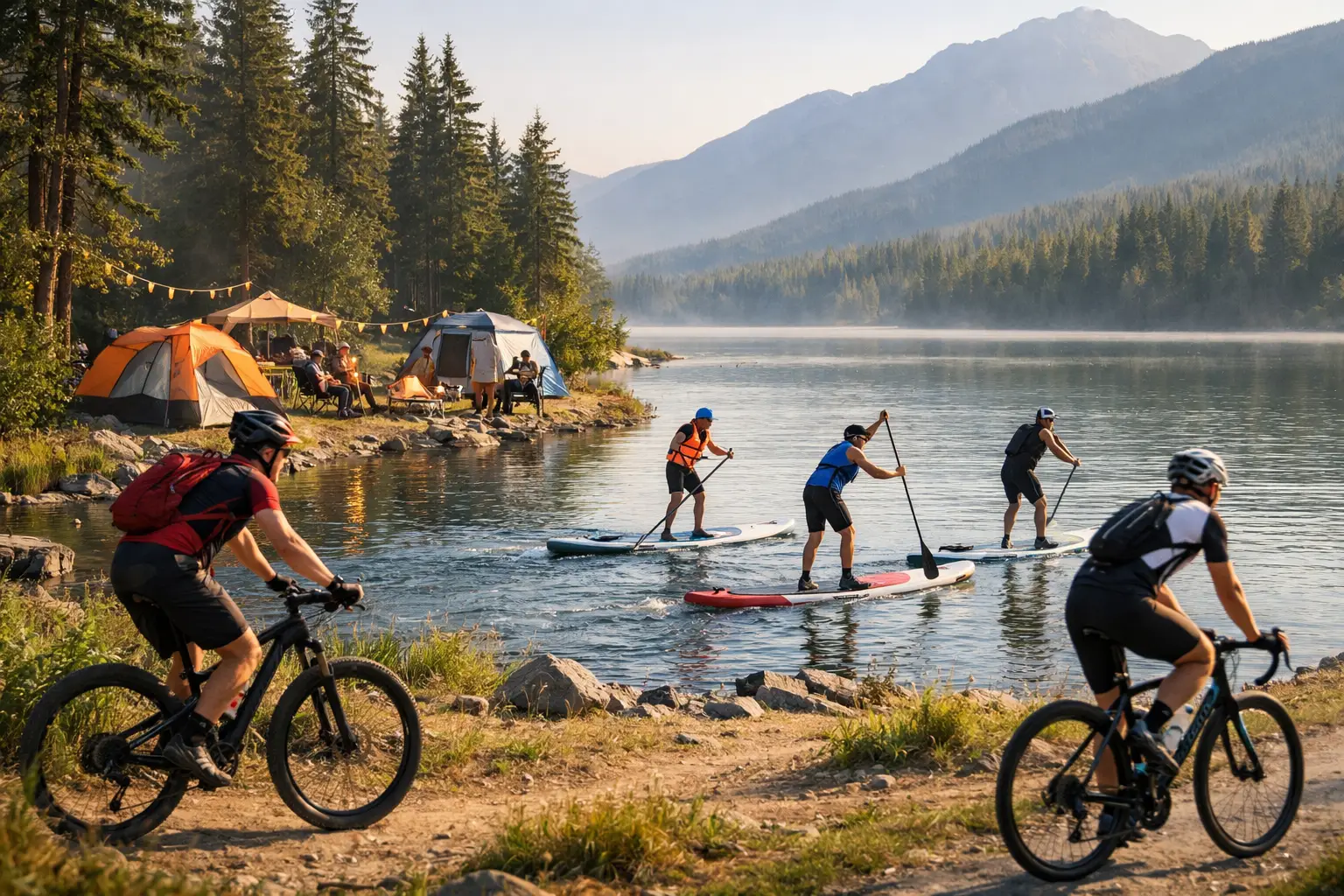
The finish line is only part of the story. An endurance event with camping gives you the bit that ordinary race days often miss: the pre-race buzz around camp, shared coffee in damp trainers, post-race stories that get better by the minute, and no frantic drive home just as the good part begins.
For paddlers, cyclists and trail runners, that changes the whole feel of a challenge. You are not simply arriving, racing and leaving. You are committing to a proper weekend outdoors, surrounded by people who understand why carrying a bike up a hill or running through mud sounds like a brilliant idea.
An endurance event with camping feels bigger than race day
A standard race morning can be a logistical sprint before the sporting one. Alarm before dawn. Breakfast at an odd hour. Loading the car. Finding parking. Queuing for registration. Trying to locate the start while keeping your kit, nerves and nutrition in check.
Camping close to the event strips much of that away. You wake up where the atmosphere is building, rather than travelling towards it. Registration, briefings, food and the start area are part of your weekend base. That leaves more headspace for the challenge ahead.
It also makes room for the side of endurance sport people remember most. Someone will lend a track pump. Someone will have forgotten a tent peg. A stranger will become your biggest cheerleader because they watched you battle through the same climb. That is not a polished hospitality package. It is the outdoor event community at its best.
At SUPBIKERUN, that shared energy suits the format. Stand-up paddleboarding, cycling and trail running demand focus, but they also reward a willingness to get stuck in. Camp first, race hard, celebrate properly.
The practical advantage: less rushing, more readiness
Camping is not just a lifestyle extra. For many participants, it is the sensible option.
Arriving the day before gives you time to set up, collect your event information, check your bike and familiarise yourself with the layout. If you have travelled across the country, especially to a rural venue, it also means you are not adding a long journey to an already demanding start line.
That matters when your event involves more than one discipline. Paddleboard, helmet, shoes, hydration, layers, nutrition, timing device, dry bag – adventure triathlon kit can spread quickly. Having your tent or vehicle nearby creates a useful base for sorting it all without turning the car park into a frantic packing station.
There is a trade-off, of course. Camping means accepting that sleep may not be hotel-perfect. The ground can be firm, weather can turn, and early risers exist in every campsite. But good preparation narrows the gap. A warm sleeping bag, insulated mat, earplugs and a proper windproof layer will do more for your race morning than pretending you can tough it out with minimal kit.
Build a campsite that works for race weekend
Your camp does not need to look like an expedition headquarters. It needs to keep you warm, dry, fed and organised.
Choose a tent you know how to put up, not the one still in its packaging from a hopeful January purchase. Check it before travelling, including pegs, poles and waterproofing. If rain is possible, which it often is at a UK outdoor event, pack a groundsheet and keep your dry clothes in a separate bag. A wet towel should never be allowed anywhere near tomorrow’s running kit.
Think about your race morning before you go to sleep. Lay out clothes in the order you will need them. Keep nutrition somewhere easy to reach. Put your head torch, phone and event details in the same place. If you are doing an early paddle section, have warm layers ready for before and after rather than searching for them at first light.
A small camp chair is worth its space if you are staying for the full weekend. So is a reusable mug. They make recovery between activity, spectating and post-race chat far more comfortable. Leave the kitchen sink at home, though. The point is to be ready for adventure, not to spend half the evening managing gear.
Fuel well without making it complicated
The temptation at a social camping event is understandable: big evening meal, celebratory drinks, late-night stories, perhaps one more round by the tent. Enjoy the atmosphere, but remember you have signed up to move for hours, not merely look sporty around a campsite.
Keep your pre-race meal familiar. This is not the moment to test a spicy campfire creation, a new energy product or a heroic portion size. Carbohydrates, some protein, plenty of fluids and food you know sits well is the reliable route. Bring breakfast you can eat even if you wake up nervous.
After the race, the rules can relax. Replace fluids, eat something substantial and give yourself permission to stop analysing splits. A camp-based event lets the finish line breathe. You can cheer in friends, compare muddy legs, enjoy the event village and take a moment to realise what you have done.
Camping makes the challenge more inclusive
Not every endurance athlete wants the same weekend. Some are chasing a podium. Some are tackling their first multi-discipline event. Some are coming with mates, a partner, colleagues or family members who are there for the atmosphere as much as the race.
Camping gives those different ambitions space to coexist. The fast racers can keep their routine tight. First-timers can ask questions and feel part of the occasion before the start. Friends and supporters have somewhere to gather rather than waiting in a car park. Corporate teams get more than a day of branded shirts and polite small talk – they share the nerves, the effort and the laughs that create real team memories.
That sense of belonging is especially valuable in outdoor sport. It can be easy to assume that everyone else has done it all before, owns the perfect gear and knows exactly what to eat at 5am. Campsite conversation quickly proves otherwise. Most people are figuring out something, whether it is their first open-water paddle, a tricky bike repair or how to keep trail shoes dry in British weather.
Respect the campsite and the people in it
A relaxed atmosphere only works when everyone does their bit. Pack out what you bring in, use the facilities properly and keep noise down when people are sleeping. If a venue has rules on fires, parking, dogs or quiet hours, treat them as part of the event plan, not optional reading.
Be generous with encouragement, but do not assume everyone wants a late-night party before their race. The best event campsites have energy without chaos: music and laughter where it is welcome, calm where it is needed, and plenty of respect for the land hosting the weekend.
The same applies after your finish. Your race might be done, but another participant could be heading out for their hardest section. Cheer loudly, offer a kind word and keep the route clear. You may be the reason someone finds an extra gear when they need it most.
Choose the weekend, not just the race
An endurance event tests your preparation, but the right one gives something back beyond a medal and a finish time. Camping turns the challenge into a shared escape from normal routines – a few days of fresh air, tired legs, good people and a reason to put the phone away.
Bring the kit you trust, arrive with enough time to settle in, and be ready to embrace imperfect weather and brilliant company. When the last tent comes down, you should leave with more than a result. You should leave already planning who is joining you next time.